

Most people insure their homes, cars, and health, but many overlook one of their most valuable assets—their ability to earn an income. If an illness or injury prevents you from working, disability insurance can help replace part of your lost income while you recover or adjust to a long-term disability.
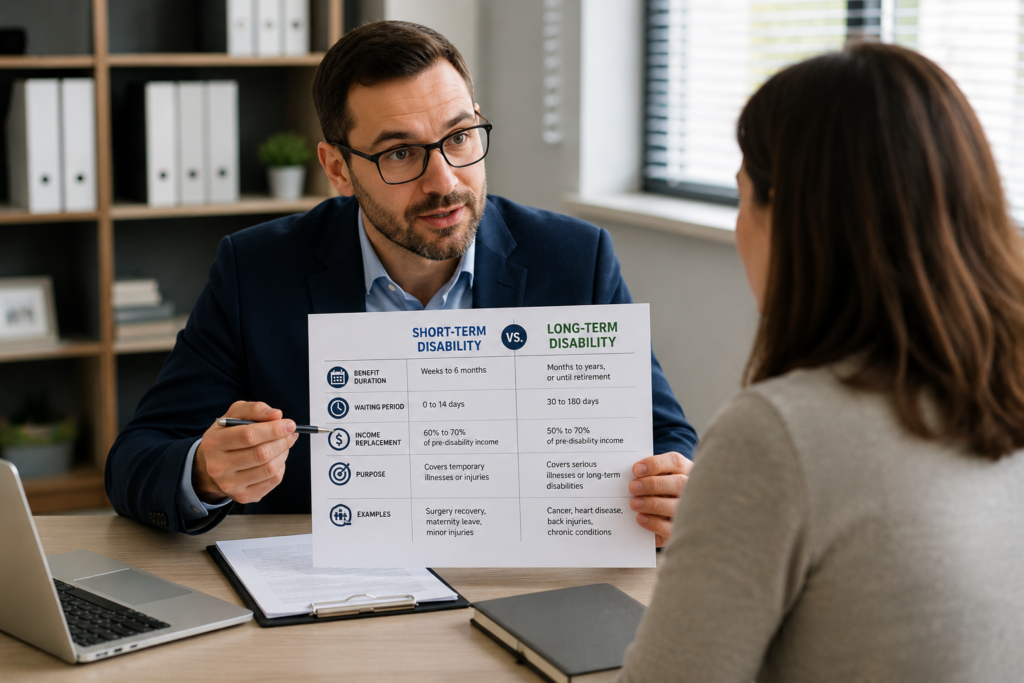
Disability insurance generally falls into two main categories: Short-Term Disability (STD) and Long-Term Disability (LTD). Although both are designed to provide income replacement, they differ significantly in benefit duration, waiting periods, coverage amounts, and the types of situations they are intended to address.
Understanding these differences can help you choose coverage that fits your financial responsibilities, career, and long-term goals.
What Is Disability Insurance?
Disability insurance provides income replacement if a covered illness or injury prevents you from working. Rather than paying medical expenses like health insurance, disability insurance is designed to help replace a portion of your regular income while you are unable to earn wages.
Benefits may help pay for everyday expenses such as:
- Mortgage or rent
- Utility bills
- Groceries
- Transportation
- Loan payments
- Childcare
- Insurance premiums
- Other household expenses
The amount paid, benefit period, and eligibility requirements depend on the policy.
Why Disability Insurance Matters
Many households depend primarily on employment income to meet monthly financial obligations. A temporary or long-term inability to work can create financial stress if savings are limited.
Disability insurance can help:
- Maintain household income.
- Reduce financial pressure during recovery.
- Help cover essential living expenses.
- Protect long-term financial goals.
- Reduce the need to rely on emergency savings.
Coverage does not eliminate financial challenges, but it may provide valuable support during periods when earning an income is difficult.
What Is Short-Term Disability Insurance?
Short-Term Disability (STD) insurance provides income replacement for temporary disabilities that prevent you from working for a limited period.
Coverage often applies to conditions such as:
- Recovery after surgery
- Pregnancy and childbirth recovery
- Broken bones
- Serious illnesses
- Temporary injuries
- Certain mental health conditions, depending on the policy
STD is intended for situations where recovery is expected within a relatively short period.
Typical Features of Short-Term Disability Insurance
Although policy terms vary, short-term disability insurance commonly includes:
- Benefit period of several weeks to several months.
- Short waiting (elimination) period before benefits begin.
- Partial income replacement.
- Coverage for temporary illnesses or injuries.
- Employer-sponsored or individually purchased options.
Review your policy carefully to understand the exact benefit duration and eligibility requirements.
What Is Long-Term Disability Insurance?
Long-Term Disability (LTD) insurance is designed for disabilities that last much longer than short-term policies cover.
Benefits may continue for:
- Several years.
- Until a specified age.
- Until retirement age, depending on the policy.
- Other benefit periods selected at purchase.
Long-term disability insurance can provide ongoing financial support when a medical condition significantly limits your ability to work.
Conditions That May Lead to Long-Term Disability
Examples may include:
- Cancer
- Stroke
- Multiple sclerosis
- Severe back disorders
- Heart disease
- Parkinson’s disease
- Serious neurological conditions
- Permanent injuries
- Certain chronic illnesses
Eligibility depends on the policy definition of disability and medical documentation.
Typical Features of Long-Term Disability Insurance
Many LTD policies include:
- Longer benefit periods.
- Longer waiting periods before benefits begin.
- Partial income replacement.
- Coverage for extended disabilities.
- Optional policy riders.
- Individual or employer-sponsored plans.
The specific terms vary among insurers and policies.
Short-Term vs. Long-Term Disability Insurance
| Feature | Short-Term Disability | Long-Term Disability |
|---|---|---|
| Purpose | Temporary income replacement | Extended income replacement |
| Typical Benefit Duration | Weeks to several months | Several years or longer, depending on the policy |
| Waiting Period | Usually shorter | Usually longer |
| Best For | Temporary recovery | Long-lasting disabilities |
| Premium | Often lower | Often higher due to longer coverage |
| Employer Plans | Common | Also common |
Benefits of Short-Term Disability Insurance
Short-term disability insurance can be particularly valuable because it:
Provides Quick Financial Support
Benefits generally begin after a shorter waiting period than long-term disability policies.
Helps During Recovery
It may assist individuals recovering from surgeries, injuries, or temporary illnesses while they are unable to work.
Protects Emergency Savings
Income replacement may reduce the need to rely entirely on savings for routine household expenses.
Supports Family Finances
Even partial income replacement can help families continue meeting important financial obligations during a temporary disability.
Benefits of Long-Term Disability Insurance
Long-term disability insurance offers different advantages.
Longer Financial Protection
Benefits may continue for years if a qualifying disability prevents you from returning to work.
Income Stability
Ongoing benefits can help individuals maintain financial stability during prolonged recovery or permanent disability.
Protection for High-Income Professionals
Professionals whose careers depend heavily on their ability to work may value the extended protection offered by LTD coverage.
Helps Preserve Long-Term Financial Goals
Continued income replacement may reduce the need to withdraw retirement savings or sell assets during an extended disability.
Who Should Consider Short-Term Disability Insurance?
Short-term disability coverage may be appropriate for individuals who:
- Have limited paid sick leave.
- Would struggle financially after missing several weeks of work.
- Are planning surgery.
- Expect maternity or parental recovery leave where applicable.
- Have minimal emergency savings.
- Want protection against temporary income interruptions.
Who Should Consider Long-Term Disability Insurance?
Long-term disability insurance may be worth considering for individuals who:
- Rely heavily on employment income.
- Have significant monthly financial obligations.
- Support a family.
- Work in specialized professions.
- Would face financial hardship if unable to work for several years.
- Want additional protection beyond employer benefits.
Can You Have Both?
Yes.
Many people have both short-term and long-term disability insurance because the two cover different stages of a disability.
In many situations:
- Short-term disability provides benefits during the initial recovery period.
- Long-term disability may begin after the short-term benefits end, provided the policy requirements are met.
Together, the two types of coverage can provide more continuous income protection.
How to Choose the Right Disability Insurance
Selecting disability insurance involves more than comparing premiums. The right policy should match your income, financial responsibilities, occupation, and existing employee benefits.
Consider the following factors before purchasing coverage.
1. Review Your Employer Benefits
Many employers provide some disability insurance as part of their benefits package.
Before purchasing an individual policy, determine:
- Whether short-term disability is included.
- Whether long-term disability is offered.
- The percentage of salary replaced.
- The benefit duration.
- Whether coverage continues if you change jobs.
- Whether benefits may be taxable under your circumstances.
Understanding existing benefits helps identify any coverage gaps.
2. Evaluate Your Emergency Savings
Ask yourself:
- How many months could you pay your bills without an income?
- Would your savings cover mortgage or rent?
- Could you continue paying insurance premiums?
- Would you need to use retirement savings?
Individuals with limited emergency funds may benefit from disability coverage that provides earlier income replacement.
3. Consider Your Occupation
Certain occupations may face a higher likelihood of work-related injuries or physical demands.
Examples include:
- Construction workers
- Healthcare professionals
- Electricians
- Mechanics
- Manufacturing employees
- Transportation workers
Office-based professionals may have different disability risks, but illnesses, surgeries, and chronic medical conditions can also interrupt income regardless of occupation.
4. Understand the Waiting Period
The waiting period (also called the elimination period) is the amount of time you must be disabled before benefits begin.
In general:
- Short-term disability policies often have shorter waiting periods.
- Long-term disability policies typically require a longer waiting period before benefits start.
Choosing a longer waiting period may reduce premiums but could require you to rely on savings for a longer time.
5. Review the Benefit Period
Benefit periods vary by policy.
Common options may include:
- Several months
- Two years
- Five years
- Ten years
- To a specified retirement age
Select a benefit period that aligns with your financial responsibilities and long-term needs.
Can You Have Both Short-Term and Long-Term Disability Insurance?
Yes. In fact, many people rely on both types of coverage because they serve different purposes.
A common approach works like this:
- A covered illness or injury prevents you from working.
- Short-term disability benefits begin after the policy’s waiting period.
- If the disability continues beyond the short-term benefit period, long-term disability benefits may begin after the long-term policy’s waiting period has been satisfied and the claim is approved.
This combination can provide more continuous income replacement during both temporary and extended disabilities.
What Affects Disability Insurance Costs?
Premiums depend on several factors, including:
- Age
- Occupation
- Income level
- Health history
- Smoking status
- Benefit amount
- Waiting period
- Benefit duration
- Policy riders
- State of residence
Higher benefit amounts and longer benefit periods generally result in higher premiums.
Common Policy Exclusions
Every disability insurance policy contains exclusions and limitations.
Examples may include:
- Disabilities resulting from intentionally self-inflicted injuries.
- Certain injuries occurring during criminal activity.
- Disabilities excluded by specific policy provisions.
- Conditions subject to waiting periods or pre-existing condition limitations, where permitted by the policy.
Always review the complete policy language to understand what is and is not covered.
Common Mistakes to Avoid
Waiting Too Long to Buy Coverage
Premiums may increase with age, and developing certain medical conditions could affect eligibility or pricing.
Assuming Employer Coverage Is Enough
Employer-sponsored disability insurance may not replace all of your income and may end when employment ends.
Ignoring Waiting Periods
Understanding how long you must wait before benefits begin is essential for planning your emergency savings.
Choosing the Lowest Premium Without Comparing Benefits
A lower premium may come with a longer waiting period, shorter benefit duration, or lower income replacement.
Not Reviewing Coverage Regularly
Career changes, salary increases, marriage, or the birth of a child may change your disability insurance needs.
Frequently Asked Questions
Is short-term disability insurance better than long-term disability insurance?
Neither is universally better. Short-term disability insurance helps cover temporary income loss, while long-term disability insurance is designed for disabilities lasting much longer. Many people benefit from having both.
Can I receive both short-term and long-term disability benefits?
In some situations, yes. Short-term disability benefits may be paid first, followed by long-term disability benefits if the disability continues and the policy requirements are met.
Does disability insurance replace my entire salary?
Most policies replace only a percentage of your pre-disability income, not your full salary. The exact percentage depends on the policy.
Can I buy disability insurance if I’m self-employed?
Yes. Many insurers offer individual disability insurance policies designed for self-employed individuals, freelancers, and business owners.
Is disability insurance worth it?
For individuals who depend on employment income, disability insurance can provide valuable financial protection by helping replace a portion of lost earnings during a covered disability.
Final Thoughts
Disability insurance is designed to protect one of your most important financial assets—your ability to earn an income. While short-term disability insurance helps bridge temporary income interruptions caused by illnesses or injuries, long-term disability insurance provides ongoing support when a disability lasts much longer.
The right choice depends on your occupation, financial obligations, emergency savings, employer benefits, and long-term goals. Reviewing your existing coverage, comparing policies carefully, and understanding waiting periods, benefit durations, and exclusions can help you select protection that fits your needs.