

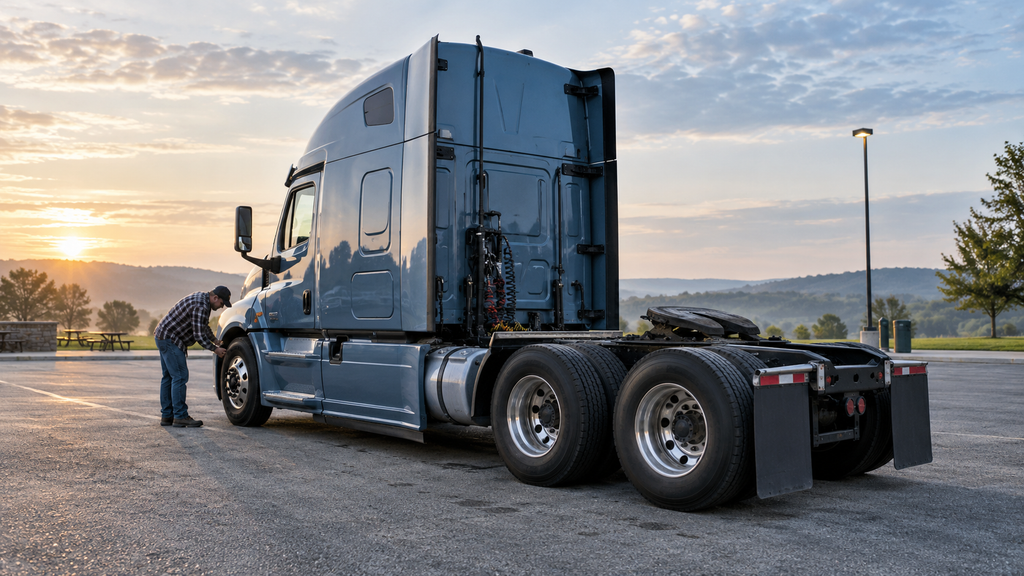
You drop a trailer and drive your tractor to the next stop. On the way, you collide with another vehicle. There may be damage to the other vehicle and damage to your own tractor.
Those are separate insurance questions. Bobtail liability may address an eligible claim for injury or damage you cause to others while operating a tractor without a trailer. Physical damage coverage may address eligible damage to your insured tractor. Buying one does not automatically provide the other.
There is another complication: bobtail and non-trucking liability are often used as though they mean the same thing, but their coverage triggers can differ. Before relying on either name, check the policy wording, your dispatch status, and your lease with the motor carrier.
Bobtail vs. Physical Damage at a Glance
| Coverage | Main question it answers | Typical example |
|---|---|---|
| Bobtail liability | Could an eligible third-party liability claim be covered while the tractor has no trailer attached? | A bobtail tractor damages another vehicle |
| Physical damage | Could eligible damage to the insured tractor be covered? | The tractor is damaged in a collision or stolen |
This article focuses on US commercial trucking terminology. Coverage names and requirements may differ outside the United States.
What Does “Bobtail” Mean?
A tractor is bobtailing when it is driven without a trailer attached. That describes the tractor’s physical configuration; it does not, by itself, tell you whether the driver is working, under dispatch, returning to a terminal, or on a personal trip.
A true bobtail liability product can be written to address third-party liability when the tractor is operated without a trailer, whether or not it is under dispatch. OOIDA describes its bobtail liability offering in those terms. Progressive Commercial also distinguishes that trailer-based trigger from non-trucking liability’s personal-use trigger. Actual policy provisions must still be checked.
If you attach an empty trailer, you are no longer bobtailing. That situation is often called deadheading. Do not assume a bobtail-only policy covers it.
What Can Bobtail Liability Cover?
Subject to its terms, bobtail liability is intended for eligible liability arising from operation of the tractor without a trailer. That may involve injury to another person or damage to someone else’s property.
For example, an owner-operator driving a bobtail tractor strikes a parked car. A relevant liability policy may respond to the eligible claim for damage to the parked car. But it does not follow that the same liability coverage will pay to repair the owner-operator’s tractor.
Whether the carrier’s primary liability policy, a bobtail policy, or another policy responds depends on the facts and the actual contracts. The Federal Motor Carrier Safety Administration (FMCSA) states that a tractor bobtailing while in the service of a motor carrier remains subject to applicable financial-responsibility regulations. Being without a trailer does not automatically mean the trip is outside the carrier’s service.
Bobtail Is Not Always Non-Trucking Liability
This is the distinction most likely to cause confusion when buying coverage.
Non-trucking liability (NTL) is generally designed for qualifying personal, non-business use of a truck. By contrast, a true bobtail liability policy focuses on whether the tractor is being operated without a trailer. Progressive Commercial says these terms are often used interchangeably even though they are technically different. Its NTL description also warns that travel to a terminal, fueling, servicing, washing, or deadheading may be treated as business use rather than personal use.
Consider these trips:
- No trailer, travelling to collect a load: The tractor is bobtailing, but the trip may be for business or in the carrier’s service.
- No trailer, using the tractor for a permitted personal errand: The tractor is bobtailing; NTL may be relevant if the trip meets that policy’s personal-use terms.
- Empty trailer attached, travelling between assignments: The tractor is not bobtailing. Whether another liability policy applies needs a separate check.
A policy sold casually as “bobtail insurance” may have more restrictive wording. Ask the agent to identify its exact coverage name and trigger on the declarations and policy forms.
What Is Physical Damage Coverage?
Physical damage coverage concerns the insured vehicle itself. It can include collision, which addresses eligible damage from impact or overturning, and comprehensive or a more limited fire-and-theft option for specified non-collision losses. Coverage options differ by insurer.
For example:
- You hit an object and damage the tractor: collision coverage may be relevant.
- The insured tractor is stolen: comprehensive or an applicable fire-and-theft option may be relevant.
- A covered event damages both your tractor and another person’s vehicle: physical damage and liability are separate parts of the insurance analysis.
Physical damage commonly has a deductible and a vehicle valuation provision. Check how the insurer determines a total-loss payment. A stated amount on an application should not be mistaken for an unconditional promise to pay that amount after a loss.
A motor carrier’s primary liability insurance does not necessarily insure an owner-operator’s tractor against collision or theft. An owner-operator can therefore have liability protection for others and still face a large loss on their own equipment.
One Accident, Two Different Losses
Imagine a leased owner-operator is driving without a trailer and is involved in a covered collision:
- Damage to another driver’s vehicle: $18,000
- Eligible damage to the owner-operator’s tractor: $14,000
- Illustrative physical damage deductible: $2,000
A relevant liability policy would be examined for the $18,000 third-party claim. A relevant physical damage policy would be examined for the tractor. In this simplified example, the owner-operator’s share of eligible tractor repairs could be the $2,000 deductible, with the insurer considering the balance under the policy’s limits and valuation rules.
The example does not determine which liability insurer must pay. Dispatch status, carrier service, lease terms, exclusions, and the actual policies all matter. It demonstrates why a liability certificate alone does not establish coverage for repairs to your tractor.
Which Coverage Applies During Common Trips?
| Situation | Liability question | Own-tractor question |
|---|---|---|
| Bobtailing while in the motor carrier’s service | Check the carrier’s primary liability policy and any bobtail policy | Check physical damage |
| Bobtailing on a qualifying personal trip | Check the exact bobtail or NTL wording | Check physical damage |
| Pulling an empty trailer for work | Check applicable primary or other liability coverage; a bobtail-only trigger may not apply | Check physical damage |
| Tractor stolen while parked | Liability coverage is generally not the coverage for the stolen tractor | Check comprehensive or applicable theft coverage |
This table is a review guide, not a coverage determination. An insurer must assess a particular claim against the policies and facts.
What About the Trailer and Cargo?
Protecting the tractor does not automatically protect everything attached to it or carried by it.
Ask separately whether you need:
- Physical damage coverage for a trailer you own
- Trailer interchange coverage for a qualifying non-owned trailer
- Motor truck cargo coverage for eligible freight losses
- Downtime or rental reimbursement coverage while a truck is repaired
For example, Progressive Commercial states that its physical damage coverage for a vehicle does not apply to non-owned trailers used under a trailer interchange agreement; that exposure needs a separate coverage review.
Read each policy’s insured-vehicle schedule. Even a good coverage type cannot protect a tractor or trailer that has not been properly included where listing is required.
Why Your Motor Carrier Lease Matters
If you lease your tractor to a motor carrier, read the insurance section of the written lease alongside the insurance policies. It should clarify which party is responsible for coverage and any insurance costs charged back to you.
US leasing provisions reproduced by OOIDA state that the lease must identify the carrier’s public-protection insurance obligation and specify who provides other insurance for leased equipment, such as bobtail coverage. They also address policy and certificate information when the lessor buys coverage through the carrier.
Do not assume that a deduction labelled “insurance” on a settlement statement means you have physical damage, NTL, bobtail, cargo, and trailer coverage. Ask for the policy or certificate, coverage limits, insured vehicles, dates, exclusions, and deductibles for each type.
FMCSA insurance filings concern specified financial-responsibility requirements that vary by carrier and operation. A filing showing public-liability coverage should not be treated as proof that your tractor has physical damage coverage.
Questions to Ask Before Buying or Renewing
Give your insurance agent and motor carrier specific driving scenarios, then request written answers:
- Is this policy true bobtail liability, non-trucking liability, unladen liability, or another form?
- Does it apply without a trailer while under dispatch, off dispatch, or both?
- What counts as personal use or business use?
- What happens when I pull an empty trailer?
- Which policy covers liability while I am in the motor carrier’s service?
- Is my tractor listed for collision, comprehensive, or fire-and-theft coverage?
- What deductible and valuation method apply to a tractor loss?
- Are owned trailers, non-owned trailers, and cargo insured separately?
- Does my lease require a particular coverage or limit?
- What changes when the lease ends or I move to another carrier?
Keep your lease, declarations, endorsements, and certificates together. Review them when you change carriers, buy another tractor, add a trailer, or change how you use the truck.
Key Takeaways
- Bobtail describes a tractor operating without a trailer.
- Bobtail liability concerns eligible claims for harm to others; physical damage concerns eligible loss to the insured tractor.
- Non-trucking liability has a different, generally personal-use trigger. Do not rely on the terms being interchangeable.
- An empty trailer changes the bobtail analysis, and a carrier’s liability policy does not automatically repair your own truck.
- The lease, vehicle schedule, and full policy wording determine where the coverage gaps may be.
Frequently Asked Questions
Does bobtail insurance pay to repair my truck?
Bobtail liability is not a substitute for physical damage coverage on your tractor. Check collision and applicable non-collision coverage for eligible repairs or theft.
Is bobtail insurance the same as non-trucking liability?
Not necessarily. True bobtail liability can be based on operating without a trailer; NTL generally depends on qualifying personal, non-business use. The wording of the policy you buy controls.
Am I bobtailing if I pull an empty trailer?
No. Bobtailing means operating the tractor without a trailer attached. Driving with an empty trailer is commonly called deadheading.
Does the motor carrier cover my tractor while I am under dispatch?
Its primary liability coverage should not be assumed to include physical damage to your tractor. Check the lease and the policies to see who insures your equipment.
Does FMCSA require every owner-operator to buy bobtail and physical damage coverage?
FMCSA financial-responsibility requirements vary by operation. Separate bobtail or physical damage responsibilities may arise from the lease, a lender, or your own decision to protect the equipment. Confirm the requirements for your arrangement rather than treating one policy as universally required.
Disclaimer: This article is general US-focused educational information, not a determination of insurance coverage or legal advice. Policy language, leases, state rules, federal requirements, and accident facts can change the outcome. Review your documents with a licensed trucking insurance professional.