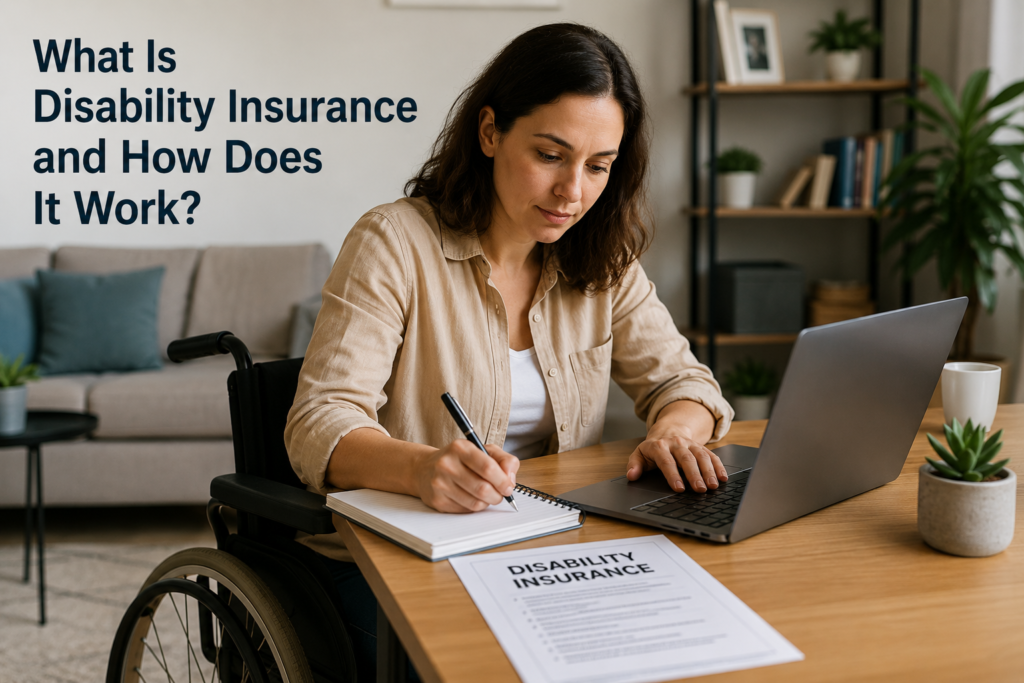
Your ability to earn an income is one of your most valuable financial assets. If an illness or injury prevents you from working for weeks, months, or even years, disability insurance can help replace a portion of your lost income and provide financial stability while you recover.
Whether you’re an employee, self-employed professional, freelancer, or business owner, disability insurance can help cover everyday living expenses when you’re unable to work due to a covered disability.
This guide explains how disability insurance works, the different types of coverage, what is typically covered, common exclusions, costs, and how to choose the right policy.
Table of Contents
What Is Disability Insurance?
Why Disability Insurance Is Important
How Disability Insurance Works
Types of Disability Insurance
What Disability Insurance Covers
Common Exclusions
Factors Affecting Premiums
Choosing the Right Policy
Tips Before Buying
Frequently Asked Questions
Conclusion
What Is Disability Insurance?
Disability insurance is a type of insurance that replaces part of your income if you become unable to work because of a covered illness or injury. Instead of paying medical bills, disability insurance focuses on helping you maintain your financial stability while you’re unable to earn a paycheck.
Benefit payments are generally made according to the policy’s waiting period, benefit period, coverage amount, and other policy terms.
Why Disability Insurance Is Important
A temporary or long-term disability can affect anyone. Without a steady income, it may become difficult to pay for:
Mortgage or rent
Utility bills
Groceries
Loan payments
Insurance premiums
Education expenses
Everyday household costs
Disability insurance helps reduce financial stress so you can focus on your recovery.
How Disability Insurance Works
After purchasing a policy, you pay regular premiums to keep your coverage active. If a covered disability prevents you from working, you file a claim with your insurer. Once the claim is approved and the waiting period has been satisfied, eligible benefits are paid according to your policy.
Important policy features include:
Monthly benefit amount
Waiting (elimination) period
Benefit period
Definition of disability
Coverage limits
Policy exclusions
Types of Disability Insurance
Short-Term Disability Insurance
Short-term disability insurance provides income replacement for temporary disabilities. Benefits typically begin after a short waiting period and may continue for several weeks or months, depending on the policy.
It may help if you’re recovering from:
Surgery
Pregnancy and childbirth (subject to policy terms)
Serious illness
Temporary injuries
Long-Term Disability Insurance
Long-term disability insurance provides benefits when a disability lasts beyond the short-term coverage period. Depending on the policy, benefits may continue for several years or until retirement age.
This coverage is often designed for illnesses or injuries that significantly affect your ability to work over an extended period.
Employer-Sponsored Disability Insurance
Some employers offer disability insurance as part of an employee benefits package. Coverage, benefit amounts, and eligibility vary by employer.
Individual Disability Insurance
Individuals can purchase disability insurance directly from an insurer. These policies may provide greater flexibility and can remain in force even if you change employers, provided premiums continue to be paid.
What Disability Insurance Typically Covers
Depending on the policy, disability insurance may provide income replacement when a covered illness or injury prevents you from performing your job.
Covered conditions may include:
Serious illnesses
Accidental injuries
Certain surgeries requiring recovery time
Musculoskeletal disorders
Some mental health conditions (subject to policy terms)
Other qualifying medical conditions
Coverage varies by insurer and policy.
Common Exclusions
Many disability insurance policies do not cover:
Self-inflicted injuries
Fraudulent claims
Disabilities caused by criminal activity
Cosmetic procedures not medically necessary
Pre-existing conditions (subject to policy terms)
Disabilities specifically excluded by the policy
Always review your policy wording carefully before purchasing coverage.
Factors That Affect Premiums
The cost of disability insurance depends on several factors, including:
Age
Occupation
Income
Health status
Lifestyle
Smoking status
Benefit amount selected
Waiting period
Benefit period
Optional policy riders
Higher-risk occupations generally have higher premiums.
How to Choose the Right Disability Insurance
When comparing policies, consider:
Monthly income replacement percentage
Waiting period
Length of benefit payments
Definition of disability
Financial strength of the insurer
Optional riders
Policy exclusions
Overall affordability
Choosing coverage that aligns with your income, profession, and financial responsibilities can help provide meaningful protection.
Tips Before Buying Disability Insurance
Compare quotes from multiple insurers.
Read the policy wording carefully.
Understand waiting periods and benefit durations.
Review exclusions and limitations.
Choose a benefit amount that fits your financial needs.
Reassess your coverage after major life or career changes.
Frequently Asked Questions
Is disability insurance the same as health insurance?
No. Health insurance helps pay for medical expenses, while disability insurance helps replace part of your income if you’re unable to work due to a covered disability.
Do I need disability insurance if I have savings?
Savings can help, but a prolonged disability may significantly reduce your financial resources. Disability insurance can provide ongoing income replacement during a covered period of disability.
What is the difference between short-term and long-term disability insurance?
Short-term disability insurance generally provides benefits for temporary disabilities lasting weeks or months, while long-term disability insurance is intended for disabilities that continue for a longer period, subject to policy terms.
Can self-employed individuals purchase disability insurance?
Yes. Many insurers offer individual disability insurance policies designed for self-employed professionals, freelancers, and business owners.
Is disability insurance worth it?
For many people, disability insurance can provide valuable financial protection by helping replace lost income during a covered disability. The value of coverage depends on your financial obligations, savings, occupation, and personal circumstances.
Conclusion
Disability insurance plays an important role in protecting your financial future by helping replace a portion of your income if you’re unable to work due to a covered illness or injury. Whether you rely on employer-sponsored coverage or purchase an individual policy, understanding benefit periods, waiting periods, exclusions, and coverage options can help you make an informed decision.
Review your financial needs regularly and compare policies carefully to choose coverage that supports your long-term financial security.
Running a business involves opportunities, growth, and risk. Whether you operate a small local shop, an online store, a consulting firm, or a large company, unexpected events such as lawsuits, property damage, cyberattacks, employee injuries, or natural disasters can lead to significant financial losses. Business insurance helps reduce these risks by providing financial protection against covered events.
Choosing the right insurance policy is an important part of responsible business management. The right coverage can help your business recover after unexpected incidents, maintain customer confidence, and comply with legal or contractual requirements.
This guide explains what business insurance is, how it works, the most common types of coverage, what it typically includes and excludes, and how to choose the right policy for your business.
Table of Contents
What Is Business Insurance?
Why Business Insurance Matters
How Business Insurance Works
Types of Business Insurance
What Business Insurance Covers
Common Exclusions
How Much Business Insurance Costs
Factors That Affect Premiums
How to Choose the Right Coverage
Tips to Reduce Business Risks
Frequently Asked Questions
Conclusion
What Is Business Insurance?
Business insurance is a collection of insurance policies designed to protect businesses from financial losses resulting from accidents, lawsuits, property damage, theft, cyber incidents, and other covered risks.
Rather than relying on a single policy, businesses often combine different types of insurance based on their industry, size, number of employees, assets, and operational risks.
Why Business Insurance Matters
Business insurance helps:
Protect business assets
Reduce financial losses
Cover legal expenses
Maintain business continuity
Meet contractual obligations
Increase customer and investor confidence
Protect employees
Support long-term business growth
How Business Insurance Works
A business owner purchases a policy and pays a premium. If a covered event occurs, the business files a claim. After reviewing the claim, the insurer may pay covered repair costs, legal expenses, medical costs, settlements, or replacement costs according to the policy terms, limits, and deductible.
Types of Business Insurance
General Liability Insurance
Protects against third-party claims involving:
Bodily injury
Property damage
Advertising injury
Legal defense costs
Commercial Property Insurance
Helps protect business property, including:
Buildings
Equipment
Furniture
Inventory
Computers
Office contents
Professional Liability Insurance
Also called Errors & Omissions (E&O) insurance, this coverage helps protect businesses that provide professional services against claims of negligence, mistakes, or failure to deliver promised services.
Workers’ Compensation Insurance
Provides benefits for employees who suffer work-related injuries or illnesses, where required by law.
Coverage may include:
Medical expenses
Lost wages
Rehabilitation
Disability benefits
Business Interruption Insurance
Helps replace lost income if a covered event temporarily interrupts normal business operations.
Commercial Auto Insurance
Covers vehicles owned or used by the business for covered accidents, liability, and certain physical damage.
Cyber Insurance
Helps businesses recover from covered cyber incidents such as:
Data breaches
Ransomware attacks
Network interruptions
Customer notification costs
Cyber investigations
Product Liability Insurance
Designed for businesses that manufacture, distribute, or sell products. It can help protect against claims that a product caused injury or property damage.
What Business Insurance Typically Covers
Depending on the policy, business insurance may cover:
Property damage
Fire and smoke damage
Theft and vandalism
Certain weather-related losses
Third-party injuries
Legal defense costs
Employee injuries (under applicable policies)
Equipment damage
Business interruption
Cyber incidents (with cyber coverage)
Common Exclusions
Most business insurance policies do not cover:
Intentional acts
Fraud
Criminal activity
Normal wear and tear
Maintenance issues
Certain floods or earthquakes unless separately insured
Undisclosed business activities
Losses exceeding policy limits
Always review policy documents carefully to understand exclusions.
How Much Business Insurance Costs
Premiums vary based on several factors, including:
Industry
Business size
Annual revenue
Number of employees
Claims history
Business location
Property value
Coverage limits
Deductible amount
Type of operations
Higher-risk businesses generally pay higher premiums than businesses with lower exposure to claims.
How to Choose the Right Business Insurance
Consider:
Your industry risks
Business assets
Number of employees
Legal requirements
Client contract requirements
Cybersecurity exposure
Budget
Potential financial impact of a major claim
Comparing multiple quotes and reviewing coverage annually can help ensure your insurance continues to meet your business needs.
Tips to Reduce Business Risks
Maintain workplace safety programs.
Train employees regularly.
Secure business data with strong cybersecurity practices.
Keep equipment properly maintained.
Document business assets.
Review insurance policies every year.
Develop a business continuity plan.
Report incidents promptly.
Frequently Asked Questions
Is business insurance required by law?
Some types, such as workers’ compensation or commercial auto insurance, may be legally required depending on your location and business operations. Other coverages may be optional but highly recommended.
Do small businesses need insurance?
Yes. Even small businesses can face lawsuits, property damage, cyber incidents, or customer injury claims that could result in significant financial losses.
What is a Business Owner’s Policy (BOP)?
A Business Owner’s Policy typically combines general liability insurance and commercial property insurance into one policy, often with optional additional coverages.
Does business insurance cover cyberattacks?
Generally, cyber incidents are covered only if your business has a cyber insurance policy or endorsement that includes those risks.
How often should I review my business insurance?
Review your coverage at least once a year and whenever your business experiences significant changes, such as expansion, hiring employees, purchasing equipment, or adding new services.
Conclusion
Business insurance plays a critical role in protecting companies from unexpected financial losses. Whether you’re a startup, a growing small business, or an established enterprise, the right combination of insurance policies can help safeguard your assets, employees, customers, and long-term success.
By understanding your risks, comparing coverage options, and reviewing your policies regularly, you can build an insurance strategy that supports your business as it grows.
Choosing the right auto insurance policy is one of the most important financial decisions a driver can make. While every state has minimum insurance requirements, those minimums may not provide enough protection if you’re involved in a serious accident. This is where understanding the difference between liability insurance and full coverage auto insurance becomes essential.
Liability insurance helps pay for injuries and property damage you cause to others, but it doesn’t cover repairs to your own vehicle. Full coverage includes liability insurance along with collision and comprehensive coverage, offering broader protection against accidents, theft, vandalism, weather damage, and other covered events.
Whether you’re purchasing your first policy, replacing an older vehicle, or reviewing your current coverage, this guide explains the differences, benefits, costs, and factors to consider so you can make an informed decision.
Table of Contents
What Is Liability Auto Insurance?
What Is Full Coverage Auto Insurance?
Liability vs. Full Coverage at a Glance
What Liability Insurance Covers
What Full Coverage Includes
Key Differences
Cost Comparison
Pros and Cons
When Liability Insurance Makes Sense
When Full Coverage Is Worth It
Factors to Consider Before Choosing
Common Misconceptions
Tips to Save Money
Frequently Asked Questions
Conclusion
What Is Liability Auto Insurance?
Liability insurance is the basic level of auto insurance required in most U.S. states. It protects you financially if you are responsible for causing injuries or property damage to another person in an accident.
A standard liability policy includes:
Bodily Injury Liability (BI)
Property Damage Liability (PD)
These coverages help pay for medical expenses, legal costs, lost wages, and repairs to another person’s property if you’re found at fault.
What Liability Insurance Does Not Cover
Liability insurance does not cover:
Damage to your own vehicle
Theft of your vehicle
Fire or flood damage
Vandalism
Hail or storm damage
Collision with animals
Personal medical expenses (unless covered separately)
What Is Full Coverage Auto Insurance?
Although many people refer to it as a single policy, full coverage is actually a combination of multiple coverages that provide broader financial protection.
A typical full coverage policy includes:
Liability Insurance
Collision Coverage
Comprehensive Coverage
Many insurers also offer optional coverages, including:
Uninsured/Underinsured Motorist Coverage
Personal Injury Protection (PIP)
Medical Payments (MedPay)
Rental Car Reimbursement
Roadside Assistance
Gap Insurance
Liability vs. Full Coverage at a Glance
Feature
Liability Insurance
Full Coverage
Meets minimum legal requirement
✅
✅
Covers injuries to others
✅
✅
Covers damage to other vehicles
✅
✅
Covers your vehicle after an accident
❌
✅
Covers theft
❌
✅
Covers vandalism
❌
✅
Covers fire and flood
❌
✅
Covers weather damage
❌
✅
Covers falling objects
❌
✅
Covers animal collisions
❌
✅
Higher premium
❌
✅
What Liability Insurance Covers
Bodily Injury Liability
If you cause an accident that injures another person, bodily injury liability may help pay for:
Emergency medical care
Hospital bills
Rehabilitation
Lost income
Legal defense costs
Funeral expenses (where applicable)
Property Damage Liability
This coverage helps pay for damage to another person’s property, including:
Vehicles
Buildings
Fences
Utility poles
Mailboxes
Road signs
Landscaping
What Full Coverage Includes
Liability Coverage
Provides protection if you’re responsible for injuries or property damage to others.
Collision Coverage
Collision insurance pays to repair or replace your vehicle after:
Hitting another vehicle
Striking a tree or pole
Rolling over
Hitting a guardrail
Single-vehicle accidents
Collision coverage usually requires you to pay a deductible before insurance contributes toward repairs.
Comprehensive Coverage
Comprehensive insurance covers non-collision events such as:
Theft
Fire
Flooding
Hailstorms
Falling branches
Vandalism
Broken windshields (subject to policy terms)
Animal collisions
Like collision coverage, comprehensive insurance typically includes a deductible.
Key Differences
Protection for Your Vehicle
Liability insurance does not pay for damage to your own vehicle. Full coverage helps pay for repairs or replacement after covered losses.
Cost
Liability insurance generally costs less because it offers limited protection. Full coverage is more expensive due to the additional collision and comprehensive coverage.
Lender Requirements
If you finance or lease your vehicle, your lender will often require collision and comprehensive coverage until the loan or lease ends.
Financial Risk
With liability-only insurance, you may have to pay the full cost of repairing or replacing your vehicle after an at-fault accident. Full coverage can reduce that financial burden for covered losses.
Cost Comparison
Several factors influence the cost of both liability and full coverage insurance, including:
Driver age
Driving history
Vehicle make and model
Vehicle value
ZIP code
Annual mileage
Coverage limits
Deductible amount
Claims history
Credit-based insurance score (where permitted)
Although full coverage has higher premiums, it may provide better financial value for newer or higher-value vehicles.
Pros and Cons
Liability Insurance
Advantages
Lower premiums
Meets minimum legal requirements
Good option for older vehicles with low market value
Easy to understand
Disadvantages
No protection for your own vehicle
No coverage for theft or weather-related damage
Higher out-of-pocket expenses after an accident
Full Coverage Insurance
Advantages
Protects your own vehicle
Covers theft and vandalism
Covers many natural disasters and weather events
Often required for financed or leased vehicles
Provides greater peace of mind
Disadvantages
Higher monthly premiums
Deductibles apply to collision and comprehensive claims
May not be cost-effective for older vehicles with very low value
When Liability Insurance Makes Sense
Liability-only coverage may be appropriate if:
Your vehicle has a low market value.
You own your vehicle outright.
You can afford to replace your vehicle if necessary.
You drive infrequently.
You’re looking for the lowest insurance premium.
When Full Coverage Is Worth It
Full coverage is often recommended if:
Your vehicle is new or relatively new.
You lease or finance your vehicle.
Your car has a high resale value.
You live in an area with high theft or severe weather risks.
You rely on your vehicle for work or daily commuting.
You want broader financial protection.
Factors to Consider Before Choosing
Vehicle Value
If your vehicle would be expensive to repair or replace, full coverage may be worthwhile.
Budget
Choose a policy that balances affordability with adequate protection.
Deductibles
Higher deductibles generally reduce premiums but increase your out-of-pocket costs when filing a claim.
Local Risks
Consider theft rates, weather patterns, wildlife, and traffic conditions in your area.
Personal Financial Situation
If paying for major vehicle repairs would create financial hardship, broader coverage may be a sensible investment.
Common Misconceptions
Myth: Full coverage covers everything.
Reality: Every policy includes exclusions, coverage limits, and deductibles.
Myth: Liability insurance protects my own car.
Reality: Liability insurance only covers injuries and property damage you cause to others.
Myth: Older cars never need full coverage.
Reality: Depending on the vehicle’s value and your financial circumstances, maintaining collision and comprehensive coverage may still make sense.
Tips to Save on Auto Insurance
Compare quotes from multiple insurers.
Bundle home and auto insurance if available.
Maintain a clean driving record.
Increase your deductible if you can comfortably afford it.
Ask about discounts for safe driving, anti-theft devices, low mileage, or completing defensive driving courses.
Review your policy each year to ensure your coverage still meets your needs.
Frequently Asked Questions
Is liability insurance required by law?
Most U.S. states require drivers to carry at least a minimum amount of liability insurance. Requirements vary by state.
Does full coverage include liability insurance?
Yes. Full coverage generally includes liability insurance along with collision and comprehensive coverage.
Is full coverage mandatory?
Not usually. However, lenders commonly require collision and comprehensive coverage for financed or leased vehicles.
Can I switch from full coverage to liability only?
Yes, if you own your vehicle outright and no lender requires additional coverage. Before making the change, consider your vehicle’s value and your ability to pay for repairs or replacement yourself.
What is the difference between collision and comprehensive insurance?
Collision coverage pays for damage to your vehicle resulting from a collision with another vehicle or object. Comprehensive coverage pays for damage caused by events other than collisions, such as theft, fire, vandalism, or severe weather.
Conclusion
Liability and full coverage auto insurance serve different purposes, and the best choice depends on your individual circumstances. Liability insurance satisfies legal requirements and protects you financially if you cause injury or property damage to others. Full coverage expands that protection by helping pay for repairs or replacement of your own vehicle after covered accidents, theft, vandalism, or weather-related events.
When deciding between the two, consider your vehicle’s value, whether it’s financed or leased, your budget, and the level of financial protection you need. Comparing quotes, understanding policy terms, and reviewing your coverage regularly can help ensure you have the right protection at the right price.
Life insurance is one of the most important financial tools for protecting your family’s future. Although many people know they need life insurance, understanding how it works and choosing the right policy can feel overwhelming, especially for first-time buyers.
Whether you’re starting a family, buying a home, or planning for the future, life insurance can provide financial support to your loved ones if you’re no longer there to provide for them.
This beginner’s guide explains the basics of life insurance, the different types of policies, how coverage works, and what to consider before purchasing a plan.
What Is Life Insurance?
Life insurance is a contract between you and an insurance company. In exchange for regular premium payments, the insurer agrees to pay a death benefit to your chosen beneficiary if you pass away while the policy is active.
The money received by your beneficiaries can help cover expenses such as:
Mortgage or rent payments
Household expenses
Children’s education
Outstanding debts
Funeral expenses
Daily living costs
The amount paid depends on the policy’s coverage limit and terms.
Why Is Life Insurance Important?
Life insurance provides financial protection for the people who depend on you.
It can help your family:
Replace lost income
Maintain their standard of living
Pay outstanding loans
Cover education expenses
Meet future financial goals
Reduce financial stress during a difficult time
For many families, life insurance offers peace of mind by helping ensure loved ones have financial support when it’s needed most.
How Does Life Insurance Work?
The process is simple.
Step 1: Choose a Policy
Select the type and amount of life insurance coverage that fits your financial needs.
Step 2: Apply for Coverage
The insurance company reviews your application. Depending on the policy, you may be asked to answer health questions or complete a medical exam.
Step 3: Pay Premiums
Regular premium payments keep your policy active.
Step 4: Policy Remains Active
As long as premiums are paid and the policy conditions are met, your coverage continues according to the policy terms.
Step 5: Beneficiary Receives the Benefit
If the insured person passes away while covered, the insurance company pays the policy’s death benefit to the designated beneficiary, subject to the policy’s terms and conditions.
Types of Life Insurance
There are two main types of life insurance, and each is designed to meet different financial goals.
Term Life Insurance
Term life insurance provides coverage for a specific period, such as 10, 20, or 30 years. If the insured person passes away during the policy term, the beneficiary receives the death benefit.
Benefits:
Lower premiums
Simple to understand
Ideal for young families
Suitable for temporary financial needs
Permanent Life Insurance
Permanent life insurance provides lifelong coverage as long as premiums are paid. Some policies also build cash value over time.
Common types include:
Whole Life Insurance
Universal Life Insurance
Variable Life Insurance
Permanent policies generally have higher premiums but may offer long-term financial benefits.
How Much Life Insurance Do You Need?
The right amount of coverage depends on your personal and financial situation.
Consider:
Annual income
Outstanding mortgage
Household expenses
Children’s education
Existing debts
Future financial goals
Many financial professionals suggest choosing coverage that can adequately support your family’s needs, but the right amount varies for each individual.
Key Life Insurance Terms
Premium
The amount you pay to keep your policy active.
Death Benefit
The amount paid to your beneficiary after your death if the policy is in force.
Beneficiary
The person or organization you choose to receive the policy proceeds.
Policy Term
The length of time your insurance policy remains active.
Cash Value
A savings component available in certain permanent life insurance policies that may grow over time.
Factors That Affect Life Insurance Premiums
Insurance companies consider several factors when determining your premium.
These commonly include:
Age
Health
Medical history
Lifestyle habits
Smoking status
Occupation
Coverage amount
Policy type
Buying life insurance at a younger age often results in lower premiums.
Tips for Choosing the Right Life Insurance
Compare quotes from several insurers.
Choose coverage based on your financial goals.
Review policy exclusions.
Select a beneficiary carefully.
Review your policy after major life events.
Keep your beneficiary information up to date.
Common Mistakes to Avoid
Avoid these common mistakes:
Waiting too long to buy coverage.
Purchasing insufficient coverage.
Choosing a policy based only on price.
Forgetting to update beneficiaries.
Not reviewing your policy regularly.
Frequently Asked Questions
Is life insurance worth it?
For many people, life insurance provides valuable financial protection for loved ones in the event of an unexpected death.
Can I have more than one life insurance policy?
Yes. Some individuals choose multiple policies to meet different financial needs.
Do I need a medical exam?
Some policies require one, while others offer simplified or no-exam options, depending on the insurer and policy.
Can I change my beneficiary?
In most cases, yes. Contact your insurance provider to update your beneficiary information.
When is the best time to buy life insurance?
Many people find it beneficial to purchase life insurance when they are younger and in good health, as premiums may be lower.
Final Thoughts
Life insurance is an important part of a long-term financial plan. Understanding the different policy types, knowing how much coverage you need, and comparing options can help you make an informed decision.
Whether you’re protecting your family, covering future expenses, or planning for financial security, choosing the right life insurance policy can provide lasting peace of mind.
Buying your first home is a major milestone and one of the biggest financial investments you’ll ever make. Along with choosing the right property and arranging a mortgage, protecting your home with homeowners insurance is an important step.
If you’re buying a home for the first time, insurance terms like deductibles, dwelling coverage, and liability protection can seem confusing. This guide explains the basics of homeowners insurance in simple language so you can understand how it works and choose coverage with confidence.
What Is Homeowners Insurance?
Homeowners insurance is a policy that helps protect your home and personal belongings against certain covered risks. It can also provide liability protection if someone is injured on your property or if you accidentally cause damage to someone else’s property.
Coverage varies by insurer and policy, so it’s important to review the details before purchasing insurance.
Why Do First-Time Buyers Need Homeowners Insurance?
Your home is likely one of your most valuable assets. Unexpected events such as fire, storms, theft, or vandalism can result in costly repairs or replacements.
Homeowners insurance may help:
Protect your home’s structure
Cover personal belongings
Provide liability protection
Help pay for temporary living expenses if your home becomes uninhabitable due to a covered event
Offer financial peace of mind
Many mortgage lenders also require homeowners insurance before approving a home loan.
How Does Homeowners Insurance Work?
Understanding the process makes buying insurance much easier.
Choose a Policy
Compare different insurance companies and select a policy that fits your home’s value, location, and budget.
Pay Your Premium
You’ll pay a monthly or annual premium to keep your coverage active.
File a Claim
If a covered event damages your home or belongings, you can file a claim with your insurance company.
Claim Review
The insurance company reviews your claim and determines what is covered according to your policy.
Receive Payment
Once approved, the insurer helps pay covered repair or replacement costs, subject to deductibles and policy limits.
What Does Homeowners Insurance Typically Cover?
Most standard homeowners insurance policies include several types of protection.
Dwelling Coverage
Helps repair or rebuild your home’s structure after covered damage.
Other Structures Coverage
Protects detached garages, sheds, fences, and similar structures on your property.
Personal Property Coverage
Helps replace personal belongings such as furniture, electronics, clothing, and appliances if they’re damaged or stolen due to covered events.
Liability Coverage
Provides financial protection if you’re legally responsible for injuries or property damage involving another person.
Additional Living Expenses (ALE)
If a covered event makes your home temporarily uninhabitable, this coverage may help pay for hotel stays, meals, and other eligible temporary living expenses.
What Isn’t Usually Covered?
Most standard policies have exclusions.
Common exclusions may include:
Flood damage
Earthquake damage
Normal wear and tear
Pest damage
Intentional damage
Certain high-value collectibles unless additional coverage is purchased
Separate insurance may be available for some excluded risks.
Factors That Affect Insurance Costs
Insurance companies consider several factors when calculating premiums.
These may include:
Home location
Home age
Construction materials
Roof condition
Replacement cost
Claims history
Deductible amount
Coverage limits
Security systems
Tips for First-Time Homebuyers
Before purchasing homeowners insurance:
Compare quotes from multiple insurers.
Understand what your policy covers.
Choose a deductible you can comfortably afford.
Create a home inventory with photos.
Review coverage annually.
Ask about available discounts.
Common Mistakes to Avoid
Many first-time buyers make avoidable mistakes.
Avoid:
Buying coverage based only on price.
Underinsuring your home.
Ignoring policy exclusions.
Forgetting to update coverage after renovations.
Not keeping records of valuable belongings.
Conclusion
Homeowners insurance is an important part of protecting your investment and your financial future. Understanding how policies work, what they cover, and what they exclude can help first-time buyers make informed decisions.
Health insurance can seem complicated when you first encounter terms such as premium, deductible, copayment, coinsurance, network, formulary, and out-of-pocket maximum.
But the basic idea is straightforward.
You pay for health insurance so that you don’t have to bear the full financial cost of covered medical care on your own.
Depending on your plan, insurance can help pay for services such as:
Doctor visits
Hospital treatment
Emergency care
Prescription medications
Laboratory tests
Preventive services
Mental health services
Maternity care
Rehabilitation
You will usually still pay part of the cost through premiums and various forms of cost sharing.
Understanding how those pieces work together can help you compare plans and avoid expensive surprises.
What Is Health Insurance?
Health insurance is an agreement between you and an insurance company or health plan.
You generally pay a:
Premium
to maintain coverage.
In exchange, the plan pays some or all of the cost of covered healthcare according to its rules.
Those rules determine:
Which services are covered
Which doctors and hospitals you can use
How much you pay
How much the insurer pays
and:
Whether authorization is required before certain treatments.
The important word is:
Covered.
Having health insurance doesn’t mean every medical service will automatically be paid for.
Why Do You Need Health Insurance?
Healthcare can become expensive very quickly.
Routine doctor appointments may be manageable without insurance.
A major medical event is different.
An unexpected:
Hospitalization
Surgery
Cancer diagnosis
Serious accident
or:
Chronic illness
can potentially generate substantial medical expenses.
Health insurance helps transfer part of that financial risk from you to the health plan.
It can also provide access to negotiated provider rates and preventive services.
The 5 Health Insurance Terms Every Beginner Should Know
Understanding these five concepts makes health insurance much easier.
1. Premium
Your premium is the amount you pay to maintain your insurance coverage.
Suppose your premium is:
$400 per month.
Over one year, that equals:
$4,800.
You generally pay the premium whether or not you use medical services.
Think of the premium as:
The price of keeping your insurance active.
If you have employer-sponsored insurance, your employer may pay part of the premium.
2. Deductible
A deductible is the amount you generally pay for covered healthcare services subject to the deductible before your plan begins paying its share.
Suppose your annual deductible is:
$2,000.
You may need to pay the first $2,000 of applicable covered services yourself before the insurer starts sharing those costs.
But this doesn’t mean:
“Insurance pays nothing until I spend $2,000.”
Some services may be covered before the deductible.
HealthCare.gov notes that many plans cover certain services before the deductible is met, and Marketplace plans cover specified preventive services before you meet the deductible.
3. Copayment
A copayment, commonly called a:
Copay,
is a fixed amount you pay for a covered healthcare service.
For example:
Primary-care visit: $30
Specialist: $60
Prescription: $15
The actual amounts depend on your plan.
Some plans provide copays before you satisfy the deductible, while other services may require the deductible first.
4. Coinsurance
Coinsurance is different from a copay.
Instead of paying a fixed dollar amount, you pay:
a percentage.
Suppose your plan has:
20% coinsurance.
After satisfying the applicable deductible, imagine you receive a covered service with an allowed cost of:
$1,000.
You might pay:
$200
while the insurer pays:
$800.
HealthCare.gov describes coinsurance as the percentage of the cost of a covered healthcare service you pay after you’ve paid your deductible.
5. Out-of-Pocket Maximum
This is one of the most important numbers on your insurance plan.
The out-of-pocket maximum limits how much you must pay during a plan year for applicable covered in-network healthcare through:
Deductibles
Copayments
and:
Coinsurance.
Once you reach the applicable limit, the health plan generally pays 100% of covered in-network benefits for the remainder of the plan year.
For 2026 Marketplace plans, the out-of-pocket limit cannot exceed:
$10,600 for an individual
or:
$21,200 for a family.
Individual plans can have lower limits.
What Doesn’t Count Toward the Out-of-Pocket Maximum?
This is important.
HealthCare.gov explains that the out-of-pocket maximum generally doesn’t include:
Monthly premiums
Services your plan doesn’t cover
Out-of-network care
and:
Costs above the plan’s allowed amount in applicable circumstances.
So:
$10,600
shouldn’t be interpreted as the maximum amount you could possibly spend on every healthcare-related expense.
Now suppose you unexpectedly need expensive medical treatment.
You may first pay applicable expenses toward your:
$2,000 deductible.
After satisfying the deductible, your insurer may begin sharing eligible costs.
You could then pay:
20% coinsurance
until your eligible in-network cost sharing reaches:
$7,500.
At that point, the plan generally pays 100% of covered in-network benefits for the remainder of that plan year.
This example is simplified. Actual plan designs can involve copays, separate prescription deductibles and other rules.
Your Premium Doesn’t Count Toward Your Deductible
Beginners frequently confuse these two numbers.
Suppose you pay:
$400 per month
for insurance.
After five months, you’ve paid:
$2,000 in premiums.
If your plan also has a:
$2,000 deductible,
you haven’t necessarily satisfied that deductible.
Premiums maintain your coverage.
Deductibles represent a separate type of cost sharing for applicable healthcare services.
What Is a Health Insurance Network?
Health insurance companies establish relationships with:
Doctors
Hospitals
Laboratories
Imaging centers
Pharmacies
and other healthcare providers.
These participating providers make up the plan’s:
Network.
Providers inside the network are:
In network.
Providers outside it are:
Out of network.
This distinction can have major financial consequences.
Why Staying In Network Matters
Insurance companies negotiate prices with participating providers.
Using an in-network provider generally gives you access to the plan’s negotiated arrangements.
Out-of-network treatment can result in:
Higher costs
or, depending on your plan:
No coverage for non-emergency care.
Before scheduling expensive treatment, verify network status directly with your insurer or plan.
Don’t rely solely on a doctor’s office saying:
“We accept your insurance.”
That phrase doesn’t necessarily mean:
“We’re in network for your specific plan.”
HMO vs. PPO vs. EPO
You’ll frequently see these abbreviations while shopping for insurance.
HMO — Health Maintenance Organization
An HMO typically emphasizes care through a defined provider network.
Depending on the plan, you may need:
a primary-care physician
and referrals for certain specialist services.
Non-emergency out-of-network coverage is generally limited.
PPO — Preferred Provider Organization
A PPO generally provides more flexibility when choosing providers.
You can typically receive care from:
In-network
and:
Out-of-network providers,
although out-of-network care usually costs substantially more.
PPO premiums can also be higher.
EPO — Exclusive Provider Organization
An EPO combines aspects of other network models.
You generally must use the plan’s provider network except for applicable emergency situations, but specialist-referral requirements may be less restrictive than some HMO designs.
Always check the specific plan because rules vary.
What Is a High-Deductible Health Plan?
A High-Deductible Health Plan, or HDHP, generally combines:
Higher upfront cost sharing
with potentially:
Lower premiums.
Some qualifying HDHPs can be paired with a:
Health Savings Account (HSA).
An HSA allows eligible individuals to save money for qualified medical expenses with federal tax advantages.
However:
Not every plan with a large deductible is automatically HSA-eligible.
The plan must satisfy IRS requirements.
What Does Health Insurance Cover?
Exact coverage varies.
However, ACA-compliant individual and small-group plans generally cover categories of essential health benefits including:
Ambulatory patient services
Emergency services
Hospitalization
Pregnancy, maternity and newborn care
Mental health and substance-use-disorder services
Prescription drugs
Rehabilitative and habilitative services
Laboratory services
Preventive and wellness services
and:
Pediatric services.
HealthCare.gov provides the federal overview of these essential health benefit categories.
Specific services and coverage details can vary by state and plan.
Preventive Care Is Special
ACA-compliant health plans generally cover specified preventive services without requiring:
Copayment
or:
Coinsurance
when applicable requirements are met and care is received appropriately.
Depending on age, sex and risk factors, covered preventive services can include certain:
Vaccinations
Cancer screenings
Blood-pressure screening
Cholesterol screening
and other preventive care.
HealthCare.gov maintains information about covered preventive services.
What Is a Prescription Formulary?
Your health plan may not cover every prescription drug in exactly the same way.
The list of covered medications is called a:
Formulary.
Plans frequently organize medications into:
Drug tiers.
A simplified structure might look like:
Tier 1 — Preferred generic drugs
Tier 2 — Preferred brand drugs
Tier 3 — Non-preferred drugs
Specialty tier — High-cost specialty medications
Higher tiers can involve higher copays or coinsurance.
If you regularly take prescription medication, always check the formulary before selecting a plan.
What Is Prior Authorization?
Some healthcare services require approval from the insurance company before treatment.
This is called:
Prior Authorization.
It can potentially apply to:
Certain medications
Advanced imaging
Surgeries
Medical equipment
Specialty treatment
and other services.
A doctor’s recommendation doesn’t automatically mean:
your insurance company has authorized coverage.
Before an expensive planned procedure, confirm whether prior authorization is required and whether it has been approved.
What Is Step Therapy?
Step therapy is another insurance utilization-management tool.
A plan may require you to try:
Treatment A
before it covers:
Treatment B.
This frequently appears in prescription-drug coverage.
Exceptions or appeals may be available depending on your plan and circumstances.
Employer Health Insurance
Many Americans receive health insurance through an employer.
The employer may pay a substantial portion of the:
premium.
The employee pays the remaining amount, often through payroll deductions.
Employer plans can sometimes provide attractive coverage because of:
Employer premium contributions
Group purchasing
and:
Convenient enrollment.
But don’t automatically choose the lowest-premium option offered at work.
Compare:
Deductible
Copays
Coinsurance
Network
Prescription coverage
and:
Out-of-pocket maximum.
Marketplace Health Insurance
Individuals who don’t receive suitable employer-sponsored coverage may purchase insurance through the ACA Marketplace or applicable state Marketplace.
Depending on household income and other eligibility requirements, some consumers may qualify for:
Premium tax credits
and potentially:
Cost-sharing reductions.
Because subsidy rules and eligibility can change, use official Marketplace information when determining what assistance is available to you.
How much might you need to spend before applicable cost sharing begins?
3. Copays and Coinsurance
What will you pay when actually using healthcare?
4. Out-of-Pocket Maximum
How much financial exposure could you face for applicable covered in-network services?
5. Provider Network
Are your preferred:
Doctors
Hospitals
and:
Specialists
in network?
6. Prescription Coverage
Are your medications covered, and at what cost?
A Simple Plan Comparison
Imagine you’re choosing between two hypothetical plans.
Feature
Plan A
Plan B
Monthly Premium
$550
$350
Annual Premium
$6,600
$4,200
Deductible
$1,000
$4,000
Coinsurance
20%
20%
Out-of-Pocket Maximum
$5,500
$8,000
Which is better?
You can’t tell from the premium alone.
Plan B saves:
$2,400 annually
in premiums.
But it exposes you to a much larger deductible and out-of-pocket maximum.
Someone expecting significant medical care might prefer Plan A.
Someone with minimal healthcare use and substantial emergency savings might find Plan B attractive.
Calculate Your Worst-Case Cost
One useful comparison is:
Annual Premium + Out-of-Pocket Maximum
For Plan A:
$6,600 + $5,500 = $12,100
For Plan B:
$4,200 + $8,000 = $12,200
Suddenly, the plans look much closer under a high-use scenario.
Remember that this calculation doesn’t include expenses excluded from the out-of-pocket maximum, such as premiums and certain non-covered or out-of-network expenses.
How Much Should You Keep in Emergency Savings?
There’s no universal number.
But at minimum, look at your:
deductible
and:
out-of-pocket maximum.
Ask:
Could I afford this amount if I unexpectedly became seriously ill?
If your plan has a $5,000 deductible and you have $200 in savings, your low monthly premium may be hiding substantial financial risk.
People eligible for HSAs may also use those accounts to build dedicated healthcare savings.
What Happens When You Receive a Medical Bill?
The process generally looks something like this:
1. You receive healthcare.
2. The provider submits a claim.
3. Your insurer processes the claim.
4. You receive an Explanation of Benefits.
5. The provider sends you a bill for the applicable patient responsibility.
The:
Explanation of Benefits (EOB)
isn’t itself necessarily a bill.
It explains how the insurance company processed the claim.
What If Your Insurance Claim Is Denied?
Don’t automatically pay a large disputed amount without understanding what happened.
First determine why the claim was denied.
Possible reasons include:
Incorrect billing information
Missing prior authorization
Out-of-network treatment
Medical-necessity determination
Excluded service
or:
Experimental/investigational classification.
Many health-plan decisions can be appealed.
HealthCare.gov provides information on consumers’ internal appeal rights and, for qualifying cases, external review.
Common Beginner Mistakes
Choosing Only by Premium
A cheap plan can have a very large deductible.
Ignoring the Network
Your preferred doctor may not participate.
Ignoring Prescription Coverage
Your medication may be expensive or not covered under the plan.
Assuming Everything Is Covered After the Deductible
You may still owe copays or coinsurance.
Confusing the Deductible With the Out-of-Pocket Maximum
They’re different numbers.
Going Out of Network Without Checking
This can substantially increase costs.
Ignoring Prior Authorization
A medically recommended treatment can still encounter insurance coverage problems if plan requirements aren’t followed.
Health Insurance Checklist for Beginners
Before enrolling in any plan, check:
Monthly premium
Annual premium
Individual deductible
Family deductible
Primary-care copay
Specialist copay
Emergency-room costs
Coinsurance
Out-of-pocket maximum
Provider network
Preferred hospitals
Prescription formulary
Prescription deductible
Mental-health benefits
Maternity benefits if relevant
Prior-authorization requirements
Out-of-network rules
HSA eligibility
Employer HSA contributions
Marketplace subsidy eligibility
Coverage effective date
Then ask yourself:
Could I comfortably afford this plan both when I’m healthy and when I’m sick?
Frequently Asked Questions
What is health insurance in simple words?
Health insurance is coverage that helps pay for eligible medical expenses in exchange for premiums and other cost sharing according to the plan’s rules.
What is the most important number when choosing insurance?
There isn’t one. At minimum, compare the premium, deductible, copays/coinsurance and out-of-pocket maximum together.
What is a deductible?
It’s the amount you generally pay for applicable covered services before your plan starts sharing those costs. Some services can be covered before the deductible.
What’s the difference between a copay and coinsurance?
A copay is generally a fixed amount, such as $30. Coinsurance is a percentage, such as 20%.
Does insurance become free after I meet my deductible?
Usually not. You may continue paying copays or coinsurance until reaching your applicable out-of-pocket maximum.
Is the cheapest health insurance plan best?
Not necessarily. A low-premium plan may have a high deductible, high coinsurance or a restrictive provider network.
Can health insurance deny a claim?
Yes. Claims can be denied for various reasons. Depending on the reason and type of coverage, you may have appeal rights.
Is health insurance worth having if I’m healthy?
Health insurance protects against unpredictable medical expenses as well as helping provide access to covered preventive and routine care. Even healthy people can experience unexpected illnesses or accidents.
Final Thoughts
Health insurance becomes much easier to understand once you stop focusing on dozens of technical terms and concentrate on four fundamental questions:
1. What do I pay every month?
That’s your:
Premium.
2. What might I pay before insurance begins sharing certain costs?
That’s primarily your:
Deductible.
3. What do I pay while insurance shares the cost?
That’s generally:
Copays and Coinsurance.
4. What’s my limit for applicable covered in-network cost sharing?
If you understand those pieces, you’re already equipped to make a much more informed health insurance decision than someone who simply chooses the plan with the lowest monthly premium.
The goal isn’t necessarily to find the plan with the:
lowest deductible
or:
lowest premium.
It’s to find coverage that provides an appropriate balance between:
what you can afford every month and what you could afford during a serious medical event.
Disclaimer
This article is for informational and educational purposes only and isn’t medical, financial, tax, legal or insurance advice. Health insurance costs, benefits, eligibility, networks and coverage requirements vary by insurer, employer, state and individual circumstances. Review official plan documents and consult qualified professionals when appropriate.
Most people rely on their income to pay for everyday expenses such as housing, food, healthcare, transportation, and bills. But what happens if an illness or injury prevents you from working for weeks, months, or even years?
Disability insurance is designed to provide financial support by replacing a portion of your income if you’re unable to work because of a covered disability. While it doesn’t replace your full salary, it can help you manage essential expenses during your recovery.
This guide explains how disability insurance works, the different types of coverage, and what to consider before choosing a policy.
What Is Disability Insurance?
Disability insurance is a type of insurance that provides income replacement if a covered illness or injury prevents you from working. Instead of paying medical bills, disability insurance helps replace part of your lost earnings so you can continue paying everyday living expenses.
Coverage depends on the terms, conditions, and exclusions of your policy.
Why Is Disability Insurance Important?
An unexpected medical condition can affect anyone. If you’re unable to earn an income, even for a short period, paying monthly expenses can become difficult.
Disability insurance may help you:
Replace part of your lost income
Pay rent or mortgage payments
Cover utility bills
Buy groceries
Continue paying insurance premiums
Maintain financial stability during recovery
How Does Disability Insurance Work?
The process is generally straightforward.
Step 1: Purchase a Policy
Choose a disability insurance policy that matches your occupation, income, and financial needs.
Step 2: Pay Premiums
You pay regular premiums to keep your policy active.
Step 3: Become Unable to Work
If you experience a covered illness or injury that prevents you from working, you may be eligible to file a claim.
Step 4: Waiting Period
Most policies include an elimination or waiting period before benefits begin. The waiting period can vary depending on the policy.
Step 5: Receive Benefits
If your claim is approved, you’ll receive benefit payments according to your policy terms until you recover or your benefit period ends.
Types of Disability Insurance
Short-Term Disability Insurance
Short-term disability insurance typically provides income replacement for temporary disabilities lasting several weeks or months.
It may be suitable for:
Surgery recovery
Pregnancy-related leave
Temporary injuries
Certain illnesses
Long-Term Disability Insurance
Long-term disability insurance provides benefits for longer-lasting disabilities that may continue for several years or until retirement age, depending on the policy.
It may help individuals facing serious illnesses or permanent disabilities.
What Does Disability Insurance Usually Cover?
Coverage varies by insurer, but disability insurance may provide benefits if a covered condition prevents you from performing your job.
Examples include:
Serious injuries
Chronic illnesses
Certain surgeries
Mental health conditions (when covered)
Neurological disorders
Recovery after major accidents
Always review your policy for covered conditions, waiting periods, and exclusions.
What Is Usually Not Covered?
Policies differ, but common exclusions may include:
Self-inflicted injuries
Disabilities resulting from criminal activity
Certain pre-existing conditions
Cosmetic procedures
Disabilities not meeting policy definitions
Read your policy carefully before purchasing coverage.
How Much Disability Insurance Do You Need?
The right amount depends on your:
Monthly income
Living expenses
Existing savings
Employer benefits
Family responsibilities
Other income sources
Many policies replace only a percentage of your income rather than your entire salary.
Factors That Affect Disability Insurance Premiums
Several factors influence premium costs, including:
Age
Occupation
Income
Health history
Smoking status
Waiting period
Benefit period
Coverage amount
Riskier occupations generally have higher premiums.
Tips Before Buying Disability Insurance
Compare policies from different insurers.
Understand waiting periods.
Review benefit periods.
Check policy exclusions.
Consider your monthly expenses.
Review your coverage regularly as your career changes.
Common Mistakes to Avoid
Many people purchase disability insurance without understanding the details.
Avoid these mistakes:
Choosing the cheapest policy without comparing benefits.
Ignoring waiting periods.
Underestimating your income replacement needs.
Forgetting to review policy exclusions.
Not updating coverage after major life changes.
Frequently Asked Questions
Is disability insurance the same as health insurance?
No. Health insurance helps cover medical expenses, while disability insurance helps replace a portion of your income if you’re unable to work due to a covered disability.
Do self-employed people need disability insurance?
Many self-employed individuals consider disability insurance because they may not have employer-provided income protection.
Can I receive benefits if I can work part-time?
Some policies may offer partial disability benefits, depending on their terms and conditions.
How long do disability benefits last?
Benefit periods vary by policy. Some provide benefits for a few months, while others may continue for several years or until retirement age.
Final Thoughts
Disability insurance can play an important role in protecting your financial well-being if an illness or injury prevents you from working. Understanding how coverage works, comparing available options, and choosing a policy that fits your needs can help you prepare for unexpected situations with greater confidence.
Starting and running a small business is exciting, but it also comes with responsibilities and risks. Whether you own a retail shop, restaurant, consulting firm, online store, or home-based business, unexpected events can affect your operations and finances.
Business insurance helps reduce the financial impact of covered incidents, allowing you to focus on growing your business with greater confidence. This guide explains the basics of business insurance, the most common types of coverage, and how to choose a policy that fits your business needs.
What Is Business Insurance?
Business insurance is a collection of insurance policies designed to help protect businesses from financial losses caused by covered events. Depending on your policy, it may help cover property damage, legal claims, employee-related risks, business interruptions, and other unexpected situations.
Different businesses face different risks, so the right coverage depends on factors such as your industry, company size, location, and daily operations.
Why Business Insurance Is Important
Even a small incident can lead to significant expenses. Business insurance provides financial protection that can help your company recover from unexpected challenges.
Some common benefits include:
Helps protect business assets.
May reduce the financial impact of lawsuits.
Helps businesses recover after covered property damage.
Supports business continuity after certain covered events.
Can improve credibility with customers and business partners.
Some policies may be required by law or contracts.
Common Types of Business Insurance
General Liability Insurance
General liability insurance helps protect your business if a third party claims bodily injury, property damage, or personal injury resulting from your business operations.
This is one of the most common types of coverage for small businesses.
Professional Liability Insurance
Also known as Errors and Omissions (E&O) insurance, professional liability insurance may help protect businesses that provide professional advice or services if a client claims financial loss due to errors, omissions, or negligence.
Commercial Property Insurance
Commercial property insurance helps protect business-owned buildings, equipment, furniture, inventory, and other physical assets from covered risks such as fire, theft, or certain weather-related events.
Business Interruption Insurance
If your business must temporarily close because of a covered event, business interruption insurance may help replace lost income and assist with certain ongoing operating expenses during the recovery period.
Workers’ Compensation Insurance
Workers’ compensation insurance generally provides benefits to employees who suffer work-related injuries or illnesses. Requirements vary depending on your location and business type.
Commercial Auto Insurance
If your business owns or regularly uses vehicles for work, commercial auto insurance may help cover accidents, vehicle damage, and liability related to business driving.
Cyber Insurance
Businesses increasingly rely on digital systems to manage operations and customer information. Cyber insurance may help businesses recover from certain cyber incidents, including data breaches, ransomware attacks, and other technology-related risks, depending on the policy.
How to Choose the Right Business Insurance
Choosing the right coverage starts with understanding your business risks.
Consider the following:
The type of products or services you provide.
The number of employees you have.
Whether customers visit your business location.
The value of your equipment and inventory.
Whether you own or lease business property.
Your industry’s legal or contractual insurance requirements.
Working with a licensed insurance professional can help you identify coverage that matches your business needs.
Factors That Affect Business Insurance Costs
Insurance premiums vary because every business is different.
Common factors include:
Business industry
Annual revenue
Number of employees
Business location
Claims history
Coverage limits
Deductible amount
Value of business property
Businesses with higher risks generally pay higher premiums than businesses with lower risk profiles.
Tips for Small Business Owners
To get the most value from your business insurance:
Compare quotes from multiple insurers.
Understand what each policy covers.
Review exclusions carefully.
Update your coverage as your business grows.
Keep detailed business records and inventory.
Review your insurance annually.
Common Mistakes to Avoid
Many business owners purchase insurance without fully understanding their risks.
Avoid these common mistakes:
Buying only the minimum required coverage.
Ignoring professional liability risks.
Underestimating the value of business property.
Not reviewing policies after business growth.
Assuming personal insurance covers business activities.
Frequently Asked Questions
Do all small businesses need business insurance?
Insurance needs vary depending on your business type, location, and legal requirements. Many businesses benefit from having appropriate insurance coverage.
Is business insurance legally required?
Some types of insurance, such as workers’ compensation or commercial auto insurance, may be required depending on local laws and business operations.
Can home-based businesses need insurance?
Yes. Many home-based businesses have risks that may not be covered under a standard homeowners insurance policy.
How often should I review my policy?
It’s a good idea to review your insurance annually or whenever your business experiences significant changes.
Final Thoughts
Business insurance is an important part of managing risk for any small business. While no policy can prevent unexpected events, the right coverage can help reduce financial setbacks and support business continuity.
Review your business risks regularly, compare available options, and choose coverage that aligns with your company’s current and future needs.
Buying your first car is an exciting milestone, but it also comes with new responsibilities. One of the most important is purchasing auto insurance. If you’ve never bought insurance before, the different coverage options and insurance terms can seem confusing.
This guide explains how auto insurance works in simple language, helping first-time drivers understand the basics and make informed decisions.
What Is Auto Insurance?
Auto insurance is a contract between you and an insurance company. In exchange for paying a premium, the insurer agrees to help cover certain financial losses if your vehicle is involved in a covered event, such as an accident, theft, or weather-related damage.
The type and amount of coverage depend on the policy you choose.
Why First-Time Drivers Need Auto Insurance
For most drivers, auto insurance is more than just a legal requirement—it also provides financial protection.
A policy may help pay for:
Damage to your vehicle
Damage you cause to another person’s property
Medical expenses after a covered accident
Legal costs related to covered claims
Theft or damage from certain non-collision events
Without insurance, you could be responsible for paying these costs yourself.
How Auto Insurance Works
Understanding the basic process can make insurance easier to manage.
1. Choose Your Coverage
Select the coverages that match your driving needs, budget, and state requirements.
2. Receive a Quote
Insurance companies calculate your premium based on several factors, including:
Age
Driving experience
Vehicle type
Location
Annual mileage
Driving history
3. Purchase the Policy
Once you accept a quote, your policy becomes active after payment and the effective date.
4. Drive Safely
Your insurance remains active as long as premiums are paid on time.
5. File a Claim if Needed
If a covered accident or loss occurs, notify your insurance company promptly. The insurer will review the claim and determine what is covered under your policy.
Common Types of Auto Insurance Coverage
Liability Coverage
Liability insurance helps pay for injuries or property damage you cause to others in a covered accident. In many places, this is the minimum coverage required by law.
Collision Coverage
Collision insurance helps pay to repair or replace your vehicle after a collision with another vehicle or object, regardless of who is at fault.
Comprehensive Coverage
Comprehensive insurance covers many non-collision events, such as:
Theft
Fire
Vandalism
Falling objects
Certain weather-related damage
Personal Injury Protection (PIP) or Medical Payments
Depending on your location, these coverages may help pay medical expenses for you and your passengers after a covered accident.
Uninsured or Underinsured Motorist Coverage
This coverage may help if you’re involved in an accident with a driver who has little or no insurance.
What Is a Deductible?
A deductible is the amount you agree to pay out of pocket before your insurance coverage applies to certain claims.
For example:
Repair cost: $2,000
Deductible: $500
Your insurance may cover the remaining eligible amount after the deductible, subject to your policy terms.
Factors That Affect Your Premium
Insurance companies consider many factors when determining your premium.
These often include:
Your age
Driving experience
Driving record
Vehicle make and model
ZIP code
Annual mileage
Coverage limits
Deductible amount
Every insurer uses its own rating methods, so premiums can vary.
Tips for First-Time Drivers
If you’re buying auto insurance for the first time, these tips may help:
Compare quotes from multiple insurers.
Understand what each policy covers.
Don’t focus only on the lowest price.
Choose a deductible you can comfortably afford.
Ask about available discounts.
Review your policy every year.
Common Mistakes to Avoid
Many first-time drivers make avoidable mistakes, including:
Buying coverage without comparing options.
Choosing limits that may not meet their needs.
Ignoring deductibles.
Not reading policy exclusions.
Forgetting to update the insurer after major life changes.
Frequently Asked Questions
Is auto insurance required?
Requirements vary by location. In many places, drivers must carry at least a minimum amount of liability insurance.
Can first-time drivers get affordable insurance?
Yes. Comparing quotes, maintaining a clean driving record, and asking about discounts may help reduce costs.
What happens if I miss a payment?
Missing payments could result in cancellation or a lapse in coverage, depending on your insurer’s terms.
Should I buy full coverage?
The right coverage depends on your vehicle, financial situation, and personal needs. Consider reviewing your options carefully before making a decision.
Final Thoughts
Auto insurance is designed to help protect you financially when unexpected events occur. As a first-time driver, understanding how policies work, what they cover, and how premiums are calculated can help you choose coverage with confidence.
Take time to compare policies, understand the details, and select protection that fits your needs and budget.
Lending your car to a friend, family member, or colleague may seem harmless, but what happens if they get into an accident while driving your vehicle? Many car owners assume the driver’s insurance will automatically cover the damages, but in most cases, insurance follows the vehicle rather than the driver.
Understanding how auto insurance works when someone else is behind the wheel can help you avoid unexpected financial and legal complications.
Does Insurance Cover Someone Else Driving Your Car?
In many situations, yes. Most standard auto insurance policies provide coverage when you give someone permission to drive your vehicle.
This is known as permissive use, which means the driver had your consent to use the car. If an accident occurs, your insurance policy is generally the first source of coverage.
However, the exact outcome depends on:
Your insurance policy terms
The driver’s insurance coverage
The cause of the accident
State laws where the accident occurred
Who Pays for the Damage?
Your Insurance Usually Pays First
When someone else causes an accident while driving your car with permission, your auto insurance policy is typically considered the primary coverage.
This may include:
Property damage liability
Bodily injury liability
Collision coverage (if purchased)
Medical payments coverage (if included)
The claim is generally filed under your policy because the vehicle is insured under your name.
The Driver’s Insurance May Help
If damages exceed your policy limits, the driver’s personal auto insurance may act as secondary coverage in some situations.
This can provide additional protection when accident costs are substantial.
What If the Driver Was at Fault?
If the person driving your car caused the accident:
Property Damage Claims
Your liability coverage may pay for damage to the other person’s vehicle or property.
Injury Claims
Your insurance may cover medical expenses and injury-related claims from other parties involved in the accident.
Deductibles Apply
If your vehicle needs repairs under collision coverage, you may be responsible for paying the deductible.
When Coverage May Be Denied
Insurance companies may deny coverage in certain circumstances.
Unauthorized Use
If someone took your vehicle without permission, your insurer may refuse coverage under permissive-use provisions.
Excluded Drivers
Some policies specifically exclude certain individuals from driving the insured vehicle.
If an excluded driver causes an accident, coverage may be limited or denied.
Illegal Activities
Coverage issues can arise if the driver was:
Driving under the influence
Participating in illegal activities
Operating the vehicle without a valid license
Will Your Insurance Rates Increase?
Possibly.
Even if you were not driving, an at-fault accident involving your insured vehicle can affect your claims history.
Insurance companies evaluate:
Claim amounts
Accident severity
Driver history
Overall risk profile
As a result, premiums may increase when your policy renews.
What Should You Do After the Accident?
If someone else crashes your car:
1. Ensure Safety
Check for injuries and call emergency services if necessary.
2. Contact Law Enforcement
A police report can help document the accident details.
3. Gather Information
Collect:
Driver’s license details
Insurance information
Vehicle details
Witness contact information
Photos of the accident scene
4. Notify Your Insurance Company
Report the accident as soon as possible and provide accurate information about who was driving.
5. Cooperate During the Investigation
Your insurer may request statements, documents, and additional details before processing the claim.
Tips Before Letting Someone Drive Your Car
Before handing over your keys:
Verify the driver has a valid license.
Confirm they are experienced and responsible.
Understand your insurance policy’s permissive-use rules.
Review coverage limits and exclusions.
Avoid lending your vehicle to high-risk drivers.
A few minutes of preparation can prevent significant financial headaches later.
Final Thoughts
When someone else drives your car and causes an accident, your auto insurance policy is often the first line of protection. While coverage is commonly available when you give permission, every policy contains specific terms, limits, and exclusions.
Before allowing others to use your vehicle, review your insurance policy carefully and understand how coverage applies. Knowing the rules ahead of time can help protect both your finances and your peace of mind if an accident occurs.