

Introduction
Every business faces risks, regardless of its size or industry. A customer could slip and fall at your office, an employee might accidentally damage a client’s property, or your advertising could unintentionally lead to a legal dispute. Even a single lawsuit can result in significant legal expenses, settlements, and business disruption.
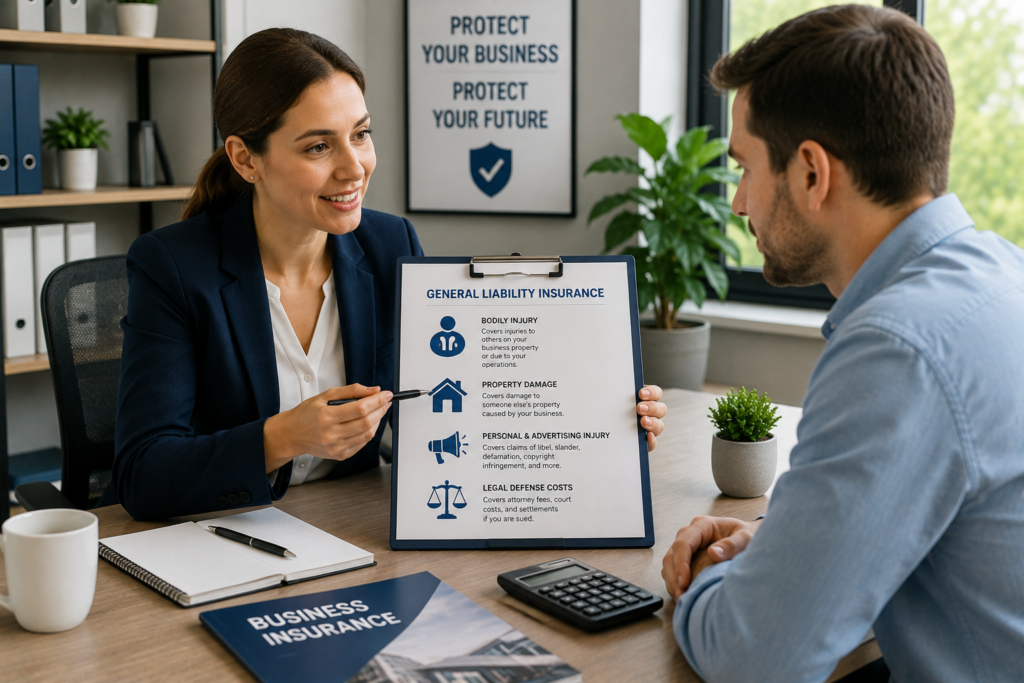
General liability insurance is one of the most common types of business insurance because it helps protect businesses against many third-party claims involving bodily injury, property damage, and personal or advertising injury. While it doesn’t cover every business risk, it forms the foundation of a comprehensive commercial insurance program.
This guide explains what general liability insurance is, what it covers, common exclusions, factors that affect premiums, and how to determine whether your business needs this important coverage.
Table of Contents
- What Is General Liability Insurance?
- Why Businesses Need It
- What General Liability Insurance Covers
- What It Doesn’t Cover
- Who Should Buy General Liability Insurance?
- Factors Affecting Insurance Costs
- How to Choose the Right Coverage
- Tips for Reducing Liability Risks
- Frequently Asked Questions
- Conclusion
What Is General Liability Insurance?
General liability insurance, often called Commercial General Liability (CGL) insurance, helps protect businesses against certain third-party claims arising from everyday business operations.
Instead of covering damage to your own business property, this policy focuses primarily on claims made by customers, vendors, visitors, or other third parties.
If a covered claim occurs, the policy may help pay legal defense costs, settlements, judgments, and other eligible expenses up to the policy limits.
Why Businesses Need General Liability Insurance
Unexpected accidents can happen in almost any business environment. Without insurance, legal expenses alone may place significant financial pressure on a company.
General liability insurance helps businesses:
- Protect against third-party injury claims.
- Cover certain property damage claims.
- Pay eligible legal defense costs.
- Meet client or contract requirements.
- Improve business credibility.
- Reduce financial risk.
- Support long-term business continuity.
Many landlords, government agencies, and commercial clients require proof of general liability insurance before signing contracts or lease agreements.
What General Liability Insurance Covers
Although coverage varies by insurer and policy, general liability insurance commonly includes the following protections.
Bodily Injury Liability
If a customer, vendor, or visitor is injured on your business premises or because of your business operations, the policy may help cover:
- Medical expenses
- Legal defense costs
- Court judgments
- Settlement costs
For example, if a customer slips on a wet floor in your retail store and files a lawsuit, general liability insurance may provide coverage according to the policy terms.
Property Damage Liability
If your business accidentally damages someone else’s property, the policy may help pay repair or replacement costs.
Examples include:
- Damaging a client’s office equipment during installation
- Breaking windows while performing contracted work
- Accidental property damage during business operations
Personal and Advertising Injury
General liability insurance may also cover certain claims involving:
- Libel
- Slander
- Defamation
- Copyright infringement in advertising
- Advertising-related injuries covered by the policy
Coverage varies depending on policy wording.
Legal Defense Costs
Even if a lawsuit is ultimately unsuccessful, defending a legal claim can be expensive.
General liability insurance may help pay:
- Attorney fees
- Court costs
- Investigation expenses
- Expert witness costs
- Settlement negotiations
Subject to policy terms and limits.
Products and Completed Operations
Businesses that manufacture, distribute, install, or sell products may receive coverage for certain claims involving products after they have been sold or completed.
For example, if a customer alleges that a product caused bodily injury or property damage, this coverage may apply depending on the circumstances and policy terms.
What General Liability Insurance Does Not Cover
General liability insurance has important exclusions.
Common exclusions include:
- Employee injuries (typically covered by workers’ compensation insurance)
- Professional errors or negligence
- Intentional acts
- Fraudulent or criminal conduct
- Auto accidents involving business vehicles
- Damage to your own business property
- Cyberattacks and data breaches
- Employment-related claims
- Pollution liability (unless specifically endorsed)
Businesses often purchase additional insurance policies to cover these risks.
Who Should Buy General Liability Insurance?
Almost every business can benefit from general liability insurance, including:
- Retail stores
- Restaurants
- Contractors
- Consultants
- Marketing agencies
- Freelancers
- Professional service providers
- Manufacturers
- Technology companies
- E-commerce businesses
- Small business owners
- Home-based businesses
Even businesses that operate primarily online may face liability claims.
Factors That Affect Insurance Premiums
Insurance companies consider several factors when determining premiums, including:
- Industry type
- Business size
- Annual revenue
- Number of employees
- Claims history
- Business location
- Coverage limits
- Deductible amount
- Type of operations
- Level of business risk
Higher-risk industries generally pay higher premiums than lower-risk businesses.
How to Choose the Right General Liability Insurance
Selecting the right general liability insurance policy involves more than comparing prices. Consider the scope of your business operations and the financial impact a liability claim could have on your company.
Evaluate Your Business Risks
Consider questions such as:
- Do customers regularly visit your business?
- Do employees work at client locations?
- Do you sell products?
- Do you advertise your services?
- Could your work accidentally damage someone else’s property?
Understanding your daily operations helps determine the level of protection your business may need.
Choose Appropriate Coverage Limits
Every policy has maximum coverage limits.
When selecting limits, consider:
- Business size
- Industry requirements
- Contract obligations
- Potential lawsuit costs
- Value of projects performed
- Customer expectations
Higher limits generally increase premiums but provide greater financial protection.
Review Policy Exclusions
Before purchasing a policy, carefully review exclusions and limitations.
You may need additional coverage such as:
- Professional Liability Insurance
- Commercial Property Insurance
- Cyber Insurance
- Workers’ Compensation Insurance
- Commercial Auto Insurance
- Employment Practices Liability Insurance (EPLI)
Combining multiple policies can provide broader business protection.
Tips for Reducing Liability Risks
Insurance is only one part of managing business risk. Businesses can also reduce claims by implementing good safety practices.
Recommended steps include:
- Maintain a clean and safe workplace.
- Train employees on safety procedures.
- Display warning signs when hazards exist.
- Document accidents immediately.
- Inspect equipment regularly.
- Follow industry regulations.
- Maintain accurate customer records.
- Review contracts before signing.
- Keep insurance policies up to date.
Preventing claims is often less expensive than managing them after they occur.
Common Mistakes Businesses Make
Many business owners unintentionally leave themselves exposed to liability by making avoidable mistakes.
Common examples include:
Purchasing the Lowest-Cost Policy
The cheapest policy may not provide adequate coverage for your business risks.
Ignoring Policy Exclusions
Understanding what is not covered is just as important as understanding what is covered.
Not Updating Coverage
As your business grows, your insurance needs may change.
Review your policy after:
- Hiring employees
- Opening new locations
- Purchasing equipment
- Expanding services
- Increasing annual revenue
Assuming General Liability Covers Everything
General liability insurance is only one component of a comprehensive business insurance program. Many businesses also need property, cyber, professional liability, or workers’ compensation coverage.
Frequently Asked Questions
Is general liability insurance required by law?
General liability insurance is generally not legally required, but many landlords, clients, lenders, and government contracts require businesses to carry it before doing business.
Does general liability insurance cover employee injuries?
No. Employee injuries are generally covered under workers’ compensation insurance rather than general liability insurance.
Does general liability insurance cover professional mistakes?
No. Claims arising from professional advice, errors, or negligence are typically covered by professional liability (Errors & Omissions) insurance instead.
Do freelancers and small businesses need general liability insurance?
Yes. Even freelancers and small businesses can face lawsuits involving bodily injury, property damage, or advertising-related claims.
Does general liability insurance cover cyberattacks?
No. Cyber incidents and data breaches are generally covered under a separate cyber insurance policy rather than a standard general liability policy.
Conclusion
General liability insurance is one of the most important forms of protection for businesses of all sizes. It helps safeguard your company against many third-party claims involving bodily injury, property damage, and advertising-related injuries that could otherwise lead to significant legal and financial consequences.
While no single insurance policy covers every business risk, general liability insurance serves as the foundation of a strong commercial insurance strategy. Reviewing your coverage regularly and combining it with other business insurance policies can help protect your company as it grows.