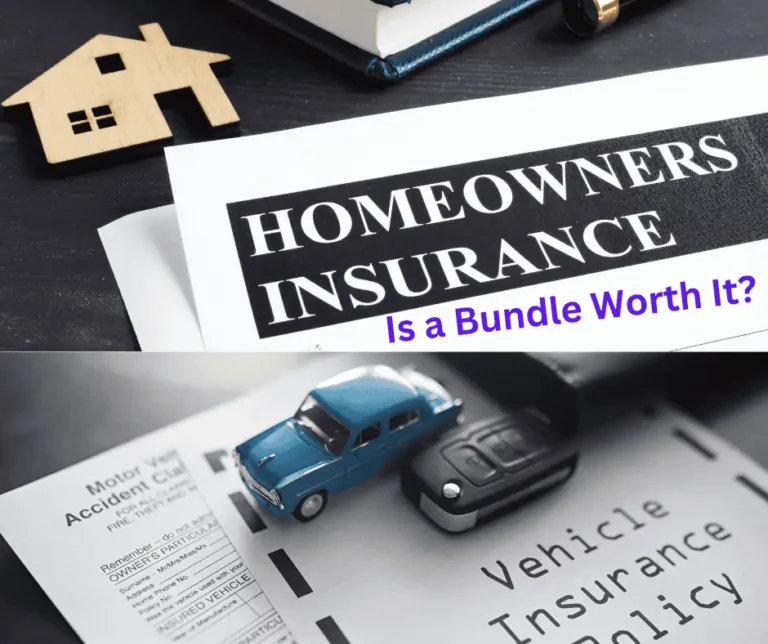

When people hear the phrase “bundle your home and auto insurance,” they usually think about one thing:
The discount.
And that’s understandable.
Many insurance companies encourage customers to purchase multiple policies from the same insurer by offering a multi-policy or account discount.
New York’s Department of Financial Services confirms that some insurers offer discounts on both auto and homeowners coverage when the policies are purchased from the same company.
But saving money isn’t the only possible advantage.
Keeping your home and auto policies with the same insurance company may also make your insurance easier to manage, simplify renewals, reduce the number of companies you need to contact, and sometimes make it easier to understand your overall insurance protection.
At the same time, bundling has limitations.
The biggest mistake is assuming:
Bundle = automatically cheaper.
Sometimes two separate insurers can provide better coverage at a lower combined price.
Here’s how to determine whether bundling actually makes sense.
What Does Bundling Insurance Mean?
Insurance bundling simply means purchasing more than one type of insurance from the same insurer or insurance group.
The most common combination is:
Auto Insurance + Homeowners Insurance
But other combinations may include:
- Auto + Renters
- Auto + Condo
- Auto + Umbrella
- Home + Umbrella
- Auto + Home + Umbrella
- Multiple vehicles + Home
Depending on the insurer, this may be called:
- Multi-policy discount
- Multi-line discount
- Account discount
- Package discount
- Bundle discount
New York regulators specifically identify multi-policy/account discounts among the discounts available from some auto insurers.
Benefit #1: You May Receive a Multi-Policy Discount
This is the most obvious benefit.
Suppose you currently pay:
Auto Insurance
$1,600 per year
Home Insurance
$1,500 per year
Total:
$3,100
Now suppose an insurer offers both policies together for:
$2,750
Potential annual difference:
$350
That’s meaningful.
But this is only an example.
There is no universal bundling discount.
The amount can depend on:
- Insurance company
- State
- Home
- Vehicle
- Claims history
- Coverage
- Driver profile
- Other rating factors
New York DFS advises consumers to consider bundling because some insurers provide discounts for maintaining multiple policies with the company.
Benefit #2: The Discount May Apply to More Than One Policy
This is something consumers sometimes overlook.
A multi-policy arrangement doesn’t necessarily mean the saving appears only on the auto policy.
Depending on the insurer’s program, discounts may apply to:
Auto
and/or
Homeowners
coverage.
New York DFS specifically notes that some insurers offer multi-policy discounts that reduce premiums on both auto and homeowners coverage.
That means you should look at your total household insurance cost, not simply the discount shown on one policy.
Benefit #3: Insurance Becomes Easier to Manage
Imagine having:
Auto — Company A
Home — Company B
Umbrella — Company C
Now you have three:
- Accounts
- Renewal dates
- Billing systems
- Mobile apps
- Customer-service departments
- Sets of documents
Bundling may simplify this.
You might have one insurer handling several major household risks.
That can make it easier to:
- Find policy documents
- Update contact information
- Review renewals
- Track premiums
- Contact customer service
- Discuss overall insurance needs
Convenience doesn’t have a direct dollar value, but it can still be useful.
Benefit #4: It Can Make Your Annual Insurance Review Easier
Insurance shouldn’t necessarily be something you buy once and ignore for ten years.
Your circumstances change.
You may:
- Buy a new car
- Renovate your home
- Add a teenage driver
- Build a garage
- Install a pool
- Buy expensive personal property
- Start working from home
If several policies are with one insurer or handled by the same agent, reviewing your overall protection can be simpler.
Instead of discussing one policy in isolation, you can ask:
“Does my overall insurance still make sense?”
That can help identify both coverage gaps and unnecessary duplication.
Benefit #5: Liability Coverage Can Be Easier to Review
Both home and auto policies can contain important liability protection.
Auto liability may protect you against qualifying claims arising from a vehicle accident.
Homeowners personal liability may protect you against certain claims arising from incidents such as someone being injured on your property.
For households with substantial assets, an umbrella liability policy may provide additional liability protection above underlying policies, subject to its terms.
Having the underlying home and auto policies within the same insurance relationship may make it easier to review:
- Liability limits
- Required underlying limits
- Umbrella eligibility
- Potential coverage gaps
This doesn’t mean bundling automatically increases your liability coverage.
It simply can make coordination easier.
Benefit #6: Adding an Umbrella Policy May Be More Convenient
Suppose you have:
$500,000 auto liability
and
$500,000 homeowners liability.
You decide you want additional liability protection through a personal umbrella policy.
An umbrella insurer may require certain minimum underlying limits on your home and auto policies.
If the same insurance company handles all three policies, confirming those limits can sometimes be simpler.
You might ultimately have:
Home + Auto + Umbrella
within one insurance relationship.
But umbrella eligibility and requirements vary significantly, so ask the insurer exactly what underlying coverage is required.
Benefit #7: Fewer Companies to Contact After Certain Events
Consider a severe storm.
A tree falls across your driveway.
It damages:
- Your garage
- Your car
Now potentially two types of coverage are involved.
Damage to the building may involve your homeowners insurance.
Damage to your vehicle may involve comprehensive auto insurance, depending on the circumstances and policy.
If home and auto are with different insurers, you may need to communicate with two companies.
If they’re with the same insurer, you may still have separate claims and separate deductibles, but having one company involved may simplify communication.
That’s an important distinction.
Does Bundling Mean One Deductible?
Usually, you should not assume this.
Bundling two policies doesn’t necessarily turn them into one giant insurance contract.
Your home policy can have its own deductible.
Your auto policy can have separate:
- Collision deductible
- Comprehensive deductible
Suppose a storm damages your roof and your car.
You could potentially have:
Home claim deductible
plus
Auto comprehensive deductible
depending on the policies.
Some insurers may offer special features for multi-policy customers, but these vary.
Always ask.
Benefit #8: One Agent May Understand More of Your Insurance Picture
If you use an insurance agent, bundling can allow that agent to see more of your household insurance needs.
For example, you tell the agent:
“We just bought a new SUV.”
That conversation may prompt questions about:
- Auto coverage
- Liability limits
- Umbrella insurance
Or you say:
“We’re adding a swimming pool.”
That could trigger a discussion about homeowners liability and umbrella protection.
Insurance decisions can overlap.
Having someone review multiple policies together can make those relationships easier to identify.
Benefit #9: Renters Can Bundle Too
You don’t need to own a house to benefit from multi-policy pricing.
Renters insurance can potentially be bundled with auto insurance.
California’s Department of Insurance specifically advises renters with auto, life, business, boat or other insurance to consider using the same insurer where doing so could qualify them for a multi-policy discount.
Renters insurance can cover qualifying:
- Personal property losses
- Personal liability
- Loss of use
- Medical payments to others
depending on the policy.
So renters should compare:
Auto alone
versus
Auto + Renters
rather than assuming bundling is only for homeowners.
Benefit #10: Bundling Can Encourage a Broader Coverage Review
People often shop for insurance one policy at a time.
They think:
“How cheap can I make my auto insurance?”
Then separately:
“How cheap can I make my home insurance?”
That approach can overlook how risks connect.
For example, someone with significant savings and assets might have:
$100,000 auto liability
but
$500,000 homeowners liability.
Reviewing both policies together could prompt a useful conversation about whether those limits make sense.
Bundling itself doesn’t fix underinsurance.
But it can create an opportunity to review your household protection more holistically.
The Biggest Bundling Myth
Here’s the myth:
“Bundling is always cheaper.”
It isn’t.
Consider this hypothetical comparison.
Insurer A — Bundle
Auto:
$1,450
Home:
$1,700
After applicable bundle savings:
$2,850 total
Separate Insurers
Company B Auto:
$1,200
Company C Home:
$1,450
Total:
$2,650
Separate policies save:
$200 per year
Even though the bundled insurer advertised a discount.
Why?
Because a discount is applied to the insurer’s underlying price.
A large percentage discount on an expensive base premium can still produce a higher final price.
Compare the Final Price, Not the Discount Percentage
Suppose:
Company A
Base combined price:
$4,000
Bundle discount:
15%
Final price:
$3,400
Companies B + C
No bundle discount.
Combined price:
$3,100
Which is cheaper?
The unbundled option.
The word “discount” shouldn’t determine your decision.
The final cost should.
Compare Coverage Too
Price isn’t enough.
Suppose Bundle A costs:
$2,900
while separate policies cost:
$3,050.
The bundle saves:
$150
But then you discover the cheaper home policy has:
- Higher deductible
- Lower personal-property limits
- Different roof settlement provisions
And the auto policy has:
- Higher Collision deductible
- Lower liability limits
- No rental reimbursement
Now the $150 difference means something very different.
Compare:
Price + coverage + deductibles + exclusions
rather than price alone.
Home Insurance Differences Can Be Huge
This deserves particular attention.
Two homeowners policies may differ in how they cover:
- Roofs
- Water damage
- Personal property
- Additional living expenses
- Jewelry
- Sewer backup
- Ordinance/law costs
- Replacement cost
- Liability
- Wind/hail
A bundle discount isn’t worth much if you’re unknowingly accepting a major coverage gap.
Read the home quote carefully.
Auto Insurance Differences Matter Too
Match the following when comparing bundled and separate options:
- Bodily injury liability
- Property damage liability
- Uninsured motorist coverage
- Underinsured motorist coverage
- PIP/medical payments where applicable
- Collision deductible
- Comprehensive deductible
- Rental reimbursement
- Roadside assistance
If the limits aren’t equivalent, you’re not making a fair comparison.
Bundling Doesn’t Guarantee Your Premium Won’t Increase
Another misconception is that loyal multi-policy customers are protected from rate increases.
They’re not necessarily.
Home insurance prices can change because of:
- Construction costs
- Catastrophe exposure
- Claims experience
- Reinsurance costs
- Property characteristics
Auto insurance prices can change because of:
- Repair costs
- Accident frequency
- Vehicle characteristics
- Claims
- Driving history
- Approved rate changes
A bundle discount may continue while the underlying premiums increase.
Always look at the actual renewal price.
What Happens If Your Home Insurance Becomes Difficult to Renew?
This issue has become increasingly important in catastrophe-exposed areas.
Suppose your insurer decides it can no longer offer or renew your homeowners coverage, subject to applicable law.
If your home policy disappears, your multi-policy discount could potentially disappear too.
That might affect your auto premium.
This creates a subtle risk of bundling:
One policy change can potentially affect the pricing of another policy.
Ask your insurer what happens to the auto discount if the home policy is cancelled or nonrenewed.
Bundling Can Make Switching Feel Harder
Convenience can create inertia.
When you have:
- Home
- Auto
- Umbrella
with one insurer, moving the policies can feel complicated.
That can discourage comparison shopping.
Don’t let convenience stop you from checking the market periodically.
New York DFS advises consumers to consider both available discounts and shopping around when reviewing insurance costs.
Should You Bundle With the Same Company Forever?
Not necessarily.
A bundle that was competitive three years ago may no longer be competitive today.
Insurance rates change.
Your circumstances change.
Your vehicle changes.
Your home’s replacement cost changes.
Your claims history changes.
Other insurers change their pricing.
Review your insurance around renewal rather than assuming loyalty automatically produces the best price.
A Better Way to Compare Bundling
Don’t ask for just one quote.
Ask for three scenarios.
Scenario A
Current home + current auto.
Scenario B
Home and auto bundled with one competing insurer.
Scenario C
Cheapest suitable home and auto policies purchased separately.
Then compare the combined annual cost.
Example: Bundle Comparison
Suppose your current premiums are:
Current Insurers
Auto:
$1,600
Home:
$1,800
Total:
$3,400
A competing insurer offers:
Bundle
Auto:
$1,350
Home:
$1,650
Total:
$3,000
Potential saving:
$400
But another combination gives:
Separate Companies
Auto:
$1,250
Home:
$1,600
Total:
$2,850
Now the separate arrangement saves another:
$150
The lesson isn’t that bundling is bad.
It’s that you should test the bundle against the market.
Bundling vs. Separate Policies
| Factor | Bundled Policies | Separate Insurers |
|---|---|---|
| Multi-policy discount | Often possible | Usually not |
| Billing convenience | Potentially easier | Multiple accounts |
| Policy management | More centralized | Separate systems |
| Agent relationship | Can be simpler | Multiple contacts |
| Claims involving home + auto | Same insurer may be involved | Multiple insurers |
| Price | May be lower | May be lower |
| Coverage choice | Limited to one insurer’s products | More flexibility |
| Switching | Can feel more complicated | Individual policies easier to move |
| Discount dependency | Losing one policy may affect another | Less interconnected |
Neither structure wins automatically.
Who May Benefit Most From Bundling?
Bundling may be particularly worth exploring if you:
- Own a home and vehicle
- Have multiple vehicles
- Want an umbrella policy
- Prefer one insurer
- Value simplified account management
- Qualify for a strong multi-policy discount
- Have competitive quotes for both policies
It may also work well for renters who combine renters and auto insurance.
Who Should Be More Cautious?
Bundling deserves closer scrutiny if:
- Your home is in a high-risk catastrophe area.
- You have a specialty or high-performance vehicle.
- You need unusual home coverage.
- One insurer is excellent for auto but expensive for home.
- You have valuable collectibles or specialty property.
- The bundle requires much higher deductibles.
- The insurer’s coverage terms don’t fit your needs.
Sometimes specialized policies from different insurers are more appropriate.
How to Ask for a Bundle Quote
When speaking with an insurer or agent, don’t simply say:
“Give me your bundle price.”
Provide identical coverage requirements.
For auto:
- Same liability limits
- Same deductibles
- Same drivers
- Same vehicles
- Same optional coverage
For home:
- Same dwelling limit
- Same liability limit
- Similar deductibles
- Similar replacement-cost treatment
- Same important endorsements
Then ask:
“What would each policy cost separately, and what is the final price after the multi-policy discount?”
That gives you a much clearer comparison.
Ask Where the Discount Is Applied
Suppose the insurer advertises:
“Save with home and auto!”
Ask:
- Is the discount on auto?
- Is it on home?
- Is it on both?
- Which coverages receive the discount?
- Does the discount remain after a claim?
- What happens if I cancel one policy?
New York’s current auto-insurance discount listings show that multi-line/package availability varies among insurers.
So never assume every insurer structures bundling the same way.
Don’t Forget Other Discounts
Bundling isn’t the only discount.
Depending on your insurer and state, you may also qualify for:
- Multi-car
- Good driver
- Accident-free
- Low mileage
- Telematics
- Anti-theft
- Defensive-driving
- Home security
- Protective devices
- New-home discounts
New York regulators specifically recommend asking insurers or brokers which discounts apply to your individual circumstances.
Your best price may come from combining several legitimate discounts.
Home Improvements May Create Additional Savings
If you’ve recently made improvements such as:
- New roof
- Security system
- Smoke alarms
- Fire protection
- Certain storm mitigation upgrades
tell your insurer.
New York DFS notes that qualifying protective devices and mitigation improvements may result in homeowners insurance discounts, depending on the insurer and circumstances.
A bundle review is therefore also a good time to update information about your property.
Don’t Raise Deductibles Just to Make a Bundle Look Cheap
An insurer may offer:
Bundle A: $3,000
but with a:
$5,000 home deductible
Another offers:
Separate policies: $3,200
with a:
$1,000 home deductible.
The $200 annual saving needs to be considered against an additional $4,000 of potential out-of-pocket exposure.
New York DFS explains that higher homeowners deductibles generally reduce premiums because the policyholder retains more of the loss.
Lower premium doesn’t necessarily mean better value.
Don’t Cancel Existing Policies Too Early
If you decide to switch:
First: Confirm the new home policy is approved and active.
Second: Confirm the new auto policy is active.
Third: Verify effective dates.
Then: Cancel the old policies.
Avoid creating a coverage gap.
This is especially important for homeowners with a mortgage and motorists who are legally required to maintain auto insurance.
Review Your Mortgage Requirements
If you have a mortgage, your lender generally has an interest in maintaining appropriate property insurance on the home securing the loan.
When switching homeowners insurers:
- Update mortgage information.
- Verify the mortgage company is correctly listed.
- Make sure billing arrangements are correct.
- Confirm coverage begins before the previous policy ends.
This is particularly important when insurance premiums are paid through an escrow account.
What About Renters Insurance?
Renters should perform the same comparison.
Suppose:
Auto Alone
$1,400
Renters Alone
$200
Total:
$1,600
A bundle might cost:
$1,480
Potential difference:
$120
But even if the discount is small, renters insurance itself can provide useful personal-property and liability protection.
California’s Department of Insurance notes that renters insurance can protect personal belongings and provide liability and loss-of-use coverage, depending on the policy.
Frequently Asked Questions
What does bundling home and auto insurance mean?
It means purchasing your homeowners and automobile insurance from the same insurer or insurance group, often making you eligible for a multi-policy discount.
Does bundling home and auto always save money?
No. Some insurers offer bundle discounts, but two separate insurers can still produce a lower combined price.
How much can I save by bundling?
There is no universal percentage. Discounts vary by insurer, state, policy, property and customer profile. Compare actual quotes rather than relying on advertised savings.
Can the discount apply to both home and auto?
It can. New York DFS notes that some insurers offer multi-policy discounts reducing premiums on both auto and homeowners coverage.
Can renters bundle insurance?
Yes. Auto and renters insurance can often qualify for multi-policy pricing. California’s insurance regulator specifically recommends checking this possibility.
Does bundling combine home and auto into one policy?
Not necessarily. They generally remain distinct insurance contracts even when issued by the same insurer.
Will I have only one deductible?
Don’t assume so. Home and auto coverages can have separate deductibles.
Is bundling useful for umbrella insurance?
Potentially. Keeping home and auto with one insurer can make coordinating the underlying liability limits required for an umbrella policy easier, depending on the insurer.
Can I lose my bundle discount?
Potentially. If one qualifying policy is cancelled, moved or nonrenewed, the remaining policy may no longer qualify for the same multi-policy discount.
Should I bundle if the saving is small?
Compare the convenience and coverage as well as price. A small saving may still be worthwhile, but not if the bundle provides materially weaker protection.
Should I compare insurance even if I’m already bundled?
Yes. Your current bundle may no longer be competitive at renewal.
Home + Auto Bundle Checklist
Before switching, check:
- Auto liability limits
- Uninsured/underinsured motorist coverage
- Collision deductible
- Comprehensive deductible
- Rental coverage
- Home dwelling limit
- Home personal-property coverage
- Replacement-cost provisions
- Home liability limit
- Home deductible
- Wind/hail deductible where applicable
- Water-related endorsements
- Multi-policy discount
- Other available discounts
- Umbrella eligibility
- Claims service
- Final combined annual premium
Only then decide whether the bundle offers better value.
Final Thoughts
Bundling home and auto insurance can offer more than an advertised discount.
The potential benefits include:
Lower combined premiums.
Simpler policy management.
Fewer insurer relationships.
Easier annual coverage reviews.
Potentially simpler liability and umbrella coordination.
More convenient communication when an event affects both your home and vehicle.
Government insurance regulators recognize multi-policy discounts as a legitimate savings opportunity. New York DFS, for example, advises consumers to consider bundling homeowners and auto insurance because some insurers offer discounts for maintaining multiple policies with them.
But bundling isn’t automatically the best deal.
The smartest comparison is:
Bundled home + auto total
versus
Best suitable auto policy + best suitable home policy purchased separately.
And make sure you’re comparing equivalent protection.
A bundle that saves $300 while substantially increasing your home deductible or reducing important coverage isn’t necessarily a bargain.
Treat the discount as one factor, not the entire decision.
The best insurance arrangement is the one that provides the protection you need at a competitive total household cost—whether that ultimately comes from one insurer or two.