
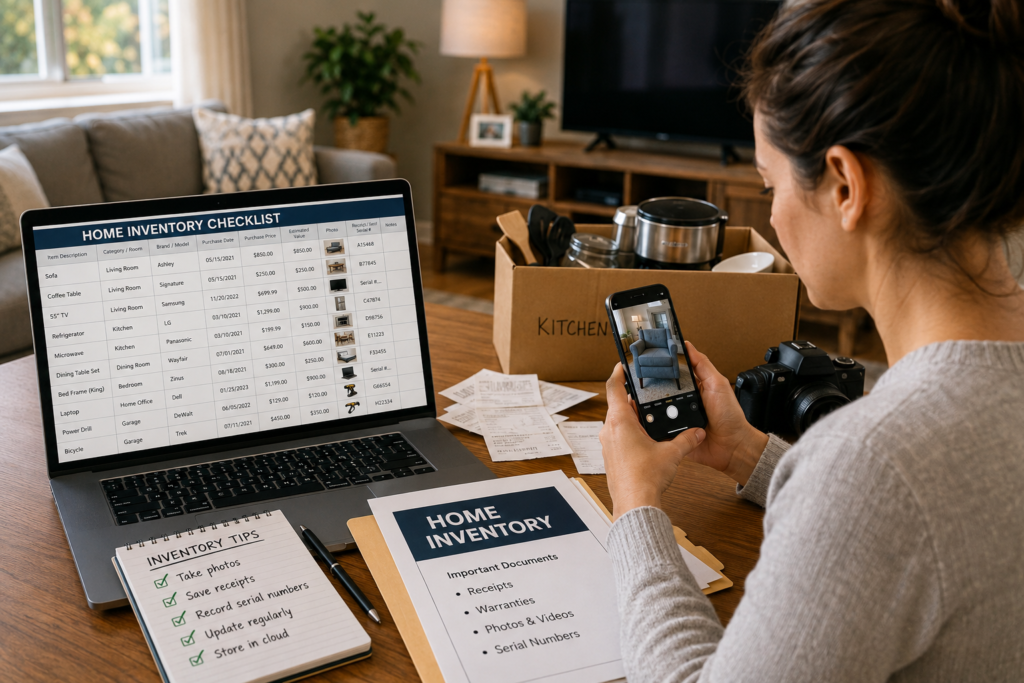
Your home contains more than just furniture and appliances—it holds valuable possessions accumulated over many years. From electronics and jewelry to clothing, kitchen appliances, artwork, and family heirlooms, replacing these items after a fire, burglary, storm, or other covered loss can be expensive.
What you’ll understand
- What Is a Home Inventory?
- Home Contents Quick Estimator
- Why a Home Inventory Is Important
Unfortunately, many homeowners don’t realize how difficult it is to remember every possession after a disaster. Insurance claims often require documentation showing what was owned, its approximate value, and when it was purchased. A well-organized home inventory can make this process faster and more accurate.
This guide explains how to create a home inventory checklist, what information to record, how often to update it, and why it is one of the simplest ways to prepare for unexpected events.
What Is a Home Inventory?
A home inventory is a detailed record of your personal belongings. It typically includes descriptions, estimated values, purchase dates, serial numbers, receipts, photographs, and videos that help document your possessions.
Home Contents Quick Estimator
Add your own rough estimates to see how quickly household contents can add up.
This is a rough inventory aid, not a valuation or coverage recommendation. High-value items can have separate limits and documentation requirements.
A complete inventory can be stored digitally, on paper, or in cloud storage, making it easy to access if your home is damaged or your records are lost.
Why a Home Inventory Is Important
A home inventory offers several advantages:
- Makes insurance claims easier to document.
- Helps identify missing or damaged items after a loss.
- Supports replacement cost estimates.
- Reduces the chance of forgetting valuable possessions.
- Simplifies policy reviews and coverage updates.
- Helps determine whether additional insurance is needed for high-value items.
Creating an inventory before an emergency occurs can save significant time and reduce stress during the claims process.
When Should You Create a Home Inventory?
It’s a good idea to create or update your inventory when:
- Purchasing a new home.
- Moving into a rental property.
- Buying expensive electronics or appliances.
- Completing a home renovation.
- Receiving valuable gifts or collectibles.
- Updating your homeowners or renters insurance policy.
- At least once each year.
Keeping the inventory current ensures it reflects your actual belongings.
What Should a Home Inventory Include?
For each item, try to record:
- Item name
- Brand and model
- Serial number (if available)
- Purchase date
- Purchase price
- Estimated current value
- Receipt or invoice (if available)
- Warranty information
- Clear photographs
- Video documentation
The more detailed your records, the easier it may be to verify ownership after a covered loss.
Room-by-Room Home Inventory Checklist
Living Room
Record items such as:
- Sofa and chairs
- Coffee tables
- Television
- Sound system
- Streaming devices
- Gaming consoles
- Artwork
- Rugs
- Lamps
- Decorative items
- Curtains and blinds
- Bookshelves
Photograph the entire room as well as individual high-value items.
Kitchen
Include:
- Refrigerator
- Oven and stove
- Microwave
- Dishwasher
- Coffee maker
- Air fryer
- Mixer
- Cookware
- Dinnerware
- Glassware
- Small appliances
- Kitchen utensils
Keep receipts for recently purchased appliances whenever possible.
Dining Room
Document:
- Dining table
- Chairs
- China cabinet
- Buffet
- Decorative lighting
- Artwork
- Rugs
Bedrooms
For each bedroom, record:
- Beds and mattresses
- Dressers
- Nightstands
- Televisions
- Computers
- Clothing
- Shoes
- Jewelry
- Watches
- Handbags
- Personal electronics
Photograph the contents of closets and drawers to help document clothing and accessories.
Bathrooms
Include:
- Vanity
- Mirrors
- Hair styling tools
- Electric toothbrushes
- Towels
- Personal care devices
- Decorative items
Home Office
Many home offices contain valuable equipment.
Record:
- Desktop computers
- Laptops
- Monitors
- Printers
- Office furniture
- External hard drives
- Cameras
- Microphones
- Office supplies
- Networking equipment
If you operate a business from home, review whether your homeowners insurance adequately covers business property.
Garage
Don’t overlook:
- Power tools
- Lawn equipment
- Bicycles
- Sports equipment
- Toolboxes
- Air compressors
- Storage cabinets
- Seasonal decorations
- Vehicle accessories
Large tool collections can represent substantial value.
Basement and Attic
Document stored belongings such as:
- Holiday decorations
- Camping equipment
- Luggage
- Family keepsakes
- Archived records
- Spare furniture
- Collectibles
- Hobby equipment
Storage areas are often forgotten until a claim occurs.
Photograph and Video Your Home
In addition to written records:
- Take wide-angle photos of every room.
- Photograph valuable individual items.
- Record serial numbers.
- Create a video walkthrough while opening closets, cabinets, and drawers.
- Narrate approximate purchase dates and values when possible.
Video documentation provides additional evidence of ownership and condition.
Organizing Your Inventory
Many homeowners organize inventories using:
- Spreadsheet software
- Mobile inventory apps
- Cloud storage
- Digital folders
- PDF documents
- Secure external backups
Store copies in multiple secure locations so they remain available even if your home computer is damaged.
High-Value Items That May Need Extra Documentation
Certain belongings deserve additional attention because they may exceed standard policy limits.
Examples include:
- Jewelry
- Luxury watches
- Fine art
- Antiques
- Collectibles
- Musical instruments
- Cameras
- Professional equipment
- Designer handbags
- Precious metals
These items may require appraisals or scheduled personal property endorsements depending on your insurance policy.
Key terms in this guide
Tap a term to review the plain-English meaning while you read.
Policy Limit
The maximum amount an insurer may pay for a covered loss or category of loss under the policy.
Endorsement
A document that changes, adds to or removes terms from the standard insurance policy.
Claim
A request for payment or benefits under an insurance policy after an event that may be covered.
Network
The group of healthcare providers or facilities that contract with a health plan under specified payment arrangements.
Replacement Cost
The cost to replace damaged property with similar new property, subject to policy terms and limits.
Did the guide make sense?
Answer two quick questions. Your score stays in this browser.
Verify Current Rules
Insurance rules, benefits and product terms can change. These official resources are useful starting points for checking current requirements; they do not replace your policy documents or jurisdiction-specific advice.
Thanks — your response is saved in this browser.
Continue learning, not just scrolling
Follow a practical path from understanding the idea to comparing options and preparing for real-world decisions.
 StartWorkers’ Compensation Insurance Guide: Coverage, Benefits, Costs, and Employer ResponsibilitiesBuild the foundation →
 CompareBehavioral Health Riders in Disability Insurance: Limits, Definitions, and What to CompareCompare your options →
 PlanMedicare Advantage 2026: A Plan-Comparison Checklist for Networks, Drugs, and CostsUnderstand the numbers →
 ActInvisible and Autoimmune Disability Claims: Building Evidence Around FunctionBe ready for a claim →
Leave a Comment
Share a helpful question or experience. Your email address will not be published.