

What Is General Liability Insurance?
Running a business creates risks that have little to do with whether your product or service is good.
What you’ll understand
- Business Insurance Risk Explorer
- General Liability Insurance at a Glance
- Why General Liability Insurance Matters
A customer could slip on a wet floor.
An employee could accidentally damage property while working at a client’s home.
A product your company sells could allegedly injure someone.
Business Insurance Risk Explorer
Select the exposures that apply to your business.
This is an educational risk-mapping tool, not a coverage recommendation. Requirements and suitable limits depend on the business, contracts, jurisdiction and policy terms.
Your advertisement could trigger a claim involving copyright infringement or another covered advertising offense.
These are the kinds of risks commercial general liability insurance, often shortened to CGL or simply called general liability insurance, is designed to address.
The Insurance Information Institute explains that CGL insurance can protect a business from financial losses arising from liability for bodily injury, property damage, and personal and advertising injury caused by business operations, services or employees. It primarily addresses non-professional negligent acts.
For many businesses, general liability is therefore one of the foundational pieces of commercial insurance.
But it does not cover every business risk.
Understanding that distinction is essential before buying a policy.
General Liability Insurance at a Glance
| Coverage Area | Typical Example |
|---|---|
| Third-party bodily injury | Customer slips in your store |
| Third-party property damage | Contractor damages customer’s flooring |
| Personal & advertising injury | Covered libel or slander allegation |
| Products-completed operations | Product allegedly injures a customer |
| Legal defense | Attorney and defense expenses for covered lawsuit |
| Medical payments | Certain minor injuries to non-employees |
| Professional mistakes | Generally not covered |
| Employee work injuries | Generally not covered |
| Business-owned vehicle accidents | Generally not covered |
| Cyber incidents | Generally require separate/specialized coverage |
Actual coverage depends on the policy wording, endorsements, exclusions and applicable law.
Why General Liability Insurance Matters
A small accident can turn into a significant financial problem.
Consider a coffee shop.
A customer slips on a recently cleaned floor and suffers an injury.
The customer might seek compensation for:
Medical expenses
Lost income
Pain or other damages
and potentially:
Legal expenses.
Or consider a painting contractor.
While working inside a customer’s house, an employee accidentally causes substantial water damage.
The business could face a property-damage claim.
Triple-I specifically uses customer slip-and-fall and contractor-caused property damage as examples of losses that can create general liability exposure.
Without appropriate insurance, a business may have to fund covered legal defense and damages from:
its own resources.
What Does General Liability Insurance Cover?
A standard commercial general liability policy is commonly divided into three major areas:
Coverage A — Bodily Injury and Property Damage Liability
Coverage B — Personal and Advertising Injury Liability
Coverage C — Medical Payments
Let’s examine each.
1. Third-Party Bodily Injury
One of the most familiar general liability claims involves:
someone getting hurt.
Suppose you own a small retail store.
A customer trips over loose flooring and is injured.
If the business is legally liable and the claim falls within the policy, general liability insurance can potentially help with covered:
Medical-related damages
Legal defense
Settlements
and:
Court-awarded damages
up to applicable limits.
Triple-I identifies bodily injury arising from a business’s premises or operations as a core part of Coverage A.
2. Third-Party Property Damage
General liability isn’t only about injuries.
It can also protect against covered claims involving:
damage to someone else’s property.
Imagine your company provides residential cleaning services.
An employee accidentally knocks over and damages an expensive television.
Or a contractor accidentally damages part of a customer’s home while completing work.
Depending on the circumstances and policy terms, a property-damage liability claim may arise.
3. Personal and Advertising Injury
This part of general liability is frequently misunderstood.
It doesn’t simply mean:
someone gets hurt by your advertisement.
Coverage B can address liability arising from certain defined offenses.
Triple-I lists examples including:
Libel
Slander
False arrest
Malicious prosecution
Wrongful eviction or entry
Invasion of privacy
Certain copyright infringement
and:
Use of another party’s advertising idea.
However, don’t assume every marketing or intellectual-property dispute is covered.
The policy’s definitions and exclusions matter.
4. Medical Payments
General liability policies can also contain:
medical payments coverage.
This can provide limited payment for certain injuries to non-employees resulting from accidents on insured premises or arising from business operations.
An important difference is that medical payments coverage can potentially respond:
without establishing legal liability.
Triple-I describes Coverage C as limited no-fault medical payments coverage intended to address certain medical expenses associated with qualifying accidents.
This shouldn’t be confused with:
health insurance for employees.
They’re completely different coverages.
5. Products-Completed Operations
Businesses that:
Make products
Sell products
Install equipment
Repair property
or:
Complete physical work
should pay particular attention to products-completed operations exposure.
Imagine a business installs shelving.
Two weeks later, the installation allegedly fails and injures a customer.
The work has already been:
completed.
That doesn’t necessarily mean the liability exposure disappeared.
Triple-I identifies products-completed operations coverage as particularly important for manufacturers because it can respond to covered lawsuits alleging that a manufactured product injured someone.
Example: Retail Store
Imagine a customer enters a clothing store.
There is a loose floor mat near the entrance.
The customer trips, falls and fractures a wrist.
They allege that:
the store failed to maintain a safe environment.
A general liability policy could potentially help with the resulting covered bodily-injury claim and defense expenses, subject to the policy.
Retail businesses face significant premises exposure simply because members of the public regularly enter their stores. Triple-I specifically highlights slip-and-fall claims as a common retail liability risk.
Example: Contractor Damages a Customer’s Property
Suppose a painting contractor is working inside a customer’s home.
An employee accidentally leaves water running.
The resulting water damage affects:
Flooring
Walls
and:
Furniture.
Triple-I uses a similar contractor example when explaining CGL property-damage exposure.
Depending on the circumstances and exclusions, general liability may respond to covered third-party property damage.
Example: Advertising Claim
Imagine your business publishes an advertisement.
A competitor alleges that your campaign improperly used:
its advertising idea.
A lawsuit follows.
Certain advertising-injury offenses may fall within Coverage B, although coverage depends heavily on:
the specific allegation
policy wording
and:
applicable exclusions.
General liability should never be treated as:
unlimited intellectual-property insurance.
What General Liability Insurance Usually Doesn’t Cover
This is just as important as understanding:
what it covers.
A general liability policy is not:
“insurance for everything that goes wrong in a business.”
Several major exposures generally require different policies.
Professional Errors and Negligence
Suppose an accountant makes an alleged professional error that causes a client:
financial loss.
Or an IT consultant allegedly gives negligent professional advice.
That’s generally not the kind of claim a standard CGL policy is designed to cover.
Businesses providing professional advice or expertise may need:
Professional Liability Insurance
also known in many industries as:
Errors and Omissions (E&O) insurance.
Triple-I distinguishes professional errors from ordinary general-liability risks and recommends professional liability/E&O coverage for service businesses facing claims arising from negligent professional acts, errors or omissions.
General Liability vs. Professional Liability
| General Liability | Professional Liability |
|---|---|
| Third-party bodily injury | Professional negligence |
| Third-party property damage | Errors or omissions |
| Premises liability | Failure to provide promised professional service |
| Certain advertising injuries | Advice-related financial loss |
| Products/completed operations | Professional-service allegations |
Some businesses need:
both.
A marketing agency, architect, consultant, accountant or technology company could have ordinary general-liability exposure and professional-service exposure.
Employee Injuries
General liability generally isn’t the policy intended to cover:
employees injured while working.
Workers’ compensation is the primary coverage designed for qualifying work-related employee injuries and illnesses.
Workers’ compensation requirements vary by state and business circumstances.
Triple-I identifies workers’ compensation as separate from CGL and notes that workers’ compensation and employment-practices liability are excluded from standard CGL coverage.
Employment Disputes
What if an employee accuses your company of:
Wrongful termination
Discrimination
Harassment
or another employment-related wrongful act?
General liability isn’t a substitute for:
Employment Practices Liability Insurance (EPLI).
Commercial insurance packages can add specialized employment-practices coverage for these exposures.
Business Vehicle Accidents
Suppose your company owns a delivery van.
An employee causes an accident while driving it.
Don’t assume:
general liability will cover the vehicle accident.
Business-owned vehicles generally require:
Commercial Auto Insurance.
Triple-I also notes that a personal auto policy won’t cover a vehicle owned by a business, making business auto coverage necessary for those vehicles.
Damage to Your Own Business Property
General liability is fundamentally:
liability insurance.
If a fire destroys:
Your inventory
Your computers
Your equipment
or:
Your building,
you generally need:
Commercial Property Insurance
rather than relying on general liability.
A Business Owners Policy can combine property and liability protection.
Cyberattacks and Data Breaches
A modern business may store:
Customer information
Payment information
Employee records
Login credentials
or:
Sensitive business data.
Don’t assume general liability provides comprehensive protection against:
cyber incidents.
Businesses with meaningful digital exposure should evaluate:
Cyber Liability / Cyber Insurance
and associated first-party cyber coverage.
Pollution
Standard CGL coverage contains important pollution exclusions.
Triple-I notes that pollution liability is generally excluded, although limited coverage or endorsements may sometimes be available; businesses with meaningful environmental exposure may need dedicated pollution liability insurance.
This can be particularly important for:
Manufacturers
Contractors
Waste businesses
Industrial operations
and:
Companies handling chemicals.
Liquor Liability
If your company:
Manufactures
Sells
Serves
or:
Facilitates alcohol,
standard general liability may not adequately address claims arising from intoxicated patrons.
Triple-I states that businesses involved in alcohol sales or service will likely need liquor liability coverage, available as specialized coverage or an add-on depending on the insurer.
Intentional Acts
Insurance generally isn’t designed to reward deliberate harmful conduct.
Claims involving intentional acts may be excluded depending on:
circumstances and policy wording.
This is another reason businesses should not assume:
“If someone sues us, general liability automatically pays.”
Coverage depends on:
what actually happened and what the complaint alleges.
General Liability vs. Commercial Property Insurance
These policies solve different problems.
General Liability
Protects against qualifying claims that:
your business caused harm to someone else.
Commercial Property
Protects qualifying:
property owned or used by your business.
Example:
A customer slips in your shop:
General liability issue.
A fire damages your inventory:
Commercial property issue.
Many small businesses need:
both.
General Liability vs. Business Owners Policy
This distinction causes frequent confusion.
General Liability Insurance
Provides liability protection.
Business Owners Policy (BOP)
Packages multiple business coverages into:
one policy.
According to NAIC, a BOP commonly combines:
General liability
Commercial/business property
and:
Business interruption coverage.
Triple-I similarly describes a BOP as a package commonly used by small and midsize businesses to combine property, liability and business interruption protection.
When Might a BOP Make More Sense?
Imagine you own:
a small bakery.
You need protection for:
Equipment
Furniture
Inventory
Customer injuries
and:
Income interruption following certain covered property losses.
Buying only general liability leaves:
substantial property exposures.
A BOP may offer a more convenient package if:
your business qualifies.
But a BOP doesn’t cover every risk.
Triple-I notes that BOPs generally don’t include professional liability, business auto, workers’ compensation, or health and disability insurance.
Who Needs General Liability Insurance?
There’s no single answer applicable to every business.
But general liability is particularly relevant if your company:
Has customers entering its premises
Visits customer locations
Works on someone else’s property
Sells or manufactures products
Uses advertising
Rents commercial space
Works with vendors
Participates in events or trade shows
Signs contracts requiring liability insurance
Employs people who interact with customers
Performs physical work for clients
Even a home-based business can have:
third-party liability exposure.
Do Freelancers Need General Liability Insurance?
Potentially.
A freelance graphic designer working entirely online may have relatively little premises exposure compared with:
a contractor.
But suppose the designer:
Visits client offices
Attends events
Rents a studio
or:
Has customers visit a workspace.
General-liability exposure still exists.
And if the freelancer provides professional advice or services:
professional liability may be equally—or more—important.
Do Contractors Need General Liability Insurance?
For many contractors, it can be particularly important.
Contractors routinely work:
on other people’s property.
That creates exposure to:
Property damage
Bodily injury
Completed-work claims
and:
Contract requirements.
Clients and general contractors may also require proof of insurance before allowing work to begin.
Do Online Businesses Need It?
An online business isn’t automatically:
risk-free.
An e-commerce company may face:
Product liability
Advertising injury
Warehouse or premises exposure
Event exposure
or:
Third-party property claims.
However, online businesses can also have significant:
cyber and professional exposures
that general liability alone won’t solve.
Coverage should follow:
the business’s actual risks,
not whether it has a storefront.
Understanding General Liability Policy Limits
Buying insurance isn’t simply choosing:
“covered” or “not covered.”
Your policy also has:
limits.
These determine how much the insurer will pay for covered claims, subject to policy terms.
A CGL policy can contain several different limits.
Each Occurrence Limit
An each occurrence limit generally caps what the policy will pay for qualifying bodily injury and property damage arising from:
one occurrence.
For illustration:
Suppose a policy has:
$1 million each occurrence.
A covered claim producing $1.4 million of damages doesn’t automatically mean the insurer pays:
all $1.4 million.
Applicable limits matter.
General Aggregate Limit
The general aggregate is broadly:
the maximum applicable amount available for certain covered losses during the policy period.
Suppose a hypothetical policy has:
$1 million each occurrence
and:
$2 million general aggregate.
Several covered claims during the same policy period can:
consume the aggregate.
That’s why a business with repeated public interaction may need to consider both:
per-occurrence exposure
and:
annual aggregate exposure.
Products-Completed Operations Aggregate
Products and completed operations can have:
their own aggregate limit.
This matters particularly for:
Manufacturers
Retailers
Installers
and:
Contractors.
A business may have exposure long after:
a product has been sold or a job completed.
Personal and Advertising Injury Limit
Coverage B also generally has:
its own applicable limit.
Businesses heavily involved in:
Advertising
Publishing
Social media
and:
Marketing
should understand both:
the coverage
and:
the exclusions.
Medical Payments Limit
Medical payments typically have a much smaller limit than:
bodily-injury liability.
That’s because this coverage is designed for certain smaller medical expenses rather than:
major liability lawsuits.
Triple-I describes Coverage C as limited medical-payment coverage for qualifying injuries to non-employees.
What Is a Certificate of Insurance?
Businesses are often asked to provide a:
Certificate of Insurance (COI).
A COI is evidence showing information about insurance coverage in force at the time it’s issued.
You may be asked for one by:
Landlords
Clients
General contractors
Event organizers
or:
Vendors.
But a certificate itself isn’t a substitute for:
the insurance policy.
The underlying contract and endorsements determine:
actual coverage.
What Is an Additional Insured?
A contract may require your company to add another organization or person as an:
additional insured
under specified circumstances.
For example, a landlord may require a commercial tenant to add the landlord as an additional insured for certain liability arising from:
the tenant’s operations.
A general contractor may similarly require:
subcontractors
to provide additional-insured protection.
Don’t confuse:
Certificate Holder
with:
Additional Insured.
They’re not necessarily the same thing.
If a contract requires additional-insured status, make sure the appropriate:
endorsement
is actually issued.
Occurrence vs. Claims-Made Coverage
Commercial insurance policies can use different coverage triggers.
Traditional CGL coverage is commonly written on an:
occurrence basis.
An occurrence-based form generally focuses on when the covered bodily injury or property damage:
occurred.
Professional liability, by contrast, is commonly associated with:
claims-made coverage,
where timing of the claim and policy/retroactive dates can be critical.
Businesses shouldn’t assume these policies operate identically.
Does General Liability Cover Legal Defense?
One of general liability insurance’s most valuable features can be:
defense protection.
Triple-I states that CGL generally covers legal defense costs and covered damages up to applicable policy provisions and limits.
A business may ultimately:
win a lawsuit
and still spend substantial money defending itself.
That makes defense coverage important even when:
allegations are disputed.
Always review how defense costs interact with the limits in your particular policy.
Example: The Lawsuit You Win
Imagine a customer alleges that:
your store caused an injury.
Your company believes it did nothing wrong.
After months of litigation:
the business prevails.
There may be:
no damages award.
But lawyers, experts and litigation can still cost:
substantial amounts.
This demonstrates why liability insurance isn’t merely:
“money for settlements.”
The defense component can itself be valuable.
How Much Does General Liability Insurance Cost?
There isn’t one universal price.
Premiums depend on the insurer’s assessment of:
your business’s risk.
Factors can include:
Industry
Location
Revenue
Payroll
Number of employees
Business size
Customer traffic
Products sold
Work performed
Claims history
Coverage limits
Deductibles where applicable
Subcontractor exposure
and:
Policy endorsements.
A low-risk office business and a construction contractor shouldn’t be expected to pay:
identical premiums.
Triple-I notes that commercial insurance pricing can reflect factors such as the business type, premises, required limits, location and other risk characteristics.
Why Industry Matters So Much
Compare:
Business A — Freelance Copywriter
Mostly works from home.
Few visitors.
No physical product.
Business B — Roofing Contractor
Employees work at heights.
Work occurs on customer properties.
Equipment is used around third parties.
Completed projects can create future exposure.
It’s reasonable for an insurer to view:
these risks very differently.
That’s why generic claims such as:
“General liability costs exactly $X per month”
aren’t useful for every business.
Current quotes are more meaningful.
How Much General Liability Coverage Do You Need?
There’s no universal limit appropriate for every company.
Consider:
Contract requirements
Lease requirements
Business size
Industry
Customer traffic
Severity of possible injuries
Value of customer property
Products sold
Completed operations
and:
Your company’s assets.
A client contract may specify minimum liability limits.
Your landlord may do the same.
But satisfying the contract shouldn’t be:
the only consideration.
Your actual exposure matters too.
When Might Commercial Umbrella Insurance Help?
Suppose your general liability policy provides:
$1 million
for a particular covered occurrence.
Your business has a covered catastrophic claim exceeding that limit.
A properly structured:
commercial umbrella or excess liability policy
may provide additional limits above qualifying underlying coverage.
Triple-I recommends considering commercial excess or umbrella insurance when a business’s primary liability limits are insufficient.
Umbrella coverage shouldn’t be assumed to:
fix every exclusion.
Review what policies it sits over and how it operates.
How to Save on General Liability Insurance
Saving money doesn’t necessarily mean:
buying less protection.
Start by comparing comparable quotes.
Triple-I recommends getting business-insurance quotes from at least three insurers where possible and comparing similar coverage rather than price alone.
Other strategies can include:
Bundling Appropriate Coverage
A qualifying small business may find a BOP efficient because it packages property and liability coverage.
Strong Risk Management
Reduce preventable claims through:
Floor inspections
Maintenance
Employee training
Incident procedures
Product quality controls
and:
Worksite safety.
Reviewing Limits
Don’t automatically purchase:
far more coverage than needed,
but don’t cut limits solely to obtain the lowest premium.
Maintaining Accurate Business Information
Make sure the insurer has accurate:
Revenue
Payroll
operations
and:
business classification.
Reviewing Coverage Annually
A business can change quickly.
New:
Products
Locations
Employees
Contracts
or:
Services
can create new exposures.
Risk Management Can Be as Important as Insurance
Insurance transfers some financial risk.
It doesn’t eliminate:
the underlying hazard.
A retail business can reduce slip-and-fall exposure by:
Cleaning spills quickly
Keeping walkways clear
Repairing flooring
Using proper lighting
and:
Documenting inspections.
A contractor can reduce property-damage claims through:
Training
Worksite controls
Equipment maintenance
and:
Documented procedures.
Better risk management can:
prevent claims in the first place.
What to Do After an Incident
Suppose a customer falls in your store.
Don’t wait until:
a lawsuit arrives.
Your policy may require prompt reporting of occurrences or claims.
Triple-I advises businesses to contact their insurer promptly and specifically notes that an event such as a customer fall may need to be reported because it could later result in a liability claim.
Practical steps may include:
- Address immediate medical or safety needs.
- Prevent additional injuries or damage.
- Document what happened.
- Preserve relevant video, photographs and records.
- Obtain witness information where appropriate.
- Notify the insurer or insurance professional promptly.
- Forward legal papers immediately if received.
- Avoid making unsupported promises about insurance payment.
Follow your policy’s:
actual claim conditions.
What Information Should You Gather Before Getting Quotes?
Before requesting general liability quotes, prepare:
Legal business name
Business address
Industry
Detailed operations
Years in business
Annual revenue
Payroll
Employee count
Subcontractor information
Products sold
Customer locations
Claims history
Requested limits
and:
Contract requirements.
Accurate information helps insurers:
classify the business correctly.
Compare Policies, Not Just Premiums
Imagine:
Policy A — $650/year
and:
Policy B — $850/year.
Policy A looks cheaper.
But suppose Policy B offers:
Higher limits
An endorsement required by your landlord
Better products-completed operations protection
and:
Coverage more appropriate for your operations.
Now the $200 difference looks:
very different.
Triple-I recommends evaluating coverage, exclusions and insurer quality—not simply the premium.
General Liability Insurance Checklist
Before buying or renewing coverage, ask:
| Question | Check |
|---|---|
| Are bodily-injury claims covered? | ☐ |
| Is third-party property damage covered? | ☐ |
| What personal/advertising injury coverage applies? | ☐ |
| Are products/completed operations relevant? | ☐ |
| What is the each-occurrence limit? | ☐ |
| What is the general aggregate? | ☐ |
| Is there a separate products aggregate? | ☐ |
| How are defense costs handled? | ☐ |
| What are the major exclusions? | ☐ |
| Do I need professional liability? | ☐ |
| Do I need commercial auto? | ☐ |
| Do I need workers’ compensation? | ☐ |
| Do I need cyber insurance? | ☐ |
| Do I need EPLI? | ☐ |
| Do contracts require additional insureds? | ☐ |
| Should I consider umbrella/excess coverage? | ☐ |
| Would a BOP be more appropriate? | ☐ |
| Have my business operations changed? | ☐ |
Common General Liability Insurance Mistakes
1. Assuming It Covers Everything
It doesn’t.
General liability isn’t automatically:
Professional liability
Workers’ compensation
Commercial auto
Cyber insurance
or:
Commercial property insurance.
2. Buying Only the Minimum Required by a Contract
A contractual minimum may not represent:
your maximum possible exposure.
Assess the business itself.
3. Choosing Coverage Only by Price
The cheapest policy may contain:
exclusions or limitations
that matter to your operations.
4. Failing to Disclose Business Activities
If your business changes from:
consulting
to also performing:
physical installation,
your risk profile may change substantially.
Tell your insurer about material operational changes.
5. Confusing General and Professional Liability
A customer slipping in your office and a client alleging negligent financial advice are:
very different claims.
Businesses can need:
both policies.
6. Ignoring Products-Completed Operations
The fact that a product has been sold or work has been completed doesn’t necessarily mean:
the liability exposure is over.
7. Assuming a COI Creates Coverage
A certificate documents insurance information.
The actual:
policy and endorsements
control coverage.
8. Reporting Claims Too Late
Prompt reporting can be important.
Follow the notification requirements in your policy.
Frequently Asked Questions
What is general liability insurance?
General liability insurance is commercial coverage designed to protect a business against certain third-party claims involving bodily injury, property damage, and personal and advertising injury arising from covered business operations.
Is general liability insurance required by law?
There isn’t a universal U.S. rule requiring every business to carry the same general liability coverage. However, landlords, clients, lenders, licensing arrangements or contracts may require it, and requirements can vary by state and industry.
Does general liability cover customer injuries?
Potentially. Third-party bodily injury is one of the central protections of CGL coverage when the business faces a covered liability claim.
Does general liability cover damage to customer property?
It can cover qualifying third-party property-damage liability claims, subject to exclusions and policy terms.
Does general liability cover my own equipment?
Generally not as business property coverage. Commercial property insurance is designed to protect your company’s own buildings, equipment, inventory and similar property.
Does general liability cover professional mistakes?
Generally, professional errors or negligent professional services require professional liability or E&O coverage rather than relying on standard CGL.
Does general liability cover employee injuries?
Workers’ compensation is generally the relevant coverage for qualifying work-related employee injuries. Workers’ compensation is separate from general liability.
Is general liability included in a BOP?
Yes, liability protection is one of the core components commonly included in a Business Owners Policy, along with commercial property and business interruption coverage.
What’s the difference between general liability and a BOP?
General liability focuses on specified third-party liability exposures. A BOP packages liability with property and business interruption coverage for eligible businesses.
Do home-based businesses need general liability?
Potentially. Home-based businesses can still face third-party bodily injury, property damage, product or advertising exposures. The appropriate coverage depends on what the business actually does.
Does general liability cover lawsuits?
It can cover defense costs and damages arising from covered claims, subject to policy terms, exclusions and limits. It doesn’t mean every lawsuit against a business is covered.
Should I buy an umbrella policy?
Businesses with significant liability exposure or assets may consider commercial umbrella or excess liability insurance to provide additional limits above qualifying underlying policies.
Key Takeaways
General liability insurance is one of the fundamental protections many U.S. businesses should evaluate.
Its core purpose is to address qualifying third-party claims involving:
Bodily injury
Property damage
and:
Personal and advertising injury.
It can also provide important:
legal-defense protection.
But general liability shouldn’t be mistaken for:
complete business insurance.
Professional mistakes may require:
Professional Liability / E&O.
Employee injuries may require:
Workers’ Compensation.
Company vehicles require:
Commercial Auto.
Your own buildings, inventory and equipment generally require:
Commercial Property.
Cyber risks may require:
Cyber Insurance.
Employment claims may require:
EPLI.
And businesses with significant liability exposure may want:
Commercial Umbrella or Excess Liability.
For many eligible small businesses, a Business Owners Policy can be an efficient way to combine general liability with commercial property and business-interruption coverage.
The goal isn’t simply to buy:
the cheapest general liability policy.
It’s to understand your company’s real exposures and purchase:
appropriate coverage, limits and endorsements for those risks.
Disclaimer
This article is for general educational and informational purposes only and does not constitute personalized insurance, legal, financial or risk-management advice. Insurance coverage, exclusions, definitions, limits, endorsements and legal requirements vary by insurer, policy, industry and state. Review your actual policy and consult appropriately licensed insurance or legal professionals when necessary.
Key terms in this guide
Tap a term to review the plain-English meaning while you read.
Premium
The amount charged for insurance coverage, usually paid monthly, quarterly or annually.
Deductible
The amount you may need to pay toward a covered loss before the insurer pays under the policy, subject to the policy terms.
Policy Limit
The maximum amount an insurer may pay for a covered loss or category of loss under the policy.
Exclusion
A policy provision that removes specified situations, causes, property, people or losses from coverage.
Endorsement
A document that changes, adds to or removes terms from the standard insurance policy.
Claim
A request for payment or benefits under an insurance policy after an event that may be covered.
Did the guide make sense?
Answer two quick questions. Your score stays in this browser.
Verify Current Rules
Insurance rules, benefits and product terms can change. These official resources are useful starting points for checking current requirements; they do not replace your policy documents or jurisdiction-specific advice.
Thanks — your response is saved in this browser.
Continue learning, not just scrolling
Follow a practical path from understanding the idea to comparing options and preparing for real-world decisions.
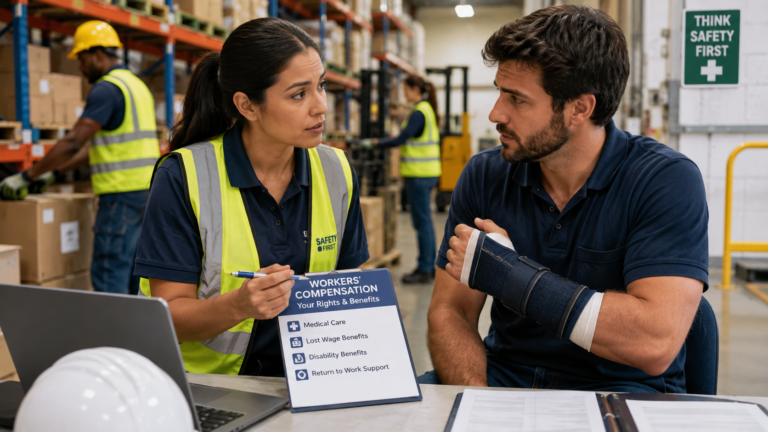 StartWorkers’ Compensation Insurance Guide: Coverage, Benefits, Costs, and Employer ResponsibilitiesBuild the foundation →
 CompareBehavioral Health Riders in Disability Insurance: Limits, Definitions, and What to CompareCompare your options →
 PlanMedicare Advantage 2026: A Plan-Comparison Checklist for Networks, Drugs, and CostsUnderstand the numbers →
 ActInvisible and Autoimmune Disability Claims: Building Evidence Around FunctionBe ready for a claim →
Leave a Comment
Share a helpful question or experience. Your email address will not be published.