

Commercial trucking is essential to the U.S. economy, but operating a truck has become increasingly expensive—and insurance is one of the costs putting pressure on carriers.
What you’ll understand
- Auto Coverage Scenario Checker
- What Is Commercial Truck Insurance?
- Why Is Commercial Truck Insurance So Expensive?
In 2026, trucking businesses are dealing with a difficult combination of higher liability claim severity, expensive vehicle repairs, large jury awards, litigation costs, driver risk, equipment values, and regulatory insurance requirements.
Recent data illustrates the pressure. The American Transportation Research Institute (ATRI) reported in May 2026 that motor carriers’ liability insurance premium costs increased 18.6% between 2021 and 2024, reaching 10.2 cents per mile, even though heavy-duty truck-involved crash rates declined 2.6% over that period. ATRI found that respondents’ liability losses per mile increased an average of 33.1%.
The pressure continued. ATRI’s 2026 operational-cost research found that the average cost of operating a truck reached a record $2.336 per mile in 2025, up 3.4% from the previous year. Excluding fuel, operating costs increased 4.2%.
Auto Coverage Scenario Checker
Choose an incident to see which part of an auto policy is commonly worth reviewing.
This tool identifies common coverage areas to review. It does not determine whether a claim is covered; policy wording, deductibles, limits, exclusions and local law control.
So why can truck insurance remain expensive even when accident frequency isn’t necessarily increasing?
The answer is largely about how expensive an accident can become when it does happen.
This guide explains the major forces influencing commercial truck insurance costs in 2026 and what trucking businesses can do to improve their insurance risk profile.
What Is Commercial Truck Insurance?
Commercial truck insurance is a broad term for insurance designed for trucks used for business purposes.
Depending on the operation, a trucking insurance program can include:
- Primary auto liability
- Physical damage
- Motor truck cargo
- General liability
- Non-trucking liability
- Bobtail coverage
- Trailer interchange
- Uninsured/underinsured motorist coverage
- Medical payments or personal injury protection where applicable
- Excess or umbrella liability
Not every trucking company needs every coverage.
A single owner-operator hauling dry freight locally has a very different insurance profile from a 100-truck interstate fleet carrying hazardous materials.
Why Is Commercial Truck Insurance So Expensive?
Insurance companies price coverage according to expected risk.
For commercial trucks, potential losses can be enormous.
A serious truck accident can involve:
- Multiple vehicles
- Severe injuries
- Fatalities
- Expensive medical treatment
- Long-term disability
- Lost income
- Damaged cargo
- Destroyed vehicles
- Property damage
- Environmental cleanup
- Litigation
- Large settlements or verdicts
Even relatively infrequent catastrophic claims can substantially affect insurers’ overall results.
In 2026, several factors are intensifying this problem.
1. Liability Claims Are Becoming More Expensive
One of the most important factors isn’t simply the number of crashes.
It’s claim severity.
ATRI’s 2026 insurance research found that liability losses per mile among respondents increased an average of 33.1% from 2021 through 2024. That increase occurred while industry-wide heavy-duty truck-involved crash rates declined.
That distinction is critical.
Imagine an insurer previously experienced:
100 claims × $50,000 average cost = $5 million
Later, it experiences:
90 claims × $100,000 average cost = $9 million
There are fewer claims, but total losses are dramatically higher.
This simplified example helps explain why insurance premiums don’t necessarily fall just because crash frequency improves.
2. Nuclear Verdicts Are a Major Concern
Few terms receive more attention in commercial auto insurance than nuclear verdicts.
The National Association of Insurance Commissioners describes nuclear verdicts generally as jury awards exceeding $10 million in compensatory and punitive damages. Auto accidents are among the areas where these verdicts have been particularly significant.
For a trucking company, a severe crash can lead to allegations involving:
- Negligent driving
- Negligent hiring
- Inadequate driver training
- Poor supervision
- Hours-of-service violations
- Vehicle maintenance failures
- Unsafe company policies
Large verdicts don’t affect only the trucking company involved.
Insurers consider the possibility of future catastrophic claims when pricing an entire portfolio of trucking risks.
3. Social Inflation Is Increasing Liability Costs
Ordinary economic inflation isn’t the only type of inflation affecting insurance.
The insurance industry also uses the term social inflation.
The NAIC describes social inflation as increases in liability claim costs beyond general economic inflation, associated with factors such as litigation trends and increasingly large monetary awards.
Commercial auto—and trucking in particular—is one of the insurance areas significantly affected by this phenomenon.
Factors associated with social inflation can include:
- Larger jury awards
- Increased litigation
- Litigation funding
- Higher settlement expectations
- Changing attitudes toward corporate defendants
- Higher legal defense costs
Insurers must account for these potential costs when pricing commercial auto liability coverage.
4. Trucks Can Cause Extremely Severe Losses
A passenger vehicle and a fully loaded tractor-trailer present very different potential loss scenarios.
Large commercial trucks can weigh many times more than passenger vehicles.
When a serious collision occurs, the consequences can include catastrophic bodily injuries and extensive property damage.
That means insurers face potentially high liability exposure every time they insure a heavy commercial vehicle.
Even a carrier with a strong safety record isn’t immune from the possibility of one catastrophic accident.
5. Federal Insurance Requirements Can Be Substantial
Certain interstate and for-hire motor carriers must maintain minimum levels of financial responsibility.
The Federal Motor Carrier Safety Administration currently lists federal minimum bodily injury and property damage financial-responsibility requirements that vary by operation.
For example, FMCSA lists $750,000 for certain for-hire non-hazardous property carriers operating vehicles with a GVWR of 10,001 pounds or more. Certain hazardous-material operations require $1 million, while some categories involving explosives, poison gas, or radioactive materials require $5 million.
These are federal requirements for specified operations—not necessarily recommendations for how much coverage every business should carry.
Contracts, shippers, brokers, lenders, state laws, and the carrier’s own risk management needs may require or justify higher limits.
6. Repair Costs Are Rising
Modern commercial vehicles can be expensive to repair.
Today’s trucks may contain sophisticated:
- Electronic control systems
- Cameras
- Sensors
- Collision-avoidance systems
- Emissions equipment
- Telematics
- Advanced driver-assistance technology
Repairing these systems can require specialized parts, equipment, and technicians.
ATRI’s July 2026 operational-cost report found that truck repair and maintenance costs increased 8.6% in 2025, one of the largest percentage increases among major operating-cost categories.
Higher repair costs can increase physical-damage claim severity.
7. Truck Values Are High
Replacing a commercial truck after a total loss can be expensive.
Insurers providing physical damage coverage need to account for the value of:
- Tractor
- Trailer
- Specialized equipment
- Permanently installed equipment
A newer high-value tractor generally creates more physical-damage exposure than an older, lower-value vehicle.
Specialized trucks can create even greater exposure.
Examples include:
- Refrigerated trucks
- Tankers
- Tow trucks
- Dump trucks
- Concrete trucks
- Car carriers
8. Cargo Creates Additional Risk
Commercial trucks don’t simply carry expensive vehicles.
They may also carry valuable freight.
Depending on the operation, cargo could include:
- Electronics
- Pharmaceuticals
- Machinery
- Food
- Clothing
- Building materials
- Consumer products
A collision, fire, theft, or refrigeration failure could potentially result in a significant cargo loss.
Cargo type therefore plays an important role in trucking insurance.
High-value or theft-sensitive freight can create greater insurance exposure.
9. Driver Experience Matters
The person behind the wheel is one of the most important variables insurers evaluate.
Insurers may consider factors such as:
- Commercial driving experience
- Motor vehicle records
- CDL history
- Violations
- Accidents
- Age where legally permitted and actuarially relevant
- Training
- Employment history
- Type of equipment operated
A company employing experienced drivers with clean records may present a different risk from a business frequently hiring inexperienced drivers.
Commercial auto insurers have also been concerned about driver shortages and the risks associated with less-experienced drivers entering fleets.
10. Distracted Driving Remains a Risk
Commercial drivers spend enormous amounts of time on the road.
Potential distractions include:
- Smartphones
- Navigation systems
- Dispatch messages
- Eating
- In-cab technology
- Fatigue
A few seconds of distraction can have serious consequences when operating a heavy vehicle at highway speed.
Insurers therefore pay close attention to fleet safety policies concerning mobile-device use and driver monitoring.
11. Long-Haul Operations Can Cost More to Insure
Operating radius can influence insurance pricing.
A truck traveling thousands of interstate miles may present greater exposure than a truck making short local deliveries.
Long-haul drivers can face:
- Greater annual mileage
- Unfamiliar roads
- Congested highways
- Weather changes
- Fatigue exposure
- More time behind the wheel
Insurers therefore often ask whether trucks operate:
Locally
Regionally
or
Long haul
Mileage and radius can materially affect underwriting.
12. Where You Operate Matters
Two otherwise similar trucking companies can pay very different premiums based partly on where they operate.
Insurers can consider:
- Accident frequency
- Litigation environment
- Traffic density
- State insurance laws
- Theft rates
- Weather
- Repair costs
- Claim severity
A truck frequently operating through heavily congested metropolitan areas may have a different risk profile from one operating primarily in lower-traffic rural areas.
13. Your Claims History Matters
Past insurance claims can significantly influence future premiums.
Insurers may examine:
- Number of claims
- Claim severity
- At-fault accidents
- Cargo losses
- Physical damage claims
- Liability claims
- Claim trends
One catastrophic loss can affect underwriting even if the fleet previously had a strong record.
Frequent smaller claims can also indicate broader safety or operational problems.
14. Safety Records Matter
Commercial trucking insurers may evaluate available safety information when underwriting a carrier.
Factors can include:
- Vehicle inspections
- Driver violations
- Out-of-service events
- Crash history
- Compliance
- Maintenance practices
Insurers want evidence that safety procedures exist not only on paper but in everyday operations.
15. Poor Vehicle Maintenance Increases Risk
Maintenance isn’t simply an operational issue.
It is also an insurance issue.
Problems involving:
- Brakes
- Tires
- Lights
- Steering
- Suspension
- Coupling equipment
can contribute to crashes and potentially become important during litigation.
A strong preventive-maintenance program can help demonstrate that a carrier takes safety seriously.
16. Litigation Can Examine the Entire Trucking Company
After a serious crash, attention may extend far beyond the driver’s actions immediately before the collision.
Litigation could examine:
- Driver hiring
- Background checks
- Training records
- Drug and alcohol testing
- Hours-of-service records
- Maintenance
- Vehicle inspections
- Company safety policies
- Electronic logging information
- Telematics
- Post-accident procedures
Poor documentation can make defending a claim more difficult.
This is why insurance and operational risk management are closely connected.
17. Excess Liability Can Be Expensive
Some trucking businesses purchase liability protection above their primary commercial auto limits.
This may be provided through excess or umbrella insurance.
But excess insurers are also exposed to catastrophic claims and large verdicts.
As a result, higher liability layers can be expensive or difficult to obtain for certain trucking operations.
Commercial auto and excess liability continued to face pressure from nuclear verdicts and social inflation during 2026 even as some other commercial insurance lines experienced moderating pricing.
How Much Does Commercial Truck Insurance Cost in 2026?
There isn’t one meaningful nationwide price that applies to every commercial truck.
Premiums vary substantially based on the operation.
Important pricing factors include:
| Factor | Potential Effect |
|---|---|
| Truck type | Heavy/specialized vehicles may cost more |
| Cargo | High-value or hazardous cargo increases exposure |
| Operating radius | Long-haul operations may increase risk |
| Driver history | Violations and accidents can increase premiums |
| Experience | New ventures may have fewer favorable loss records |
| Coverage limits | Higher limits generally cost more |
| Deductible | Higher deductibles can reduce certain premiums |
| Claims history | Frequent/severe claims can raise costs |
| Location | Claim and litigation environments differ |
| Vehicle value | Higher values increase physical-damage exposure |
| Fleet size | Changes total exposure and underwriting |
| Safety program | Strong controls can improve the risk profile |
A quote for one carrier shouldn’t be used as a reliable estimate for another trucking business.
Why New Trucking Companies May Pay More
A new trucking company can sometimes face higher insurance costs because insurers have less historical information to evaluate.
An established carrier may be able to demonstrate:
- Several years of claims history
- Stable driver employment
- Consistent maintenance
- Strong safety performance
- Established operating procedures
A new venture doesn’t have the same track record.
Insurers may therefore price additional uncertainty into the policy.
Owner-Operator vs. Fleet Insurance
Insurance requirements can differ considerably between independent owner-operators and fleets.
An owner-operator leased to a motor carrier may receive certain liability coverage through the carrier while needing separate protection for other exposures.
An owner-operator operating under their own authority may need to arrange a broader insurance program.
Fleet operators need to manage risks across:
- Multiple vehicles
- Multiple drivers
- Multiple routes
- Driver turnover
- Maintenance
- Claims
Understanding exactly who is responsible for each coverage is essential.
Ways Trucking Companies Can Potentially Reduce Insurance Costs
There is no guaranteed method for lowering premiums, but carriers can work on factors insurers consider when evaluating risk.
Hire Carefully
Establish clear driver standards and review appropriate driving records.
Invest in Training
Provide ongoing training rather than limiting safety education to onboarding.
Use Telematics
Fleet technology can help identify:
- Speeding
- Hard braking
- Rapid acceleration
- Risky driving patterns
Consider Dash Cameras
Properly implemented camera programs can provide useful evidence after accidents and support driver coaching.
Maintain Vehicles
Follow documented preventive-maintenance and inspection schedules.
Report Claims Quickly
Prompt reporting can help insurers investigate incidents while evidence and witness information are available.
Review Deductibles
Some businesses may reduce premiums by retaining more risk through higher deductibles, but only if they can comfortably absorb those losses.
ATRI’s research indicates carriers have increasingly used strategies such as higher deductibles and self-insurance to manage rising insurance costs.
Don’t Cut Liability Limits Just to Save Money
Reducing insurance limits can lower premiums in some circumstances, but it can also leave the business exposed after a catastrophic accident.
A serious truck crash can produce damages far beyond ordinary vehicle repair costs.
Before reducing liability protection, consider:
- Business assets
- Contractual requirements
- Cargo
- Routes
- Fleet size
- Accident severity potential
- Federal and state requirements
- Excess insurance availability
Price should not be the only consideration.
How Telematics Can Help
Telematics can provide data about how trucks are actually being driven.
Depending on the technology, fleets may monitor:
- Speed
- Braking
- Acceleration
- Mileage
- Routes
- Idle time
- Driver behavior
The greatest value isn’t simply collecting the data.
Businesses should have a structured process for responding to unsafe behavior.
A documented coaching program can turn telematics information into a practical risk-management tool.
Dash Cameras and Insurance
Dash cameras are increasingly used in commercial fleets.
They may help:
- Document collisions
- Determine accident circumstances
- Identify unsafe driving
- Coach drivers
- Defend against certain disputed claims
Camera technology doesn’t eliminate liability, but reliable evidence can become extremely valuable when accounts of an accident conflict.
Businesses should also consider privacy, employment, data-retention, and state-law requirements when implementing camera systems.
Why Documentation Matters
Imagine a serious accident results in litigation.
The trucking company says:
“Safety is our top priority.”
That statement is much stronger when the business can produce:
- Driver training records
- Maintenance logs
- Inspection records
- Safety meeting records
- Driver coaching documentation
- Hiring standards
- Corrective-action records
Strong documentation helps demonstrate that safety practices are real and consistently implemented.
Questions to Ask a Truck Insurance Agent or Broker
Before purchasing or renewing coverage, ask:
- What liability limits do I currently have?
- What limits are legally required for my operation?
- Do customer contracts require higher limits?
- Is motor truck cargo coverage adequate?
- How is physical damage valued?
- What deductibles apply?
- Is trailer interchange needed?
- Do I need non-trucking liability?
- Is excess liability available?
- How does my claims history affect pricing?
- Which safety improvements could improve underwriting?
- Are all drivers correctly listed?
- Is my operating radius accurate?
- Is my cargo classification accurate?
Accurate information is important because incorrect classifications can create serious problems during a claim.
Commercial Truck Insurance Mistakes to Avoid
Shopping only by price: The cheapest policy may have limits or exclusions that don’t match your operation.
Misstating operating radius: Your insurer needs accurate information about where vehicles operate.
Incorrect cargo descriptions: Hauling freight that differs materially from the declared operation can create coverage issues.
Failing to report drivers: Insurers need accurate driver information.
Ignoring safety data: Violations and unsafe driving trends should be addressed quickly.
Poor maintenance records: Documentation can become important after a serious accident.
Allowing coverage to lapse: Carriers subject to federal insurance requirements must maintain required financial responsibility. FMCSA states that operating authority can face revocation proceedings when required insurance filings are not maintained.
Frequently Asked Questions
Why is commercial truck insurance so expensive in 2026?
Major factors include increasing liability claim severity, litigation costs, large jury verdicts, expensive truck repairs, vehicle values, driver risk, operating exposure, cargo, and regulatory requirements.
Are truck insurance costs still rising?
Recent ATRI research shows continuing pressure. Liability premium costs increased 18.6% between 2021 and 2024, and early 2026 industry data points to continued increases in trucking insurance costs.
Why can premiums rise even when crashes decline?
Insurance pricing reflects the cost as well as frequency of claims. ATRI found that heavy-duty truck-involved crash rates fell 2.6% from 2021–2024 while respondents’ liability losses per mile increased an average of 33.1%.
What is a nuclear verdict?
The NAIC generally describes nuclear verdicts as jury awards exceeding $10 million in punitive and compensatory damages.
What is the federal liability requirement for a semi-truck?
FMCSA lists a $750,000 minimum financial-responsibility requirement for certain for-hire non-hazardous property carriers operating vehicles with a GVWR of at least 10,001 pounds. Higher requirements apply to certain hazardous-material operations.
Does a clean driving record reduce truck insurance costs?
Driver records are an important underwriting factor. A strong safety and claims record can improve a carrier’s risk profile, although it doesn’t guarantee lower premiums.
Can dash cameras lower truck insurance?
Some insurers may consider safety technology when underwriting, but discounts and eligibility vary. Cameras can also help with driver coaching and provide evidence following accidents.
Does cargo affect insurance premiums?
Yes. The type, value, theft exposure, and hazards associated with cargo can affect coverage needs and insurance pricing.
Are new trucking businesses more expensive to insure?
They can be because insurers have less historical loss and operating information available to evaluate.
The 2026 Outlook
The broader commercial insurance market has shown signs of moderating price growth, but commercial auto remains challenging. In the first quarter of 2026, overall U.S. commercial insurance pricing rose 2.5%, while commercial auto and casualty continued to face pressure from social inflation and large verdicts.
At the same time, trucking companies are managing record operating expenses. ATRI reported average operating costs of $2.336 per mile in 2025, the highest level in its report’s history.
For trucking companies, this makes disciplined risk management increasingly important.
Final Thoughts
Commercial truck insurance is expensive in 2026 because insurers aren’t simply protecting a vehicle.
They’re assuming the possibility of very large financial losses.
One serious truck accident can involve multiple vehicles, catastrophic injuries, extensive property damage, expensive litigation, and potentially multimillion-dollar liability claims.
Meanwhile, repair and operating expenses continue to rise.
The most effective response for trucking businesses isn’t simply searching for the cheapest insurance company.
Carriers should focus on becoming a better insurance risk.
That means hiring qualified drivers, monitoring safety performance, maintaining equipment, documenting training, using appropriate technology, managing claims effectively, and working with insurance professionals who understand trucking.
A strong safety culture may not eliminate rising market costs, but it can put a trucking business in a stronger position when insurers decide whether to offer coverage, how much capacity to provide, and how to price the risk.
Key terms in this guide
Tap a term to review the plain-English meaning while you read.
Premium
The amount charged for insurance coverage, usually paid monthly, quarterly or annually.
Deductible
The amount you may need to pay toward a covered loss before the insurer pays under the policy, subject to the policy terms.
Exclusion
A policy provision that removes specified situations, causes, property, people or losses from coverage.
Underwriting
The process an insurer uses to evaluate risk and decide whether and on what terms to offer coverage.
Claim
A request for payment or benefits under an insurance policy after an event that may be covered.
Liability
Legal responsibility for injury, damage or loss suffered by another person or organization.
Did the guide make sense?
Answer two quick questions. Your score stays in this browser.
Verify Current Rules
Insurance rules, benefits and product terms can change. These official resources are useful starting points for checking current requirements; they do not replace your policy documents or jurisdiction-specific advice.
Thanks — your response is saved in this browser.
Continue learning, not just scrolling
Follow a practical path from understanding the idea to comparing options and preparing for real-world decisions.
 StartCollision Coverage Explained: What It Covers, What It Doesn’t, and When You Need ItBuild the foundation →
 CompareCommercial Trucking Insurance: Why “Bobtail” vs. “Physical Damage” coverage is critical for owner-operators.Compare your options →
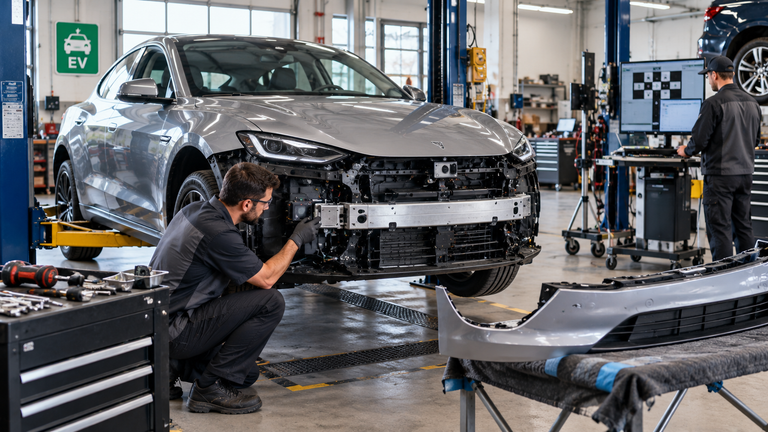 PlanTesla & EV Insurance Hikes: Why Repair Costs Are Driving Premiums UpUnderstand the numbers →
 ActThe Impact of AI on Claims: Will 2026 Algorithms Settle Your Car Accident Claim in Minutes or Hours?Be ready for a claim →
Leave a Comment
Share a helpful question or experience. Your email address will not be published.