Home Blog Page 19

Climate “No-Go” Zones: Why Your Zip Code Might Make Your Car Uninsurable in 2026

You can have a clean driving record, excellent credit where its use is permitted, a modest vehicle, and years without an accident—and still receive a surprisingly expensive auto insurance quote.

One reason may have little to do with how you drive.

It may be where your car is kept.

In 2026, insurers are paying close attention to geographic risks including hurricanes, flooding, wildfire, severe storms, hail, theft, and other factors that can produce large numbers of claims at the same time.

This matters because comprehensive auto insurance can cover many types of vehicle damage that occur while a car isn’t even being driven.

A hurricane can flood thousands of vehicles.

A hailstorm can damage entire car parks.

A wildfire can destroy cars alongside homes and businesses.

And unlike an ordinary collision involving one or two vehicles, a major catastrophe can generate thousands of insurance claims across the same geographic area.

As these risks change, motorists in some locations can encounter:

  • Higher premiums
  • Higher deductibles in some circumstances
  • More restrictive underwriting
  • Fewer available insurers
  • Greater scrutiny of garaging locations
  • Changes in insurer appetite for particular markets

But does that mean your ZIP code can literally make your car uninsurable?

Usually, the reality is more nuanced.

Here’s what drivers need to understand.


Can Your ZIP Code Really Affect Car Insurance?

Yes.

Location has long been one of the factors insurers can use when pricing auto insurance, subject to state law and regulatory requirements.

Where a vehicle is primarily garaged can provide information about risks such as:

  • Accident frequency
  • Vehicle theft
  • Vandalism
  • Weather losses
  • Flooding
  • Hail
  • Wildfire
  • Repair costs
  • Litigation and claims patterns
  • Population and traffic density

This means two otherwise similar drivers can potentially receive different premiums based partly on where their vehicles are kept.

However, insurers don’t simply look at a ZIP code and decide whether the weather is “good” or “bad.”

Pricing models can use considerably more detailed historical and predictive information.


What Is a Climate “No-Go” Zone?

There is no standard insurance-industry category officially called a climate no-go zone.

The phrase is better understood as shorthand for locations where severe-weather and catastrophe exposure can make insurance increasingly difficult or expensive.

For auto insurance, this doesn’t necessarily mean every insurer will refuse every driver in a particular ZIP code.

Instead, consumers might experience:

Higher prices

because expected claims are greater.

Reduced insurer competition

if some insurers reduce new business in a market.

Stricter underwriting

where legally permitted.

Changing coverage economics

particularly for comprehensive physical-damage protection.

The difference is important.

Expensive insurance is not the same as unavailable insurance.


Why Climate Risk Matters to Car Insurers

Many people associate auto insurance primarily with crashes.

But comprehensive insurance typically addresses several non-collision risks.

Depending on the policy, these can include:

  • Theft
  • Fire
  • Hail
  • Flooding
  • Falling objects
  • Wind-related damage
  • Certain animal-related losses
  • Vandalism

Therefore, an insurer can face a large auto loss even when the policyholder hasn’t driven anywhere.

Imagine 10,000 insured vehicles parked in an area hit by a major hurricane.

Even drivers with perfect accident histories can potentially submit comprehensive claims.

That’s why catastrophe exposure matters to auto insurers.


Hurricanes Can Create Thousands of Vehicle Claims

Coastal states can face significant hurricane exposure.

Hurricanes can damage vehicles through:

  • Storm surge
  • Floodwater
  • Falling trees
  • Flying debris
  • Structural collapse
  • Wind
  • Fire
  • Water intrusion

A single severe storm can affect thousands of insured vehicles within hours.

This creates what insurers call correlated risk.

Ordinary accidents occur at different times and locations.

Catastrophes can damage many insured assets simultaneously.

That concentration can make geographic risk particularly important.


Florida: A Clear Example of Geographic Insurance Risk

Florida is frequently discussed in insurance affordability debates because of its exposure to hurricanes and severe weather.

For auto insurance, however, hurricane risk isn’t the only consideration.

Premiums can also reflect factors such as:

  • Claims frequency
  • Vehicle theft
  • Repair costs
  • Traffic
  • Litigation environment
  • Uninsured motorists
  • Fraud
  • Individual driver characteristics

Therefore, it would be misleading to say:

“Florida auto insurance is expensive because of climate change.”

Weather catastrophe exposure can be one factor among many.

Insurance pricing is rarely explained by a single variable.


Flooding Isn’t Only a Coastal Problem

A common mistake is assuming flood risk only matters near the ocean.

Vehicles can be damaged by:

  • River flooding
  • Flash flooding
  • Heavy rainfall
  • Drainage failures
  • Tropical storms
  • Hurricanes
  • Rapid snowmelt

Urban areas can also experience serious vehicle flooding when intense rainfall overwhelms drainage systems.

A car doesn’t need to be parked beside a beach to suffer a total flood loss.


What Happens to a Flooded Car?

Flood damage can be extremely serious.

Water may affect:

  • Engine
  • Transmission
  • Electrical systems
  • Wiring
  • Sensors
  • Airbag systems
  • Interior
  • Infotainment
  • Safety electronics
  • Battery systems

Modern vehicles contain extensive electronics, which can make severe water intrusion particularly problematic.

An insurer may determine that repairing a badly flooded vehicle isn’t economically practical and declare it a total loss.


Does Car Insurance Cover Flood Damage?

Generally, comprehensive coverage is the relevant portion of a personal auto policy for eligible flood damage.

Liability-only insurance doesn’t normally pay for flood damage to your own car.

Similarly, collision coverage isn’t generally the coverage intended for a vehicle simply being inundated by floodwater.

This distinction becomes particularly important for motorists in areas exposed to hurricanes or flooding.

Dropping comprehensive coverage to reduce premiums means accepting more of this catastrophe risk yourself.


Hail Is an Expensive Auto Insurance Risk

Hail can create enormous numbers of claims in a concentrated area.

A severe hailstorm can damage:

  • Roof panels
  • Bonnets/hoods
  • Boots/trunks
  • Doors
  • Glass
  • Lights
  • Exterior trim

Even when the car remains completely driveable, repairing widespread dents can be expensive.

One storm passing over a densely populated area can damage thousands of vehicles.

For insurers, frequency and concentration of hail events can therefore matter when evaluating geographic risk.


Wildfires Can Destroy Vehicles Too

Wildfire insurance discussions usually focus on homeowners insurance.

But vehicles are also vulnerable.

Wildfires can damage cars through:

  • Direct flames
  • Extreme heat
  • Falling debris
  • Smoke
  • Fire-related structural damage

A major wildfire can destroy homes and vehicles within the same event.

Comprehensive auto coverage can generally respond to eligible fire losses, subject to policy terms.


California Shows Why Insurance Markets Are Complicated

California is another state frequently associated with climate-related insurance discussions.

Wildfire risk has had particularly significant implications for property insurance.

However, consumers should avoid automatically transferring every homeowners-insurance headline to auto insurance.

Auto insurance and homeowners insurance are separate markets with different:

  • Rating systems
  • Regulations
  • Claim patterns
  • Coverage structures
  • Underwriting considerations

A difficult homeowners-insurance market doesn’t automatically mean motorists cannot obtain auto insurance.

Still, severe catastrophe losses and changing geographic risks remain relevant to the broader insurance environment.


Tornadoes and Severe Convective Storms

Hurricanes and wildfires receive significant media attention, but severe thunderstorms can also generate costly vehicle losses.

These events can involve:

  • Tornadoes
  • Hail
  • Straight-line winds
  • Falling trees
  • Flying debris
  • Flash flooding

Cars parked outdoors can be particularly exposed.

A vehicle may be damaged even if it hasn’t moved for several days.

Again, the driver’s accident history doesn’t eliminate the physical-damage exposure.


Why Modern Cars Make Weather Claims More Expensive

A damaged car in 2026 isn’t necessarily inexpensive to repair.

Modern vehicles may contain:

  • Cameras
  • Radar
  • Parking sensors
  • Advanced headlights
  • Driver-assistance equipment
  • Electronic control units
  • Complex glass
  • High-voltage EV components

Suppose hail damages a windscreen containing a forward-facing camera.

Replacing the glass may also require appropriate recalibration of the driver-assistance system.

Similarly, storm damage to a bumper can affect sensors hidden behind the surface.

This means catastrophe frequency and modern repair complexity can interact.


Electric Vehicles Add Another Layer

Electric vehicles can also present specialised repair considerations.

Floodwater exposure involving a high-voltage battery system requires appropriate professional assessment.

EV repairs may require:

  • High-voltage safety procedures
  • Specialised technicians
  • Manufacturer-approved processes
  • Battery inspection
  • Diagnostic equipment

This doesn’t mean EVs are automatically uninsurable or always more expensive.

But vehicle technology is increasingly relevant to the cost of physical-damage claims.


Why Insurers Can’t Simply Ignore Geography

Insurance works by pooling risk.

But successful risk pooling requires insurers to understand how much exposure they have in particular locations.

Imagine an insurer covers:

100,000 cars nationwide

but 40,000 of them are concentrated in one hurricane-exposed metropolitan area.

A single catastrophic event could generate an unusually large number of simultaneous claims.

Insurers therefore manage what is known as concentration risk.

They may consider:

  • Number of policies in an area
  • Expected catastrophe losses
  • Historical claims
  • Vehicle values
  • Reinsurance arrangements
  • Regulatory requirements
  • Capital available to absorb losses

Geographic diversification matters.


What Is Reinsurance?

Reinsurance is sometimes described as insurance for insurance companies.

An insurer transfers part of certain risks to another company—the reinsurer—in exchange for a premium.

Reinsurance can help insurers manage very large or concentrated losses.

Catastrophes are particularly relevant because one event can produce enormous claims.

The cost and availability of reinsurance can therefore influence the economics of insurance markets, although the effect on an individual driver’s premium is indirect and depends on many factors.


Can an Insurer Stop Writing New Policies in an Area?

Insurers can change their underwriting appetite, subject to state laws, regulatory requirements, contractual obligations, and other rules.

An insurer may decide that it already has substantial exposure in a particular market and limit additional business.

This doesn’t necessarily mean:

“Nobody in this ZIP code can get insurance.”

It can instead mean:

“This particular insurer doesn’t currently want additional exposure here.”

Other insurers may still offer coverage.

This is why shopping among multiple companies becomes especially important in difficult markets.


Can an Insurer Cancel Your Policy Because of Climate Risk?

Insurers can’t simply ignore insurance contracts and state laws.

Cancellation and nonrenewal rules vary by state.

There is also an important difference between:

Cancellation

Ending a policy during its active term.

Nonrenewal

Choosing not to offer another policy when the current term expires.

States can impose requirements involving permissible reasons, notice periods, and consumer protections.

If you receive a cancellation or nonrenewal notice, read it carefully and contact your state insurance department if you believe the action is improper.


ZIP Code vs. Individual Risk

Your location is only one part of the insurance calculation.

Insurers may also consider legally permitted factors such as:

  • Driving history
  • Claims history
  • Vehicle
  • Age
  • Annual mileage
  • Coverage limits
  • Deductibles
  • Household drivers
  • Insurance history
  • Credit-based insurance information where permitted
  • Vehicle usage

So two neighbours can still receive different premiums.

Sharing a ZIP code doesn’t make two drivers identical insurance risks.


Why Moving Across Town Can Change Your Premium

Suppose you move eight miles away.

Same:

  • Driver
  • Vehicle
  • Coverage
  • Driving history

But your garaging address changes.

Your premium can potentially change because the insurer’s geographic risk assessment has changed.

The new area may have different experience involving:

  • Theft
  • Collisions
  • Weather losses
  • Vandalism
  • Claims frequency

This is why insurers need your accurate garaging address.


Don’t Use a False Garaging Address

When premiums are high, some motorists may be tempted to register their car at a relative’s address in a cheaper area.

Don’t do this if the vehicle isn’t actually kept there as represented.

Providing inaccurate information can create serious coverage problems and may constitute insurance fraud.

Tell the insurer where the vehicle is genuinely principally garaged and answer application questions truthfully.


Why Comprehensive Coverage Matters More in High-Risk Areas

Suppose you live in a hurricane-prone location.

Your car is worth:

$25,000

You decide to drop comprehensive coverage to save money.

Three months later, severe flooding destroys the vehicle while it is parked.

Liability coverage isn’t designed to reimburse you for flood damage to your own car.

Without applicable comprehensive protection, you could potentially absorb the entire vehicle loss yourself.

For financed or leased cars, the lender or leasing company may also require physical-damage coverage.


Should You Drop Comprehensive on an Older Car?

It depends on the economics.

Consider:

Vehicle market value: $3,000

Annual comprehensive premium: $500

Comprehensive deductible: $1,000

The maximum practical financial benefit may be limited after considering the deductible and vehicle value.

Now compare:

Vehicle value: $30,000

Annual comprehensive premium: $600

Deductible: $500

Dropping comprehensive exposes you to a much larger potential loss.

Don’t make the decision solely because your ZIP code has made comprehensive coverage more expensive.

Compare:

Premium + deductible + vehicle value + your ability to absorb the loss.


Can You Buy Comprehensive Coverage Right Before a Hurricane?

This is an important issue.

Insurers may impose temporary binding restrictions or moratoriums when a major storm is approaching.

That can prevent consumers from waiting until a hurricane is imminent and then adding physical-damage protection.

Restrictions vary by insurer and situation.

The practical lesson is simple:

Don’t wait until a catastrophe is approaching to think about catastrophe protection.

Arrange appropriate coverage while insurance is normally available.


Example: Hurricane-Prone ZIP Code

Imagine two drivers with similar profiles and identical SUVs.

Driver A

Vehicle is garaged in an inland location with relatively lower catastrophe exposure.

Driver B

Vehicle is garaged in a coastal location exposed to hurricanes and flooding.

Even if their driving records are identical, geographic claims expectations may differ.

Driver B’s premium could potentially be higher.

However, actual pricing would still depend on the insurer’s approved rating methodology and other driver-specific factors.


Example: Hail-Prone Area

A driver owns a newer sedan with:

  • Panoramic glass roof
  • Camera-equipped windscreen
  • Advanced lighting
  • Numerous exterior sensors

The vehicle is kept outdoors in an area with significant hail exposure.

A severe storm damages the roof, bonnet, windscreen and exterior panels.

Repairing the vehicle can involve much more than removing a few dents.

This illustrates why the combination of weather exposure + expensive vehicle technology can matter to insurers.


Example: Wildfire Evacuation

A wildfire approaches a community.

One homeowner evacuates early and drives the vehicle to safety.

Another vehicle remains parked and is destroyed.

Comprehensive coverage may potentially address eligible fire damage to the destroyed vehicle.

However, insurance shouldn’t be treated as a reason to take physical risks.

When authorities issue evacuation instructions, personal safety comes first.


What Can Drivers Do in High-Risk ZIP Codes?

You can’t control the weather, but you can manage some aspects of your exposure.

Shop Multiple Insurers

Different companies can evaluate the same risk differently.

Consider a Garage or Covered Parking

Covered parking can reduce exposure to hail, falling objects and other hazards.

Whether it produces an insurance discount depends on the insurer.

Choose Your Vehicle Carefully

Before buying a vehicle, compare insurance quotes.

Consider a Higher Deductible

This may reduce premiums, but only choose an amount you can afford after a loss.

Maintain Comprehensive Coverage When Appropriate

Especially if losing the vehicle would create significant financial hardship.

Review Your Policy Annually

Coverage that made sense when your car was worth $30,000 may not make sense when it is worth $5,000.

Follow Weather Warnings

Move vehicles to safer locations when authorities and conditions allow.

Never put yourself in danger solely to protect a car.


Does Parking in a Garage Lower Your Premium?

Possibly, but not always.

Insurers differ in how they evaluate overnight parking.

A garage can physically reduce exposure to:

  • Hail
  • Falling branches
  • Some theft risks
  • Vandalism
  • Certain storm debris

But whether that translates directly into a lower premium depends on the insurer’s rating model.

Provide accurate parking information and compare quotes.


Can You Lower Climate Risk With a Higher Deductible?

A higher comprehensive deductible means you’re accepting a greater portion of smaller losses yourself.

For example:

Option A

Comprehensive deductible:

$250

Option B

Comprehensive deductible:

$1,000

Option B may cost less.

But after an eligible $2,500 hail claim, your contribution could be substantially higher.

Choose a deductible based on your emergency savings—not simply the cheapest premium.


What About State Insurance Regulators?

Auto insurance is primarily regulated at the state level in the United States.

State insurance departments can oversee matters such as:

  • Rates
  • Policy forms
  • Consumer complaints
  • Licensing
  • Market conduct
  • Cancellation/nonrenewal requirements
  • Insurer solvency

The exact regulatory framework differs by state.

If you’re struggling to find insurance or believe an insurer has treated you improperly, your state Department of Insurance is an important authoritative resource.


What If Standard Insurance Becomes Difficult to Find?

Some states maintain mechanisms designed to help certain drivers obtain legally required auto insurance when they cannot secure coverage through the ordinary voluntary market.

These arrangements differ substantially by state and shouldn’t be confused with normal private insurance.

Your state insurance department can explain legitimate options if multiple insurers decline to provide coverage.


Climate Risk Isn’t the Only Reason Your ZIP Code Is Expensive

This point is essential.

A high premium in a hurricane, wildfire or flood-exposed ZIP code should not automatically be attributed entirely to climate risk.

Location-based insurance costs can also reflect:

  • Vehicle theft
  • Fraud
  • Accident frequency
  • Traffic density
  • Repair costs
  • Medical costs
  • Uninsured motorists
  • Litigation
  • Claims severity

Avoid simplistic explanations.

Auto insurance pricing is multifactorial.


Climate Risk vs. Home Insurance

The availability problem can be much more visible in homeowners insurance because a catastrophe can destroy the entire insured structure.

Cars are different.

They:

  • Move between locations
  • Generally have lower individual insured values than homes
  • Depreciate
  • Have different policy structures
  • Operate under separate regulatory and underwriting systems

Therefore, headlines about insurers withdrawing from homeowners markets shouldn’t automatically be interpreted as identical developments in auto insurance.

The markets are related to catastrophe exposure but are not interchangeable.


Questions to Ask Your Insurer in a High-Risk Area

If geographic risk is a concern, ask:

  • Is comprehensive coverage available?
  • What is my comprehensive deductible?
  • Is flood damage covered under comprehensive?
  • Is hail covered?
  • Is wildfire damage covered?
  • Are there special restrictions?
  • Does garaging affect my premium?
  • Are there discounts for security?
  • What happens if my vehicle is a total loss?
  • Are OEM parts covered?
  • Are rental-car expenses included after a covered loss?
  • Are there binding restrictions before major storms?
  • What happens if I move?

Get answers before disaster season.


Climate-Risk Car Insurance Checklist

Before renewing your policy:

  • Confirm your garaging address is accurate.
  • Check whether you have comprehensive coverage.
  • Review your comprehensive deductible.
  • Check flood protection.
  • Check hail protection.
  • Check fire/wildfire protection.
  • Review your vehicle’s current market value.
  • Compare multiple insurers.
  • Consider covered parking.
  • Review rental reimbursement.
  • Check lender requirements.
  • Keep emergency savings for your deductible.
  • Understand catastrophe-related binding restrictions.
  • Review state insurance resources if coverage is difficult to obtain.

Frequently Asked Questions

Can my ZIP code affect my car insurance premium?

Yes. Location can be used as a rating factor subject to state law. Local accident, theft, claims and catastrophe experience can influence pricing.

Are there official “climate no-go zones” for car insurance?

No. It isn’t an official regulatory insurance classification. The phrase describes locations where catastrophe exposure may contribute to higher costs or reduced insurer appetite.

Can climate change make my car completely uninsurable?

It would be too broad to say climate change alone makes every vehicle in a particular ZIP code uninsurable. Some consumers can face fewer options or higher premiums, but availability depends on the state, insurer, vehicle and individual risk.

Does liability insurance cover hurricane damage to my car?

No. Liability coverage is not designed to pay for hurricane or flood damage to your own vehicle. Comprehensive coverage is generally relevant to qualifying weather losses.

Does comprehensive car insurance cover flooding?

Generally, comprehensive coverage can cover eligible flood damage, subject to the policy’s terms, deductible and exclusions.

Does comprehensive insurance cover hail?

Generally yes, subject to policy terms.

Does comprehensive insurance cover wildfire damage?

Eligible fire damage is generally handled through comprehensive coverage.

Can insurers stop selling policies before a hurricane?

Insurers may impose temporary binding restrictions when major storms are approaching. Rules and practices vary.

Can moving to another ZIP code change my premium?

Yes. Changing the location where your vehicle is principally garaged can change your insurance rate.

Should I use my parents’ address to get cheaper insurance?

Not if that isn’t where the vehicle is genuinely principally garaged. Providing false information can create serious insurance problems.

Should I drop comprehensive if it becomes expensive?

Consider the vehicle’s value, deductible, premium and your ability to replace the vehicle yourself before making that decision.

Where can I get help if insurers won’t cover me?

Contact your state Department of Insurance for information about consumer protections and any applicable residual-market options.


Final Thoughts

Your ZIP code has always mattered to auto insurers.

What’s changing is the financial significance of some geographic risks.

Hurricanes can flood thousands of vehicles simultaneously. Severe hail can damage entire neighbourhoods. Wildfires can destroy parked vehicles alongside buildings. Modern cars can then make those claims more expensive because even seemingly simple repairs may involve cameras, sensors, electronics and specialised procedures.

That doesn’t mean America is suddenly divided into official “insurable” and “uninsurable” climate ZIP codes.

The reality is more complicated.

Individual insurers can have different appetites for geographic risk. State regulations differ. Theft, collisions, fraud, repair costs and other local factors can matter alongside catastrophe exposure.

For consumers, the practical lesson is straightforward:

Don’t evaluate car insurance only by your driving record.

Understand where your vehicle is kept, what catastrophe risks exist there, and whether your policy includes comprehensive protection against hazards such as flood, hail and fire.

If insurance options in your area begin shrinking, compare multiple insurers and contact your state insurance department for guidance rather than simply dropping important coverage.

And if you’re purchasing your next vehicle, consider not only its purchase price and fuel economy but also:

How expensive will this vehicle be to insure—and how financially exposed would I be if a catastrophe destroyed it tomorrow?

In 2026, location is becoming an increasingly important part of that calculation.

The New Price Floor: Why Minimum Car Insurance Costs Are Rising in 2026

Telematics 2.0: How “Big Brother” Became Your Biggest 2026 Budget Hack

Shopping for basic car insurance used to feel relatively straightforward: choose a modest car, select the minimum coverage you need, maintain a clean driving record, and expect a reasonably affordable premium.

In 2026, many UK motorists are discovering that it isn’t always that simple.

Even drivers looking for relatively basic protection can encounter premiums that feel surprisingly high.

This has created what could be described as a new price floor in motor insurance—the underlying cost of providing insurance can remain substantial even before a driver’s individual risk factors are considered.

It doesn’t mean insurers have established an official minimum price. There is no universal UK minimum premium.

Instead, several underlying costs can place upward pressure on the amount insurers need to collect to cover claims and operating expenses.

One particularly important factor is vehicle repair.

In February 2026, Thatcham Research reported that average collision repair costs had increased 50% between 2019 and 2024, with technological complexity and the specialist skills required to repair modern vehicles among the key drivers.

That matters even if you’re a careful driver.

Your premium doesn’t only reflect the probability that you’ll crash your own car. It also reflects the potential cost of claims involving other vehicles, property and people.

Let’s examine why the apparent floor beneath UK car insurance prices can remain high in 2026.


What Does a “Car Insurance Price Floor” Mean?

There isn’t an official minimum amount that every UK insurer must charge.

“Price floor” in this article describes something different.

Think of an insurance premium as containing several layers of cost.

An insurer needs enough premium income to account for things such as:

  • Expected claims
  • Vehicle repairs
  • Third-party damage
  • Injury claims
  • Theft
  • Replacement vehicles
  • Claims administration
  • Fraud prevention
  • Operating expenses
  • Reinsurance
  • Taxes
  • Regulatory and capital requirements

Then the insurer considers the characteristics of the individual risk.

So even when you reduce optional coverage, there can still be significant underlying costs associated with insuring a driver.


The Legal Minimum Doesn’t Mean the Cheapest Policy

UK law requires motorists to have at least third-party motor insurance to drive a vehicle on public roads.

But an important misconception is:

Minimum legal coverage = minimum insurance price

Those two things aren’t the same.

Third-party insurance covers potentially expensive liabilities involving other people.

A driver with basic third-party cover could still cause:

  • £10,000 of damage to another vehicle
  • Damage to several vehicles
  • Serious personal injuries
  • Damage to buildings or street infrastructure
  • Complex legal claims

Therefore, removing protection for your own vehicle doesn’t remove the insurer’s exposure to potentially substantial third-party claims.


Why Is Basic Car Insurance Still Expensive?

There isn’t one explanation.

Instead, several costs combine.

1. Modern Cars Are More Expensive to Repair

A minor collision involving an older vehicle might once have required:

New bumper + paint + labour

Modern vehicles can be very different.

The same general area may contain:

  • Parking sensors
  • Radar
  • Cameras
  • Wiring
  • Driver-assistance equipment
  • Electronic modules
  • Complex lighting systems

Repairing the visible damage may only be part of the job.

Sensors may need to be checked or recalibrated before the vehicle can safely return to the road.

Thatcham Research says the average cost of collision repairs increased by 50% between 2019 and 2024, primarily driven by technological advancement and the specialist skills required to repair modern vehicles safely.

That creates pressure throughout the motor insurance system.


2. A Cheap Car Can Hit an Expensive Car

This is particularly important when discussing minimum coverage.

Suppose you drive an older hatchback worth:

£3,000

You may think:

“My car isn’t worth much, so why is my insurance expensive?”

Because your insurer isn’t only considering the value of your car.

Imagine accidentally hitting a newer luxury SUV containing:

  • LED or matrix lighting
  • Parking sensors
  • Cameras
  • Radar
  • Expensive body panels
  • Advanced driver-assistance technology

The third-party repair bill could greatly exceed the value of your own vehicle.

Your inexpensive car doesn’t necessarily create inexpensive liability.


3. ADAS Has Changed Collision Repairs

Advanced Driver Assistance Systems—usually abbreviated ADAS—include technologies such as:

  • Automatic emergency braking
  • Adaptive cruise control
  • Lane-keeping assistance
  • Blind-spot monitoring
  • Parking assistance
  • Traffic-sign recognition
  • Collision-warning systems

These systems can improve vehicle safety.

But repairing vehicles containing them can require specialist procedures.

A camera mounted behind a windscreen or sensor positioned behind a bumper may need inspection or calibration following certain repairs.

That can increase labour, equipment and technical requirements.

Thatcham’s 2026 research specifically highlighted EVs and ADAS-equipped vehicles as examples of increasing vehicle complexity affecting the repair sector.


4. Repair-Sector Skills Are Under Pressure

Expensive technology isn’t the only repair issue.

There also need to be enough technicians qualified to work with it.

Thatcham Research reported in February 2026 that 73% of surveyed repair and salvage professionals identified the widening skills gap as a growing challenge.

Modern vehicle repairs increasingly require expertise involving:

  • Electronics
  • High-voltage EV systems
  • ADAS
  • Diagnostics
  • Sensor calibration
  • Modern structural materials

A shortage of suitably skilled workers can contribute to longer repair times and higher costs.


5. Longer Repairs Can Create Other Costs

The cost of an accident isn’t necessarily limited to parts and labour.

Imagine another driver’s car is damaged and requires several weeks to repair.

Depending on the circumstances, additional claim costs may arise.

Longer repair cycles can therefore have consequences beyond the repair invoice itself.

This helps explain why insurers care about:

How quickly a vehicle can be repaired

as well as

How much the repair costs.


6. Electric Vehicles Change the Repair Equation

Electric vehicles introduce additional repair considerations.

EVs can involve:

  • High-voltage systems
  • Battery protection structures
  • Specialist training
  • Manufacturer repair procedures
  • Advanced electronics
  • Specialist diagnostic equipment

This doesn’t mean every EV is expensive to repair or insure.

Vehicle models differ substantially.

But the growing technical complexity of the overall vehicle fleet can increase the skills and equipment required by repair networks.

Thatcham’s 2026 repair-sector research specifically identified EVs and ADAS-equipped vehicles as contributing to increasing repair complexity.


7. Parts Prices Matter

Modern vehicle components can be expensive.

Consider what appears to be a simple headlamp.

Depending on the vehicle, it could incorporate:

  • LED technology
  • Adaptive lighting
  • Electronic control units
  • Sensors
  • Complex housings

Similarly, a modern bumper isn’t always simply a piece of plastic.

If a low-speed collision damages multiple components, the final repair cost can become substantial.

Insurers price policies based partly on expected future claims costs, so rising repair costs can feed into premiums.


8. Vehicle Theft Remains an Insurance Risk

Comprehensive and third-party, fire and theft policies expose insurers to theft claims.

The cost isn’t simply the number of vehicles stolen.

Insurers must also consider:

  • Vehicle values
  • Theft frequency by model
  • Recovery rates
  • Damage during attempted theft
  • Keyless theft vulnerabilities
  • Location
  • Replacement costs

A vehicle model with an unfavourable theft profile may therefore attract a higher premium than another similarly priced car.


9. Insurance Premium Tax Adds to the Bill

UK motorists also pay Insurance Premium Tax (IPT).

As of August 2026, ordinary motor insurance is generally subject to the standard 12% IPT rate. HMRC’s guidance updated in 2026 confirms the standard rate remains 12%.

That means tax is already part of the amount consumers see when paying for insurance.

Simplified illustration

Suppose the chargeable premium before IPT were:

£600

At 12%, IPT would add:

£72

Total:

£672

This is only an illustration; actual premium construction can involve other factors.

The important point is that some of the final amount paid by a motorist is tax rather than simply the insurer’s underlying risk price.


10. Minimum Coverage Still Includes Major Liability Risk

This is perhaps the most important reason there can be a relatively high floor under insurance prices.

Third-party insurance might not repair your own vehicle after an at-fault accident.

But it still protects against qualifying claims from other people.

Imagine causing a motorway collision involving:

Three vehicles

rather than lightly scratching your own bumper.

The third-party costs could potentially include:

  • Multiple vehicle repairs
  • Vehicle write-offs
  • Personal injury claims
  • Property damage
  • Legal costs

The insurer’s potential exposure doesn’t disappear simply because you’ve selected basic cover.


Third-Party Insurance Isn’t Always Cheaper

This surprises many drivers.

It seems logical:

Less coverage = lower price.

But motor insurance pricing doesn’t always behave that way.

Insurers also consider the claims experience and risk characteristics associated with groups of customers selecting different coverage levels.

Therefore, a comprehensive quote can sometimes be cheaper than a third-party or third-party, fire and theft quote.

Always compare all appropriate coverage levels rather than automatically selecting third-party insurance because you expect it to be cheapest.


Example: The £2,500 Car

Imagine you own an older hatchback worth:

£2,500

You request three hypothetical quotes.

Third-Party Only

£850

Third-Party, Fire and Theft

£820

Comprehensive

£790

At first glance, this seems backwards.

Why would broader insurance cost less?

Because pricing doesn’t simply equal:

More coverage = more money

Insurers use claims experience and risk models when calculating premiums.

In this hypothetical example, comprehensive is both broader and cheaper.

This is why comparison matters.


Why Young Drivers Feel the Price Floor More

Young and newly qualified drivers can face particularly high insurance costs.

Insurers may have limited individual driving history available for a newly licensed motorist.

Younger drivers can also belong to demographic groups associated with higher claims risk.

As a result, even:

  • An inexpensive car
  • Low annual mileage
  • Basic coverage

doesn’t necessarily produce a cheap quote.

For these drivers, it can be particularly important to compare:

  • Vehicle models
  • Insurance groups
  • Telematics policies
  • Voluntary excesses
  • Mileage
  • Parking arrangements
  • Coverage levels

Can Black Box Insurance Help?

Potentially.

Telematics or “black box” insurance can measure certain driving behaviours.

Depending on the program, this might include:

  • Acceleration
  • Braking
  • Mileage
  • Time of day
  • Speed
  • Phone interaction
  • Trip information

A safe new driver may potentially qualify for better pricing under an appropriate telematics program.

However, savings aren’t guaranteed.

Drivers should understand what information is collected and how poor driving data can affect pricing.


Does Driving Less Reduce Insurance?

Potentially, but not proportionately.

Lower annual mileage can reduce exposure to road accidents.

However, even a driver covering only 3,000 miles annually still presents risks involving:

  • Theft
  • Fire
  • Weather
  • Third-party liability while driving
  • Vehicle damage
  • Claims administration

So cutting your mileage from 10,000 to 5,000 miles doesn’t necessarily halve your insurance premium.

There are fixed and semi-fixed risks in providing coverage.


Does Increasing Your Excess Help?

A higher voluntary excess can sometimes reduce the premium.

But don’t increase it beyond what you can comfortably afford.

Example

Compulsory excess:

£300

Voluntary excess:

£500

Potential total:

£800

Saving £60 on your annual premium isn’t necessarily attractive if a claim would leave you struggling to pay an £800 applicable excess.

Compare the premium saving against the additional financial risk you’re accepting.


Why Your Renewal Can Rise Without a Claim

One of the most frustrating situations is:

“I didn’t claim. Why did my insurance increase?”

Your personal claims history is only one component of pricing.

Premiums can also reflect changes in:

  • Repair costs
  • Claims severity
  • Vehicle theft experience
  • Local claims patterns
  • Parts and labour costs
  • Vehicle risk
  • Insurer pricing
  • Reinsurance
  • Industry-wide loss expectations

You can therefore remain claim-free while the economics surrounding your risk change.


Why Your Postcode Matters

Location can influence insurance pricing.

Insurers may consider geographically relevant claims experience involving:

  • Theft
  • Collisions
  • Vandalism
  • Vehicle crime
  • Traffic density
  • Claims frequency

Two drivers with otherwise similar characteristics can therefore receive different premiums in different locations.

Don’t provide an inaccurate address to obtain a cheaper quote.

Insurance applications need accurate information.


Why Your Occupation Can Affect Premiums

Insurers can also use occupation as a rating factor.

Different occupations may correlate with different:

  • Mileage
  • Driving patterns
  • Vehicle usage
  • Claims experience

Always describe your occupation accurately.

If more than one legitimate description accurately reflects your work, you can compare quotes using truthful alternatives accepted by the insurer.

Never provide a false occupation solely to reduce the premium.


Your Car Choice Matters More Than Purchase Price

When shopping for a vehicle, don’t assume the cheapest car to buy will be cheapest to insure.

Insurance risk can also reflect:

  • Repair costs
  • Performance
  • Security
  • Parts prices
  • Theft history
  • Driver-assistance systems
  • Claims experience
  • Vehicle insurance group

A £10,000 vehicle with inexpensive repairs and favourable claims experience might potentially cost less to insure than another £8,000 vehicle.

Get insurance quotes before buying the car.


The Hidden Cost of a “Small” Accident

Consider a low-speed parking accident.

Visually, the damage appears limited to:

  • Scratched bumper
  • Cracked grille

But after inspection, repairs require:

  • New bumper
  • Paint
  • Parking sensor
  • Radar bracket
  • Calibration
  • Labour

The final cost can be substantially higher than the initial visual assessment suggested.

That illustrates the modern insurance problem:

Small physical damage doesn’t necessarily mean a small claim.


Why Safe Drivers Still Share Industry Costs

Insurance works by pooling risk.

Your premium is individually calculated, but you’re still participating in a broader insurance pool.

Even if you’ve never made a claim, insurers must price policies based partly on expected costs across similar risks.

If the average cost of repairing vehicles increases significantly, those economics can influence premiums beyond the drivers who have already crashed.

Thatcham’s finding that collision repair costs increased 50% between 2019 and 2024 therefore matters well beyond individual repair shops.


Is Car Insurance Going to Keep Getting More Expensive?

Nobody can reliably predict the premium an individual driver will pay next year.

Several factors could eventually reduce pressure.

These include:

  • Improved vehicle security
  • Fewer collisions
  • Better repairability
  • Greater availability of skilled technicians
  • More competition
  • Lower parts costs
  • Improved fraud prevention
  • Better claims management

On the other hand, increasingly complex vehicles and expensive repairs can continue putting upward pressure on claims costs.

Drivers should therefore focus on factors they can control rather than trying to predict the entire market.


How to Reduce Your Car Insurance Cost in 2026

There is no single trick that guarantees cheap insurance, but several approaches can help.

Compare Insurers

Prices can differ significantly for the same driver.

Compare Coverage Levels

Don’t assume third-party insurance is automatically cheapest.

Get Quotes Before Buying a Car

Insurance cost should be part of your vehicle-buying budget.

Consider Telematics

Particularly useful to investigate for young or inexperienced drivers.

Review Your Mileage

Provide an accurate estimate rather than automatically renewing last year’s number.

Consider Your Excess

Increasing voluntary excess may lower premiums, but keep it affordable.

Improve Vehicle Security

Use insurer-recognised security where appropriate.

Build Your No Claims Bonus

A claim-free record can contribute to lower premiums, although it doesn’t guarantee that the total premium will fall.

Avoid Unnecessary Extras

Review optional features rather than automatically purchasing everything.

Shop at Renewal

Don’t assume your current insurer will always remain your best option.


Don’t Reduce Coverage Blindly to Save Money

When premiums rise, the natural reaction is to remove coverage.

But consider the financial consequences.

Suppose comprehensive insurance costs:

£800

and third-party coverage costs:

£720

Saving:

£80

If your £8,000 car is written off in an at-fault accident and your third-party policy doesn’t cover your own vehicle damage, that £80 saving could prove extremely expensive.

Compare the risk transferred, not simply the premium.


What Should Drivers Compare in 2026?

When comparing policies, look beyond the headline number.

Consider:

  • Annual premium
  • Coverage level
  • Compulsory excess
  • Voluntary excess
  • Windscreen protection
  • Courtesy car
  • Legal expenses
  • Breakdown cover
  • Personal accident cover
  • Driving abroad
  • Claims service
  • Policy exclusions
  • Cancellation charges
  • Instalment costs

The cheapest policy isn’t automatically the best-value policy.


Frequently Asked Questions

Why is minimum car insurance so expensive in 2026?

Even basic insurance includes potentially substantial third-party liability. Repair complexity, parts and labour costs, claims expenses and other underlying costs can influence premiums.

Is there an official minimum car insurance price in the UK?

No. The “price floor” discussed here is a way of describing underlying insurance costs, not a legally mandated minimum premium.

Why is my insurance expensive when my car is cheap?

Your insurer isn’t only protecting your own car. You could cause damage to an expensive vehicle or injure another road user.

Why are modern cars more expensive to repair?

Modern vehicles increasingly contain cameras, sensors, electronics and ADAS equipment. Thatcham Research reported that average collision repair costs rose 50% between 2019 and 2024.

Is third-party insurance always the cheapest?

No. Broader comprehensive insurance can sometimes be competitively priced, so compare actual quotes.

What is Insurance Premium Tax on car insurance?

Ordinary UK motor insurance is generally subject to the standard 12% Insurance Premium Tax rate as of August 2026.

Why did my renewal increase when I made no claims?

Your individual claims record is only one pricing factor. Changes in repair costs, theft experience, claims severity and broader insurer costs can also affect premiums.

Can a black box reduce insurance costs?

Potentially. Telematics can help some drivers demonstrate lower-risk driving behaviour, but savings depend on the insurer and driver.

Will buying an older car reduce my premium?

Not necessarily. Vehicle value is only one consideration. Repairability, theft experience, performance and claims history can also matter.

Does increasing my voluntary excess reduce my premium?

It can, but the saving should be compared with the additional amount you’d have to pay after an eligible claim.

Can I avoid the 12% Insurance Premium Tax?

Ordinary UK motor insurance is generally subject to IPT. It forms part of the price you pay for insurance.

What’s the best way to find cheaper insurance?

Compare multiple insurers and coverage levels using accurate information, review your mileage and excess, and obtain quotes before choosing a vehicle.


Car Insurance Cost Checklist for 2026

Before purchasing or renewing:

  • Compare multiple insurers.
  • Compare comprehensive and third-party options.
  • Check the vehicle’s insurance group.
  • Review estimated annual mileage.
  • Consider telematics if appropriate.
  • Compare compulsory and voluntary excesses.
  • Check optional extras.
  • Review vehicle security.
  • Check whether monthly payments add financing costs.
  • Keep all driver information accurate.
  • Review your no claims bonus.
  • Get insurance quotes before buying another vehicle.
  • Compare overall value rather than premium alone.

Final Thoughts

The rising apparent floor beneath car insurance prices isn’t explained by one simple factor.

Motor insurance ultimately reflects the potential cost of claims.

And modern claims can be expensive.

Cars contain more sophisticated electronics, sensors and driver-assistance systems, while repairs increasingly require specialist equipment and skilled technicians. Thatcham Research’s 2026 findings show just how significant that change has been: average collision repair costs increased by 50% from 2019 to 2024.

Meanwhile, even motorists purchasing basic insurance still present potentially substantial third-party liability.

A £3,000 car can collide with a £50,000 vehicle.

A minor-looking bumper impact can involve sensors and calibration.

And a claim can involve far more than repairing the policyholder’s own car.

On top of the underlying premium, ordinary UK motor insurance also generally attracts 12% Insurance Premium Tax in 2026.

For motorists, the most effective response isn’t simply to strip away coverage.

Instead:

Compare insurers. Compare coverage levels. Choose vehicles with insurance costs in mind. Keep your information accurate. And evaluate the total financial protection you’re receiving for the premium.

In 2026, finding good-value car insurance increasingly means understanding not only what your car is worth, but also what an accident involving your car could cost.

Understanding No-Fault Insurance in Ontario: What It Means for Your Claim.

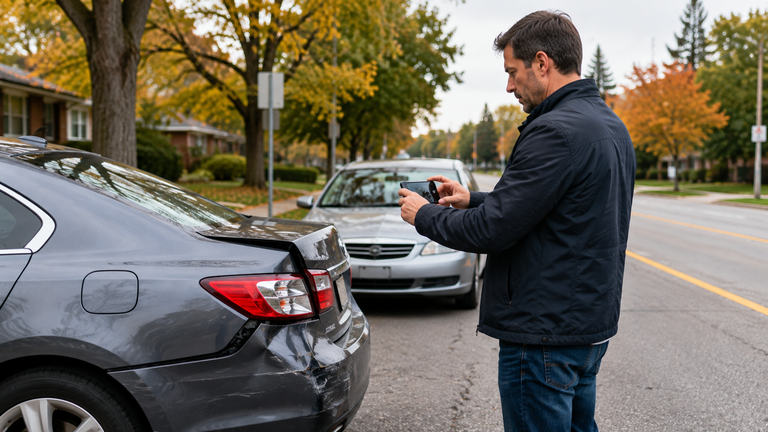
Ontario driver reviewing an auto insurance claim after a minor car accident.

Quick Takeaway

“No-fault insurance” in Ontario does not mean nobody is responsible for a car accident.

It primarily means that after a collision, you generally deal with your own automobile insurer for insured benefits and vehicle damage covered under your policy, rather than pursuing the other driver’s insurer directly.

Fault still matters.

Ontario insurers determine fault using the province’s Fault Determination Rules, and the result can affect matters such as your collision coverage and future insurance costs.

Ontario’s auto-insurance system also changed significantly on July 1, 2026. Certain accident benefits that were previously mandatory became optional for policies issued or renewed from that date, while medical, rehabilitation and attendant-care benefits remain mandatory.

That makes understanding your own policy more important than ever.


What Does “No-Fault” Actually Mean?

Imagine you’re stopped at a red light in Toronto.

Another vehicle hits you from behind.

You believe the other driver is clearly responsible.

Under a traditional understanding of fault-based insurance, you might expect to contact the other driver’s insurance company and demand payment.

Ontario works differently.

Your own insurer generally handles insured claims available under your policy.

That can include applicable:

Vehicle damage

Medical and rehabilitation benefits

Attendant care

and other accident benefits you purchased.

The term “no-fault” therefore describes how insured claims are handled, not whether responsibility for the collision exists.


No-Fault Does NOT Mean “Nobody Is at Fault”

This is probably the biggest misconception.

After a collision, insurers still determine responsibility.

Ontario uses legally prescribed Fault Determination Rules to assign fault.

Depending on the circumstances, a driver can be found:

0% at fault

25% at fault

50% at fault

75% at fault

or:

100% at fault.

The rules use defined accident scenarios rather than simply accepting each driver’s version of who caused the collision.


Why Does Fault Matter?

If your own insurer handles your claim, you may reasonably ask:

“Why should I care who was responsible?”

Because fault can still affect your insurance.

An at-fault collision may potentially influence:

Your claims record

Future premiums

Eligibility for certain discounts

and:

How vehicle damage is covered.

The precise effect depends on your policy, insurer and circumstances.


Direct Compensation Property Damage Changed in 2024

Historically, Ontario’s no-fault system included mandatory Direct Compensation Property Damage (DCPD) coverage.

DCPD generally compensated insured drivers for vehicle damage and certain property losses when another identified insured motorist was at fault, subject to applicable rules.

But Ontario changed the system.

Beginning January 1, 2024, drivers were permitted to opt out of DCPD by adding OPCF 49 to their policy.

This can reduce premiums, but it creates a significant trade-off.


What Happens If You Opt Out of DCPD?

Suppose another driver causes a collision.

You’re:

0% at fault.

That sounds like your repair bill should automatically be covered.

Not necessarily.

If you chose OPCF 49 and declined DCPD, you agreed that your insurer won’t compensate you under DCPD for qualifying vehicle damage or loss of use.

That’s why saving money on premium shouldn’t be the only consideration.

Before declining coverage, ask:

“Could I afford to repair or replace my vehicle myself after a crash I didn’t cause?”


Collision Coverage Still Matters

DCPD and collision coverage solve different problems.

Collision or upset coverage can generally help pay for insured vehicle damage when your vehicle is involved in a collision, subject to:

Policy terms

Deductible

and:

Exclusions.

If you’re responsible for a collision and don’t have appropriate optional physical-damage coverage, your own vehicle damage may not be insured.

“No-fault” doesn’t mean:

Every damaged vehicle is automatically repaired for free.


Accident Benefits Are Separate From Vehicle Damage

After an accident, there may be two very different financial problems:

Problem 1: Your car is damaged.

Problem 2: You are injured.

Ontario’s Statutory Accident Benefits Schedule addresses benefits available to qualifying people injured in automobile accidents.

These benefits can potentially apply regardless of who caused the collision.

That is one of the most important elements of Ontario’s no-fault system.


Major Ontario Auto Insurance Changes Took Effect July 1, 2026

This is especially important for anyone reading this article in 2026.

Ontario redesigned parts of its automobile insurance framework.

For policies issued or renewed on or after July 1, 2026, several accident benefits became optional rather than automatically mandatory.

Ontario’s regulator, the Financial Services Regulatory Authority of Ontario (FSRA), explains that medical, rehabilitation and attendant-care benefits remain mandatory, while benefits such as income replacement, caregiver, housekeeping/home maintenance and certain other benefits became optional.

This means two Ontario drivers can now have substantially different protection depending on the coverage they selected.


Medical, Rehabilitation and Attendant Care

These benefits remain particularly important following serious injuries.

They can potentially help with eligible expenses involving:

Treatment

Rehabilitation

and:

Personal assistance or attendant care

subject to applicable limits and rules.

Your precise benefits depend on:

Injury classification

Policy options

and:

Applicable legislation.

Always check the current policy rather than relying on an older Ontario auto-insurance explanation.


Income Replacement Benefits

Imagine you’re injured in a collision and can’t work for several months.

Your vehicle may be repaired quickly.

Your income may not be.

Income replacement benefits are therefore potentially important for workers who depend heavily on employment earnings.

Following Ontario’s July 2026 reforms, income replacement is among the accident benefits that can be optional for applicable new or renewed policies.

When renewing, don’t simply ask:

“How much is my premium?”

Ask:

“What income protection am I giving up to get this price?”


Example: Rear-End Collision

Consider Emma.

She is stopped at a traffic light.

Another vehicle strikes her from behind.

Her insurer applies Ontario’s Fault Determination Rules and determines that Emma is:

0% at fault.

Emma has:

DCPD coverage

and appropriate accident-benefit protection.

Her own insurer handles applicable insured claims.

She doesn’t need to chase the other driver’s insurance company for every covered expense.

That’s the practical value of Ontario’s no-fault framework.


Example: At-Fault Collision

Now consider Daniel.

He loses control while turning and collides with another vehicle.

The insurer determines Daniel is:

100% at fault.

Daniel can still potentially qualify for applicable accident benefits for his own injuries.

However, repairing his own vehicle may depend on whether he purchased appropriate:

Collision coverage.

His at-fault status may also affect his insurance record and future premiums.

This demonstrates the distinction:

Accident benefits may operate regardless of fault.

But:

Fault still has financial consequences.


Example: 50/50 Fault

Some accidents aren’t entirely one person’s responsibility.

Suppose two vehicles collide while simultaneously changing lanes.

Under the applicable Fault Determination Rules, responsibility might be divided.

If each driver is determined:

50% at fault,

property-damage compensation can be affected accordingly under applicable coverage and policy rules.

Ontario’s system isn’t limited to:

innocent driver vs. guilty driver.

Fault can be apportioned.


What If You Disagree With the Fault Decision?

You may believe:

“The insurer got this completely wrong.”

Start by asking the insurer to explain:

Which Fault Determination Rule was applied

and:

Why.

Gather relevant evidence such as:

Photos

Dashcam footage

Police reports

Witness information

Collision diagrams

and:

Correspondence.

If you remain dissatisfied, follow the insurer’s complaint process.

FSRA provides information about resolving complaints involving insurance companies in Ontario.


Police Reports Don’t Automatically Decide Insurance Fault

Another misconception is:

“The police didn’t charge me, so I can’t be at fault.”

Insurance fault and traffic-law enforcement aren’t necessarily identical.

Ontario insurers determine fault for insurance purposes using the Fault Determination Rules.

A traffic charge can be relevant evidence, but insurance responsibility isn’t determined solely by whether police issued a ticket.


What If the Other Driver Has No Insurance?

Ontario policies include protections dealing with uninsured motorists, subject to statutory and contractual conditions.

This is important because the no-fault system doesn’t eliminate the possibility that another motorist:

has no valid insurance

or:

cannot be identified.

The exact claim process can depend on the circumstances, so notify your insurer promptly.


What Should You Do Immediately After an Ontario Accident?

First, prioritize safety.

Where appropriate:

  • Check for injuries and call emergency services if necessary.
  • Move to a safe location when legally and physically possible.
  • Exchange driver, vehicle and insurance information.
  • Photograph the vehicles and accident scene.
  • Record witness contact information.
  • Preserve dashcam footage.
  • Report the collision to police or a Collision Reporting Centre when required.
  • Notify your insurer promptly.
  • Avoid making assumptions about fault at the scene.
  • Keep records of medical treatment and accident-related expenses.

Your insurer can then explain the claims process and the coverages available under your policy.


Why Photos Matter

Ontario’s Fault Determination Rules often depend heavily on:

Where the vehicles were

and:

How the collision occurred.

Photograph:

Vehicle positions

Damage locations

Traffic signals

Lane markings

Road signs

Intersection layout

and:

Weather or road conditions.

If vehicles need to be moved quickly, photographs can preserve useful evidence.


Dashcams Can Be Valuable

Dashcam footage can provide evidence about:

Lane position

Traffic signals

Vehicle movement

Timing

and:

Collision sequence.

If your dashcam records continuously, save the relevant footage immediately.

Otherwise, the recording could be overwritten.


Your Deductible May Depend on Coverage and Fault

Don’t assume every Ontario auto claim has the same deductible.

The deductible can depend on:

Coverage involved

Fault allocation

Policy selection

and:

Endorsements.

Review the declaration page of your policy.

It should show the coverages and deductibles you’ve selected.


Rental Cars and Loss of Use

Suppose your vehicle requires two weeks of repairs.

How will you get to work?

Rental-vehicle or transportation coverage may depend on your policy and endorsements.

Some Ontario drivers purchase additional loss-of-use protection.

Don’t assume a rental car is automatically unlimited or available after every accident.

Check:

Daily limit

Total limit

and:

Qualifying circumstances.


What Happens to Your Premium After a Claim?

A claim doesn’t automatically produce the same premium increase for everyone.

Factors can include:

Fault

Driving history

Previous claims

Convictions

Insurance company rating rules

and:

Accident-forgiveness coverage.

A first at-fault accident may be treated differently if your policy includes an applicable accident-forgiveness endorsement.

But accident forgiveness doesn’t erase the accident from existence.

Conditions apply.


No-Fault Insurance Doesn’t Eliminate Lawsuits

Ontario’s no-fault system doesn’t mean automobile lawsuits have disappeared.

In certain serious injury situations, an injured person may potentially have rights against an at-fault party, subject to Ontario’s statutory thresholds, deductibles and other legal rules.

These cases can become legally complex.

For significant injuries, individualized legal advice may be appropriate.


Why Your 2026 Renewal Deserves Extra Attention

For years, many Ontario drivers renewed their policies primarily by comparing:

Premium

and:

Deductible.

The July 2026 reforms make that approach riskier.

You should now understand exactly which accident benefits remain on your policy.

A cheaper premium could reflect:

less protection.

Ask your broker or insurer for a clear comparison between:

Current coverage

and:

Proposed renewal coverage.


Questions to Ask Your Ontario Insurer

  1. Do I still have DCPD coverage?
  2. Have I signed OPCF 49?
  3. What happens to my vehicle if I’m 0% at fault?
  4. Do I have collision coverage?
  5. What is my collision deductible?
  6. What accident benefits are included?
  7. Do I have income replacement coverage?
  8. What medical and rehabilitation limits apply?
  9. Do I have caregiver benefits?
  10. Do I have housekeeping/home-maintenance benefits?
  11. Do I have accident forgiveness?
  12. Is rental-car coverage included?
  13. What happens if the other driver is uninsured?
  14. How would a 50% fault determination affect my claim?
  15. What changed at my 2026 renewal?

2026 Ontario Auto Insurance Checklist

  • Review your policy declaration page.
  • Check whether DCPD is included.
  • Check for OPCF 49.
  • Verify collision coverage.
  • Verify comprehensive coverage.
  • Review deductibles.
  • Review mandatory accident benefits.
  • Review optional accident benefits.
  • Check income replacement protection.
  • Review medical and rehabilitation limits.
  • Check rental-car coverage.
  • Review accident forgiveness.
  • Understand the Fault Determination Rules.
  • Keep insurer contact information available.
  • Consider using a dashcam.
  • Save accident evidence immediately.
  • Compare coverage—not just premium—at renewal.

Frequently Asked Questions

Is Ontario a no-fault insurance province?

Yes. Ontario operates a no-fault automobile insurance system in which insured drivers generally deal with their own insurer for applicable insured claims rather than pursuing the other driver’s insurer directly.

Does no-fault mean nobody is responsible for an accident?

No. Insurers still determine fault using Ontario’s Fault Determination Rules. Fault can affect insurance consequences.

Can I be 50% at fault?

Yes. Ontario’s Fault Determination Rules can assign partial responsibility depending on the collision scenario.

If I’m not at fault, does my own insurer pay?

Generally, applicable claims are handled through your own insurer under the coverages available in your policy. The exact payment depends on your policy and circumstances.

Is DCPD still mandatory in Ontario?

Drivers have been permitted to opt out of DCPD since January 1, 2024 by using OPCF 49. Opting out means accepting significant limitations on compensation for certain vehicle damage and loss.

What changed on July 1, 2026?

For policies issued or renewed from July 1, 2026, Ontario made several accident benefits optional. Medical, rehabilitation and attendant-care benefits remain mandatory, while certain other previously mandatory benefits can now be selected optionally.

Can my premium increase if I’m at fault?

Potentially, yes. The impact depends on your insurer, driving record, claim history, policy and whether applicable accident-forgiveness protection exists.

Can I sue the other driver?

Ontario’s no-fault system doesn’t completely eliminate lawsuits. Rights to sue may exist in qualifying circumstances, particularly involving serious injuries, subject to Ontario law.


Final Thoughts

Ontario’s no-fault insurance system is easier to understand once you separate two concepts:

Who handles the claim?

and:

Who caused the accident?

Your own insurer generally handles applicable insured claims.

But insurers still determine fault.

That distinction affects everything from:

vehicle repairs

to:

future premiums.

And in 2026, another question has become equally important:

What coverage did you actually choose?

With Ontario allowing more flexibility in accident-benefit selection and DCPD already being optional, two drivers paying for “Ontario auto insurance” may have very different financial protection after the same accident.

The safest approach is therefore not simply to buy the lowest-priced policy.

Understand:

DCPD + collision + accident benefits + optional benefits + deductibles + endorsements

before a crash occurs.

That’s when Ontario’s no-fault system becomes much easier to navigate.

Pet Insurance Comparison: Is Lifetime Cover Worth the Extra Cost?

UK pet owners comparing lifetime pet insurance options for their dog with a veterinary professional.

Introduction

Your dog develops a skin condition.

The first year of treatment costs:

£1,500.

The following year:

another £1,200.

Then medication and check-ups continue for several more years.

Or your cat develops:

Diabetes

Kidney disease

Arthritis

or another long-term condition requiring ongoing veterinary care.

This is where the type of pet insurance you bought years earlier can become extremely important.

A cheaper policy might help initially.

But once its:

Time limit

or:

Condition-specific financial limit

is exhausted, you may have to pay future treatment costs yourself.

Lifetime pet insurance is designed differently.

The Association of British Insurers (ABI) explains that lifetime policies provide a set amount of veterinary-fee cover each year, which refreshes when the policy is renewed. This can make them particularly relevant for ongoing or recurring conditions, provided the policy remains continuously in force and its terms are met.

But lifetime policies are often:

more expensive.

So is paying extra worth it?

For many pet owners—particularly those who want protection against long-term illnesses—the answer can be:

Yes.

But lifetime cover isn’t automatically the best value for every owner or every pet.

Let’s compare the options.


What Is Lifetime Pet Insurance?

Lifetime insurance is generally the most comprehensive type of pet insurance available in the UK.

The basic idea is:

Your veterinary-fee allowance renews each policy year.

Suppose your policy provides:

£10,000 of veterinary-fee cover per year.

Your dog develops a qualifying chronic condition.

During Year 1, treatment costs:

£4,000.

At renewal, the annual allowance can reset for the new policy year, subject to the policy terms and continued renewal.

If treatment continues in Year 2, you can potentially claim again against that year’s allowance.

That’s fundamentally different from some cheaper policy structures.


Lifetime Doesn’t Mean Unlimited

This is one of the biggest misunderstandings.

A policy called:

“Lifetime”

doesn’t necessarily mean:

Unlimited veterinary treatment for your pet’s entire life.

There will still be:

Annual limits

Excesses

Exclusions

Eligibility rules

Waiting periods

and:

Policy conditions.

You also generally need to:

keep renewing the policy.

If you cancel the policy and later try to obtain new insurance, an existing illness may be treated as:

pre-existing.


The Four Main Types of Pet Insurance

UK pet insurance is commonly structured into four broad categories:

1. Lifetime

Annual veterinary limits refresh when you renew.

2. Maximum Benefit

Provides a maximum amount for each condition without necessarily imposing a time limit, but once that condition’s allowance is exhausted, it isn’t replenished.

3. Time-Limited

Provides coverage for a condition for a specified period, commonly around 12 months from when treatment begins, subject to the financial limit.

4. Accident-Only

Generally covers qualifying accidental injuries but not ordinary illnesses.

The ABI describes these major categories when explaining UK pet insurance.


Quick Comparison

FeatureLifetimeMaximum BenefitTime-LimitedAccident-Only
AccidentsUsuallyUsuallyUsuallyYes
IllnessUsuallyUsuallyUsuallyGenerally no
Chronic conditionsStrongest potential protectionUntil condition limit exhaustedLimitedNo
Annual cover refreshesYesGenerally no per-condition resetNoPolicy dependent
Condition time limitGenerally no while policy remains eligibleUsually noYesNot applicable
Pre-existing conditionsUsually excluded/restrictedUsually excluded/restrictedUsually excluded/restrictedUsually excluded/restricted
Typical costHigherMediumLowerLowest
Best suited forLong-term protectionDefined per-condition protectionShorter-term budget protectionAccident-focused cover

Exact policy terms vary.

Never choose solely from the label.


Why Lifetime Cover Costs More

The insurer is potentially taking on a much longer financial exposure.

Imagine a puppy insured at:

six months old.

At age four, the dog develops a chronic condition.

Treatment continues until age:

12.

If the policy remains renewed and the condition remains eligible, lifetime insurance could potentially contribute toward treatment:

year after year.

That can create substantially greater potential insurer liability than a policy that stops covering the condition after:

12 months.

Higher potential coverage generally means:

higher premiums.


Example: Chronic Skin Condition

Consider two hypothetical policies.

Policy A — Lifetime

Veterinary limit:

£7,500 each year.

Policy B — Maximum Benefit

Condition limit:

£5,000.

Your dog develops a chronic skin disorder.

Treatment costs:

YearTreatment
Year 1£1,500
Year 2£1,200
Year 3£1,400
Year 4£1,600
Year 5£1,300
Total£7,000

Under the lifetime policy, qualifying treatment could potentially continue to be covered each year because the annual allowance refreshes.

Under the £5,000 maximum-benefit policy, once the cumulative condition limit is exhausted:

future costs for that condition become your responsibility.

This simplified example ignores excesses and other terms, but demonstrates the fundamental difference.


Why Chronic Conditions Matter

Modern veterinary medicine can treat conditions that pets may live with for years.

Examples include:

Diabetes

Arthritis

Allergies

Skin disorders

Heart disease

Kidney disease

and:

Recurring digestive problems.

A long-term condition may involve:

Medication

Blood tests

Scans

Specialist consultations

Follow-up appointments

and:

Ongoing monitoring.

One treatment may be affordable.

Years of treatment can become expensive.


Example: Diabetes

Suppose a cat develops diabetes.

The owner may face ongoing expenses involving:

Veterinary consultations

Diagnostic testing

Medication

and:

Monitoring.

A policy covering the illness for only:

12 months

could eventually stop contributing.

Lifetime cover may continue providing eligible veterinary-fee protection in future policy years, subject to annual limits and renewal.

This is one of the strongest reasons people choose lifetime insurance.


What Is Maximum-Benefit Pet Insurance?

Maximum-benefit policies can provide a middle ground.

Instead of resetting an allowance each year, they typically provide:

a fixed financial limit for each condition.

Suppose:

£4,000 per condition.

Your dog develops arthritis.

Year 1:

£1,000.

Year 2:

£1,500.

Year 3:

£1,500.

You’ve now used:

£4,000.

If the condition continues, future arthritis treatment may no longer be covered under that condition allowance.


The Advantage of Maximum Benefit

Unlike time-limited policies, maximum-benefit insurance may not necessarily stop simply because:

12 months have passed.

If you haven’t exhausted the financial limit, qualifying treatment may continue.

That can make maximum-benefit policies attractive to owners wanting more protection than:

time-limited insurance

without paying for:

full lifetime cover.


But the Limit Doesn’t Usually Reset

This is the crucial difference.

Lifetime:

allowance refreshes.

Maximum benefit:

condition allowance is finite.

Once exhausted:

it’s gone for that condition.

So check whether the policy limit is:

per year

or:

per condition for the life of the policy.

Those phrases can sound similar but produce very different outcomes.


What Is Time-Limited Pet Insurance?

Time-limited policies generally provide cover for a condition for a defined period.

Commonly:

12 months.

There is typically also:

a monetary limit.

Suppose your dog develops an ear condition.

The policy provides:

£2,000

for up to:

12 months.

Coverage may stop when either:

The £2,000 is exhausted

or:

The 12-month period ends,

depending on the contract.

After that, the condition may become excluded from future claims.


Why Time-Limited Policies Are Cheaper

The insurer’s exposure is much more restricted.

Instead of potentially paying eligible treatment costs:

year after year,

the insurer knows the condition can only be covered within:

a defined period and limit.

That can make premiums more affordable.

But the owner accepts greater:

long-term financial risk.


When Time-Limited Cover Can Work Well

Suppose your pet suffers a temporary illness.

Treatment lasts:

three months.

The pet fully recovers.

Total veterinary cost:

£1,200.

A time-limited policy with:

£3,000

of qualifying cover may work perfectly well.

You may never notice the difference between it and a more expensive lifetime policy.

The difference becomes much more important when the condition:

doesn’t go away.


What Is Accident-Only Pet Insurance?

Accident-only policies generally provide the most limited protection.

They may cover qualifying injuries caused by:

Falls

Vehicle accidents

Cuts

Fractures

and other accidents.

But ordinary illnesses generally aren’t covered.

That means:

Cancer?

Generally not.

Diabetes?

Generally not.

Arthritis developing naturally?

Generally not.

Kidney disease?

Generally not.

Accident-only cover can be inexpensive because a major category of veterinary risk:

illness

is excluded.


Accident-Only Isn’t “Cheap Lifetime Insurance”

This is important.

If lifetime insurance costs:

£40/month

and accident-only costs:

£8/month,

the difference isn’t simply:

insurer markup.

You’re buying fundamentally different protection.

Always compare:

coverage—not just premiums.


The Pre-Existing Condition Problem

This may be the single most important concept in pet insurance.

Suppose your dog develops:

arthritis.

You claim under your existing insurer.

At renewal, another insurer offers a cheaper policy.

You switch.

The new insurer may regard the arthritis as:

pre-existing.

Future treatment for that condition may therefore be excluded.

MoneyHelper warns that changing pet insurers can become more difficult once a pet has developed a medical condition because new policies may not cover existing conditions.


That’s Why the First Policy Can Matter for Years

When your pet is:

young and healthy,

switching insurer can seem easy.

Once your pet develops:

recurring allergies

or:

heart disease,

switching becomes much more complicated.

You may have to choose between:

staying with an increasingly expensive existing policy

or:

moving to a cheaper policy that excludes the existing condition.

This is sometimes called:

insurance lock-in.


Don’t Buy Lifetime Cover Assuming the Premium Is Fixed for Life

Lifetime refers primarily to:

the coverage structure.

It doesn’t mean:

the premium stays the same for your pet’s lifetime.

Premiums can rise as:

Your pet ages

Veterinary costs increase

Claims occur

Insurer pricing changes

and:

Risk changes.

MoneyHelper notes that pet insurance generally becomes more expensive as pets get older and that some policies may also require owners to contribute a percentage of claims for older pets.


Older Pets Can Cost Significantly More

A:

1-year-old Labrador

and:

10-year-old Labrador

don’t represent the same insurance risk.

Older animals are more likely to develop:

Cancer

Arthritis

Heart problems

Eye conditions

and:

Other illnesses.

So expect insurance costs to change over time.


What Is a Co-Payment?

Some pet policies—particularly for older pets—may require:

an excess

plus:

a percentage contribution.

For example:

Veterinary bill:

£2,000.

Policy excess:

£100.

Then the owner may also have to pay:

20%

of certain remaining eligible costs, depending on policy terms.

This is commonly called:

co-payment

or:

co-insurance.

The exact calculation varies.


A £10,000 Limit Doesn’t Mean Every £10,000 Bill Is Fully Paid

Suppose your policy says:

£10,000 annual veterinary-fee limit.

You receive a:

£10,000 veterinary bill.

Your insurer won’t necessarily simply send:

£10,000.

You may still have:

Excess

Co-payment

Excluded treatments

Sub-limits

or:

Non-covered charges.

The headline annual limit is only one part of the contract.


Check for Sub-Limits

Some policies have an overall veterinary-fee limit but separate limits for specific services.

For example:

Dental treatment

Complementary therapy

Behavioural treatment

MRI/CT imaging

or:

Overseas veterinary care.

A policy advertising:

£15,000 annual vet cover

isn’t necessarily providing £15,000 for every category.

Read the schedule.


Dental Coverage Can Be a Major Difference

Pet owners often assume:

“Vet fees include teeth.”

Not necessarily.

Policies may distinguish between:

Dental injury

and:

Dental illness.

Some may require evidence of:

regular dental examinations

and:

recommended preventive treatment.

Check dental provisions carefully before buying.


What About Hereditary and Congenital Conditions?

This is especially important for certain breeds.

Some pets have increased risk of inherited conditions.

Examples may involve:

Hip disorders

Heart conditions

Eye disease

or:

Respiratory problems.

Don’t assume all policies treat hereditary and congenital conditions identically.

Check whether they’re:

included, restricted or excluded.


Breed Can Affect Premiums

Insurance pricing may consider:

Species

Breed

Age

Location

Medical history

and:

Coverage level.

Some breeds have higher average veterinary risks.

For dogs, larger or pedigree breeds may sometimes be more expensive to insure than lower-risk pets.

Your quote is specific to:

your animal.


Location Can Affect Cost Too

Veterinary prices differ around the UK.

Treatment in parts of:

London

may cost differently from treatment elsewhere.

Insurers may incorporate location into pricing.

Two identical dogs living in different postcodes may therefore receive:

different quotes.


How Expensive Can Veterinary Treatment Become?

This is why pet insurance exists.

A serious illness or injury may involve:

Emergency consultation

X-rays

Blood tests

MRI or CT scans

Surgery

Hospitalisation

Medication

and:

Specialist care.

A complex veterinary case can quickly cost:

thousands of pounds.

The question isn’t simply:

“Can I afford today’s premium?”

It’s also:

“Could I comfortably fund a £5,000–£10,000 unexpected veterinary bill?”


Lifetime Cover Is Essentially Catastrophe Protection

Routine vet visits may not justify an expensive insurance policy by themselves.

The financial value of lifetime insurance becomes clearer when considering:

long-term or expensive conditions.

You’re transferring the risk that your pet develops an illness requiring:

years of veterinary care.

That doesn’t mean you’ll necessarily claim more than you pay in premiums.

Insurance isn’t an investment account.

It’s:

risk transfer.


Example: Lifetime Cover Pays Off

Imagine lifetime insurance costs:

£45/month.

Annual premium:

£540.

Over five years:

£2,700,

ignoring premium changes.

Then your dog develops a chronic illness generating:

£3,000 per year

of eligible veterinary costs for:

four years.

Potential gross veterinary cost:

£12,000.

Subject to limits, excesses, co-payments and exclusions, lifetime insurance could provide substantial financial protection.


Example: Lifetime Cover Doesn’t “Pay Off”

Another dog remains healthy for:

14 years.

The owner pays premiums every year and makes only:

£500

of claims.

Financially, premiums exceeded claims.

Was the insurance useless?

Not necessarily.

The owner purchased protection against:

uncertain catastrophic veterinary costs.

The same logic applies to:

Home insurance

Car insurance

and:

Life insurance.

You don’t necessarily want the event that makes the policy financially profitable to happen.


Could You Self-Insure Instead?

Potentially.

Suppose you decide not to buy comprehensive pet insurance.

Instead, you put:

£75/month

into a dedicated savings account.

After:

one year,

you have:

£900.

After five years:

£4,500,

ignoring interest.

That’s useful.

But what happens if your puppy requires:

£7,000 surgery

after:

six months?

Your fund may contain only:

£450.

That’s the primary weakness of self-insurance:

the expensive event can happen before you’ve built enough savings.


A Hybrid Strategy

Some financially secure owners choose:

higher-excess lifetime insurance

plus:

dedicated pet savings.

The savings fund covers:

Excesses

Routine care

Vaccinations

and:

Smaller bills.

Insurance protects against:

major veterinary costs.

This can sometimes provide a balance between:

premium affordability

and:

catastrophic protection.

But compare actual quotes rather than assuming a high excess always provides good value.


Routine Care Is Usually Different

Pet insurance is generally designed for:

unexpected illness and injury.

Routine expenses such as:

Vaccinations

Flea treatment

Worming

Routine check-ups

Neutering

and:

Preventive care

are often not covered under standard policies.

Don’t buy insurance expecting it to function like:

a veterinary subscription plan.


Pet Health Plans Are Not the Same as Insurance

Some veterinary practices offer monthly:

pet health plans.

These may cover routine items such as:

Vaccinations

Parasite treatment

and:

Health checks.

But they aren’t necessarily insurance against:

major accidents and illnesses.

Some owners use:

Pet Health Plan + Pet Insurance

for different purposes.


What About Third-Party Liability?

Dog owners should pay particular attention to:

third-party liability.

Suppose your dog:

Injures someone

or:

Causes an accident.

Some comprehensive dog insurance policies include third-party liability protection.

Limits and exclusions vary.

Cat policies don’t necessarily offer equivalent liability protection because the legal and practical risk differs.


What About Lost or Stolen Pets?

Some policies may provide benefits relating to:

Advertising

Reward costs

or:

Purchase price/value

if a pet is lost or stolen.

But this isn’t universal.

Check:

limits and conditions.


What About Holiday Cancellation?

Certain comprehensive policies may provide limited coverage if you need to cancel or cut short a holiday because your pet requires emergency treatment.

Again:

policy specific.

Don’t assume it’s automatically included in lifetime insurance.


What About Boarding Fees?

Suppose you’re hospitalised and can’t care for your pet.

Some policies may contribute toward:

boarding or kennel fees

under qualifying circumstances.

This can be useful but is usually secondary to:

veterinary-fee coverage.

Don’t choose a policy based on extras while ignoring the core vet limit.


Compare the Vet-Fee Limit First

When comparing lifetime policies, start with:

annual veterinary-fee limit.

For example:

Policy A — £4,000/year

Policy B — £7,000/year

Policy C — £12,000/year

Then investigate:

Excess

Co-payment

Sub-limits

Dental coverage

Hereditary conditions

Complementary treatment

and:

Renewal structure.

A £12,000 headline limit isn’t automatically best.


Annual Limit vs. Per-Condition Annual Limit

Lifetime policies can be structured differently.

Annual Total Limit

Example:

£10,000 total veterinary fees each year.

All eligible conditions share the same pot.

Per-Condition Annual Limit

Example:

£4,000 per condition each year,

possibly subject to other overall restrictions.

These structures can produce very different outcomes if your pet develops:

multiple conditions simultaneously.

Read carefully.


Example: Two Conditions in One Year

Your dog develops:

arthritis

and:

heart disease.

Annual treatment:

Arthritis:

£4,000.

Heart:

£5,000.

Total:

£9,000.

If your policy has:

£7,000 total annual cover,

you may reach the annual ceiling.

A different policy structure could produce a different result.

This is why:

“Lifetime cover”

alone isn’t enough information.


What Happens at Renewal?

Lifetime protection depends heavily on:

continuous renewal.

At renewal, the insurer may:

Change the premium

and, subject to applicable terms and regulation:

Change policy conditions for the new period.

The annual veterinary allowance may refresh, but:

your premium isn’t frozen.

Read every renewal notice.


Can You Switch Lifetime Insurers?

Yes.

But:

be extremely careful after your pet has received treatment or developed symptoms.

A new insurer may exclude:

Diagnosed conditions

and potentially:

Related prior symptoms,

depending on underwriting.

MoneyHelper recommends considering existing medical conditions before switching because they may not be covered by a new insurer.

Never cancel your old policy before understanding exactly what the new policy excludes.


What Counts as a Pre-Existing Condition?

Definitions vary.

It isn’t always limited to:

a formally diagnosed disease.

Some insurers may consider:

Symptoms

Previous treatment

Veterinary advice

or:

Recurring related conditions

that existed before coverage began.

Read the insurer’s definition carefully.


Be Accurate on the Application

Don’t hide:

Previous symptoms

Medication

Veterinary visits

or:

Medical history.

If the insurer requests information, answer accurately.

Claims may involve reviewing veterinary records.

A cheaper policy based on inaccurate information isn’t good protection.


Don’t Wait Until Your Pet Is Sick

This is one of the biggest pet-insurance mistakes.

Owner:

“My dog has just been diagnosed with arthritis. I’ll buy lifetime insurance now.”

The arthritis is now likely to be:

pre-existing.

Insurance generally protects against:

uncertain future events.

Not losses already known.

The best time to consider comprehensive insurance is often when your pet is:

young and healthy.


Is Lifetime Cover Worth It for a Puppy?

It can be particularly attractive.

A puppy potentially has:

10–15+ years

of future health uncertainty.

Buying comprehensive cover while the animal has little or no medical history may reduce the number of conditions considered pre-existing.

But the long-term premium commitment matters.

You need to consider whether you can continue paying:

as the pet ages.


What About an Older Pet?

This becomes more complicated.

Lifetime cover may be:

Expensive

Subject to higher excess

Subject to co-payment

or:

Limited by existing conditions.

For an older pet with substantial medical history, compare:

what is actually covered

rather than simply buying the policy with the highest headline limit.


Don’t Overinsure Routine Risk While Underinsuring Catastrophic Risk

Suppose Policy A pays for several minor extras but provides:

£2,000 vet cover.

Policy B has fewer extras but provides:

£10,000 lifetime vet cover.

For many owners, the second policy may provide stronger protection against the event most likely to cause:

financial distress.

Prioritise:

major veterinary risk.


Price Comparison Sites: Useful but Not Enough

Comparison sites can help identify:

Prices

Limits

and:

Insurers.

But MoneyHelper warns consumers not to assume the cheapest insurance is necessarily best and recommends checking the actual policy details and exclusions.

Use comparison sites for:

discovery.

Then read:

policy documents.


Compare Policies Like-for-Like

Don’t compare:

£15/month

with:

£40/month

without checking what each provides.

Build a table.

FeaturePolicy APolicy B
TypeLifetimeLifetime
Annual vet limit£5,000£10,000
Excess£150£100
Older-pet co-pay20%10%
Dental illnessLimitedIncluded subject to conditions
Complementary therapy£500£1,500
Third-party liability£1m£2m
Monthly premium£X£Y

Now you’re comparing:

value,

not simply:

price.


Is Lifetime Cover Worth the Extra Cost?

For many owners:

Yes—if you can sustainably afford it.

Lifetime cover can be particularly valuable when:

You couldn’t comfortably fund a major veterinary bill

You want protection against chronic illnesses

Your pet is young and currently healthy

Your breed may have costly health risks

You want the annual vet-fee allowance to refresh

and:

You expect to keep the policy long term.


When Lifetime Cover May Be Less Attractive

It may be less compelling if:

Premiums are unaffordable

Your pet already has extensive excluded conditions

You have substantial liquid savings and intentionally self-insure

The lifetime policy has a very low annual limit

or:

The policy’s exclusions make the headline cover less useful.

“Lifetime” is not automatically synonymous with:

good policy.


The Affordability Test

Before buying, ask:

Can I afford this premium today?

Then:

Could I still afford it if it increased materially as my pet aged?

Because buying lifetime cover and cancelling it when the pet develops chronic health problems can undermine the reason you bought lifetime insurance in the first place.

Think beyond:

Year 1.


Your 2026 Pet Insurance Comparison Checklist

Before choosing a policy:

  1. Identify the policy type.
  2. Check the annual veterinary-fee limit.
  3. Determine whether limits reset annually.
  4. Check whether limits are total or per condition.
  5. Review the excess.
  6. Check age-related co-payments.
  7. Read the pre-existing-condition definition.
  8. Check waiting periods.
  9. Review dental coverage.
  10. Check hereditary/congenital conditions.
  11. Check complementary therapy limits.
  12. Check diagnostic-imaging limits.
  13. Review prescription/medication coverage.
  14. Check third-party liability for dogs.
  15. Review lost/stolen pet benefits.
  16. Check boarding benefits.
  17. Check holiday-cancellation benefits.
  18. Understand renewal rules.
  19. Consider future affordability.
  20. Compare like-for-like policies.
  21. Don’t switch without checking exclusions.
  22. Don’t cancel existing cover until replacement insurance is confirmed.
  23. Keep veterinary records.
  24. Disclose medical history accurately.
  25. Review coverage every year.

Frequently Asked Questions

What does lifetime pet insurance mean?

Lifetime pet insurance generally provides veterinary-fee cover that refreshes each policy year when you renew, allowing eligible ongoing conditions to continue receiving coverage subject to annual limits and policy terms.

Is lifetime pet insurance unlimited?

No. Lifetime policies still have annual limits, excesses, exclusions and other conditions.

Is lifetime pet insurance worth it?

It can be worthwhile if you want stronger protection against chronic or recurring conditions and couldn’t comfortably pay substantial long-term veterinary bills yourself. Whether it’s worth the premium depends on your finances, pet and policy.

What’s the difference between lifetime and maximum-benefit pet insurance?

Lifetime cover generally refreshes eligible veterinary limits annually. Maximum-benefit policies usually provide a fixed amount for each condition, and once that allowance is exhausted, it doesn’t reset.

What’s the difference between lifetime and time-limited insurance?

Lifetime policies can potentially continue covering eligible chronic conditions across policy years. Time-limited insurance covers a condition only for a specified period and financial limit.

Does lifetime insurance cover pre-existing conditions?

Usually not automatically. Pre-existing conditions are commonly excluded or restricted, although specialist products may differ.

Will my lifetime pet insurance premium stay the same?

No. Lifetime refers to the coverage structure, not a guaranteed lifetime premium. Costs can increase as the pet ages and for other pricing reasons.

Can I change pet insurer after making a claim?

Yes, but a new insurer may treat the condition you’ve claimed for—and potentially related medical history—as pre-existing. Check exclusions before switching.

Is accident-only pet insurance enough?

It may suit someone intentionally seeking limited accident protection, but it generally doesn’t provide the illness protection offered by more comprehensive policies.

Should I insure a puppy immediately?

Considering insurance while a pet is young and healthy can reduce the chance that future conditions are already classified as pre-existing when cover begins.


Final Thoughts

The difference between pet insurance policies can seem insignificant when your pet is:

young,

healthy,

and:

rarely visits the vet.

That’s exactly when:

£15/month

can look much more attractive than:

£40/month.

But the real test comes years later.

Suppose your dog develops:

a lifelong condition.

A time-limited policy may stop paying after the relevant coverage period.

A maximum-benefit policy may eventually exhaust its condition limit.

A lifetime policy can potentially continue providing eligible veterinary-fee protection:

year after year,

because the allowance refreshes when the policy renews, subject to its terms.

That’s what you’re paying extra for.

Not:

cheaper routine vet visits.

But protection against the possibility that one illness becomes:

a five-year, eight-year or lifelong financial commitment.

Lifetime cover still isn’t automatically the right choice.

You should compare:

Annual limit

Excess

Co-payment

Pre-existing-condition rules

Dental cover

Breed-specific risks

Renewal pricing

and:

Long-term affordability.

Most importantly, don’t wait until your pet develops symptoms before thinking about comprehensive insurance.

At that point, the condition you most want covered may already be:

pre-existing.

For pet owners who want predictable protection against potentially expensive long-term illnesses and can afford the premiums over time, lifetime cover can provide the strongest overall structure.

The cheapest policy may save money:

this year.

The better question is:

Which policy would you want if your pet needed treatment every year for the rest of its life?


Disclaimer

This article is for general informational and educational purposes only and doesn’t constitute financial, veterinary, legal or insurance advice. Pet insurance policies vary significantly by insurer, pet, breed, age and medical history. Limits, excesses, co-payments, exclusions and definitions differ. Always review the policy wording and speak with the insurer or an appropriately qualified adviser before purchasing or replacing cover.

How to Protect Your No Claims Bonus (NCB) After a Minor Scrape

How to Protect Your No-Claims Bonus (NCB) Aftera Minor Scrape.

A small scrape in a supermarket car park can create a surprisingly difficult insurance decision.

Perhaps you reversed into a post, lightly damaged another parked vehicle, or scraped your bumper against a wall. Nobody was injured, and the damage appears relatively minor.

Your first thought might be:

“Should I make an insurance claim, or will I lose my no claims bonus?”

For UK motorists, a No Claims Bonus (NCB)—also commonly called a No Claims Discount (NCD)—can significantly influence the price of car insurance. After several claim-free years, protecting that discount can become an important consideration.

However, avoiding a claim isn’t always as simple as paying for repairs yourself.

Your policy may require you to notify your insurer about an accident or incident even if you don’t intend to make a claim. If another person or vehicle is involved, additional considerations arise.

Here’s how to approach a minor scrape without making decisions that could cause bigger insurance problems later.


What Is a No Claims Bonus?

A no claims bonus is a discount insurers may provide based on the number of consecutive years you’ve gone without making a claim that affects your NCB.

For example, you might build:

  • 1 year NCB
  • 2 years NCB
  • 3 years NCB
  • 5 years NCB
  • 10+ years NCB

How insurers calculate discounts varies.

Having five years of NCB doesn’t mean every insurer will give you the same percentage discount. One insurer may recognise a different maximum number of years or apply a different discount structure from another.

This makes your number of NCB years different from the actual percentage discount applied to your premium.


What Happens to Your NCB After an Accident?

It depends on what happens after the incident.

Simply being involved in an accident doesn’t automatically mean your entire NCB disappears.

The outcome can depend on:

  • Whether you make a claim
  • Whether another person claims against your policy
  • Whether your insurer recovers its costs
  • Whether fault is established
  • Your insurer’s NCB rules
  • Whether you’ve purchased NCB protection
  • How many previous claims you’ve made

For example, if you make an at-fault claim without protected NCB, your accumulated NCB may be reduced according to the insurer’s step-back rules.

It isn’t necessarily reduced to zero.


Does a Minor Scrape Affect Your No Claims Bonus?

Potentially.

Imagine you accidentally scrape your car against a concrete pillar while parking.

Repair estimate:

£350

Your insurance excess:

£300

If you submit a qualifying claim, the insurer might contribute relatively little after the excess.

Meanwhile, the claim could affect your NCB and potentially influence future premiums.

For relatively inexpensive damage, paying for your own repair can therefore sometimes make financial sense.

But there is an important distinction:

Not making a claim doesn’t necessarily mean you shouldn’t notify your insurer.


Do You Need to Tell Your Insurer About a Minor Accident?

Check your policy wording.

Many motor policies require policyholders to report accidents or incidents even when they don’t intend to claim.

This can apply to:

  • Minor collisions
  • Parking scrapes
  • Accidents involving another vehicle
  • Damage to third-party property
  • Incidents where nobody initially intends to claim

You may be able to tell your insurer that you’re reporting the incident for notification purposes only and don’t currently intend to claim for your own damage.

Whether and how an insurer records the incident varies.

Never conceal an accident simply because you’re worried about your NCB.


Notification vs. Making a Claim

These are not necessarily the same thing.

Notification

You tell your insurer that an incident occurred.

Claim

You ask the insurer to provide benefits or pay eligible costs under the policy.

Suppose you scrape your own bumper against a wall.

You notify your insurer because your policy requires reporting incidents but decide to pay the £250 repair yourself.

That may be recorded differently from making a £250 damage claim.

However, an incident can still be relevant to future underwriting and pricing even when no payment is made.


Should You Claim for a Small Scrape?

Start by comparing the repair cost with your excess and the potential insurance consequences.

Example

Repair cost:

£450

Compulsory excess:

£250

Voluntary excess:

£150

Total applicable excess:

£400

If the claim is covered, the insurer’s contribution may be only around £50 in this simplified example.

Submitting a claim for such a small benefit may not make financial sense.

But now imagine the repair estimate is:

£2,500

with the same £400 excess.

The potential insurer contribution becomes much more significant.

The decision is therefore not simply:

Claim vs. don’t claim.

It’s:

How much financial benefit would the claim provide compared with what I might pay myself?


What If Another Car Is Involved?

This requires more caution.

Suppose you lightly scrape another vehicle in a supermarket car park.

The visible damage appears minor.

You may be tempted to offer the owner £200 and avoid insurance.

But what looks like a minor scrape can become more complicated.

Modern vehicles can contain expensive components in bumpers, including:

  • Parking sensors
  • Cameras
  • Radar equipment
  • Driver-assistance technology
  • Wiring
  • Mounting brackets

A bumper that appears lightly scratched may cost considerably more to repair than expected.

If another party is involved, exchange the appropriate information and follow your policy’s reporting requirements.


Don’t Assume “No Damage” Means No Claim

Immediately after a minor collision, both drivers may agree that everything looks fine.

A few days later, the other driver may discover additional damage.

They may then contact their insurer.

If you never informed your insurer about the original incident, your insurer could receive a third-party claim without having heard your account of what happened.

Prompt notification gives you an opportunity to provide accurate information while the event is still fresh.


Take Photographs After a Minor Scrape

Photographs can be extremely useful.

Where safe, photograph:

  • Your vehicle
  • Other vehicle
  • Damage
  • Number plates
  • Road or car park position
  • Nearby signs
  • Relevant markings
  • Wider scene

Also record:

  • Date
  • Time
  • Location
  • Weather
  • Other driver’s details
  • Witness details where applicable

Don’t edit the original photographs.

They may become useful if the other party’s description of the incident changes later.


What Is Protected No Claims Bonus?

NCB protection is an optional feature offered by many insurers.

It generally allows you to make a limited number of qualifying claims within a specified period without losing or stepping back your NCB.

For example, an insurer might allow a certain number of claims within several years while maintaining your accumulated NCB.

The exact rules vary significantly.

Check:

  • Number of protected claims
  • Relevant time period
  • Types of claims included
  • What happens after exceeding the limit
  • Whether protection transfers when changing insurer

NCB protection doesn’t make accidents financially invisible.


Protected NCB Does NOT Freeze Your Premium

This is one of the most important points in this guide.

Suppose you have:

9 years NCB + protected NCB

You make an at-fault claim.

Your insurer may allow you to retain the 9-year NCB under the protection rules.

But your underlying premium can still increase because your claims history has changed.

Simplified Example

Before accident:

Base premium: £1,000

NCB discount: 40%

Premium: £600

After accident, suppose the insurer reassesses your base premium:

New base premium: £1,300

Protected NCB discount: 40%

New premium:

£780

Your discount was protected.

Your premium still increased.

That’s why protecting your NCB and protecting your premium are not the same thing.


Is NCB Protection Worth Paying For?

It depends.

NCB protection may be more attractive when:

  • You’ve accumulated several claim-free years.
  • The additional premium is modest.
  • Losing NCB would materially affect your insurance costs.
  • You rely heavily on your vehicle.
  • You want protection against an unexpected at-fault claim.

It may be less attractive when:

  • You have very little NCB.
  • Protection is expensive.
  • Your insurer’s protection terms are restrictive.

Compare the cost of adding protection with the potential consequences of losing some NCB.


Can You Protect Your NCB After the Accident?

Generally, you shouldn’t expect to purchase NCB protection after an accident and have it retrospectively protect a claim that has already occurred.

Protection normally needs to be part of the policy before the relevant incident.

Think of it like insurance itself—you can’t normally wait until after a loss and then buy protection for that past event.


Does a Non-Fault Accident Affect Your NCB?

Potentially, at least temporarily.

Suppose another driver hits your parked car.

You make a claim through your insurer.

If your insurer initially pays for repairs, the claim may remain open while it attempts to recover the money from the responsible party’s insurer.

How this affects your NCB depends on the insurer and eventual recovery.

If the insurer successfully recovers its costs, the claim may ultimately be treated as non-fault under its rules.

Remember that in insurance terminology, “fault” can relate to whether the insurer recovered its costs, not simply who you believe caused the accident.


What About Windscreen Claims?

Many insurers treat windscreen claims differently from ordinary accident claims.

A windscreen repair or replacement may not affect your NCB under some policies.

However:

  • A separate windscreen excess may apply.
  • Claims can still be recorded.
  • Policy rules vary.

Check your insurer’s wording rather than assuming all glass claims are NCB-neutral.


What About Theft, Fire or Vandalism?

These situations can be more complicated.

Even though you didn’t deliberately cause the event, your insurer may be unable to recover its costs from another identifiable party.

Depending on the insurer’s NCB rules, such claims can potentially affect your bonus.

Protected NCB may therefore be useful for more than simply at-fault road accidents.


Can You Pay for Your Own Repairs?

Yes, you can generally decide not to claim for damage to your own vehicle.

For a small cosmetic scrape, this may be financially sensible.

For example:

Repair:

£300

Excess:

£250

Submitting an insurance claim for the small difference may provide limited benefit.

However, if another vehicle or person’s property was involved, follow your policy’s notification requirements regardless of whether you’re claiming for your own repairs.


Can You Pay for the Other Driver’s Repairs Privately?

Some drivers choose to settle very minor damage privately.

This carries risks.

The other party may later:

  • Discover additional damage
  • Receive a higher repair estimate
  • Claim for a replacement vehicle
  • Report an injury
  • Contact their insurer
  • Dispute what happened

Your policy may also require you to notify your insurer regardless of whether you intend to settle privately.

If you consider paying privately, do not use it as a reason to hide the incident from your insurer.


Example: Scraping Your Own Car

You reverse into your garage wall.

Damage:

£275

Total applicable excess:

£350

There is no third-party damage.

Making a claim would provide little or no practical benefit because the repair cost is below your excess.

You may decide to repair the vehicle yourself while still complying with any incident-notification requirement in your policy.


Example: Scraping Another Vehicle

You accidentally scratch a parked car.

Initial estimate:

£400

You think about paying privately.

But the repair shop later identifies damage involving a parking sensor, increasing the bill to:

£1,200

The other driver decides to claim through insurance.

This demonstrates why apparently minor third-party accidents should be handled carefully.


Example: £1,500 Repair With Protected NCB

You have comprehensive insurance with:

£400 total excess

and protected NCB.

Your car suffers £1,500 of covered accidental damage.

The potential insurance benefit is much more meaningful than in a £450 repair scenario.

You might decide that claiming is worthwhile.

Your NCB protection may preserve your accumulated bonus according to policy rules, although your renewal premium could still change.


How to Protect Your NCB Before an Accident Happens

The best time to think about NCB protection is before you need it.

Consider NCB Protection

Ask how much it costs and how many claims it protects.

Choose Your Excess Carefully

A very high voluntary excess can make smaller claims economically pointless.

Drive Defensively

Avoiding claims remains the most effective way to preserve your claims record.

Use Parking Technology

Sensors and reversing cameras can reduce parking-related accidents, but don’t rely on them completely.

Choose Parking Spaces Carefully

A slightly longer walk may be preferable to squeezing into an extremely tight space.

Keep Your Policy Accurate

Incorrect information about drivers, usage or vehicle details can cause serious problems when claiming.


How Many Years of NCB Can You Lose?

There is no universal rule.

Insurers use different step-back scales.

For example, one insurer might reduce five years of NCB to three years after a qualifying claim.

Another may use a different calculation.

Multiple claims can result in a greater reduction.

Read the NCB section of your policy documents to understand:

  • Maximum recognised years
  • Step-back rules
  • Protected-claim allowance
  • Renewal treatment

Can You Take Your NCB to Another Insurer?

Usually, insurers may recognise evidence of NCB from a previous provider, subject to their own rules.

You may need proof showing:

  • Your name
  • Previous insurer
  • Vehicle/policy information
  • Number of NCB years
  • Relevant policy dates

Different insurers may recognise different maximum numbers of years.

For example, having 12 years of claim-free history doesn’t necessarily mean every new insurer will display or price all 12 years identically.


Does NCB Expire?

Insurers may impose limits on how long they’ll recognise unused NCB after you stop holding qualifying insurance.

If you’re going without a car for an extended period, check how long your insurer or potential future insurers will recognise your accumulated NCB.

Don’t assume it remains valid indefinitely.


Will a Minor Accident Increase Your Premium Even Without a Claim?

It can.

Insurance pricing considers more than your NCB.

An insurer may consider your reported accident history when assessing future risk, even if no payment was ultimately made.

That doesn’t mean every notification will automatically cause a large increase.

It means:

NCB and overall premium calculation are separate issues.

Your premium can change while your NCB remains intact.


Should You Avoid Claiming to Save Your NCB?

Not automatically.

Insurance exists to protect you from losses.

Avoiding a £5,000 legitimate claim solely to protect an NCB may make little financial sense.

Instead, evaluate:

Repair cost

minus

Your excess

against

The financial value of making the claim and potential future insurance consequences.

For small cosmetic damage, self-funding may sometimes make sense.

For substantial damage, insurance can provide exactly the financial protection you purchased it for.


A Simple Decision Process After a Minor Scrape

Step 1: Stop and Assess the Situation

Make sure everyone is safe.

Step 2: Document Everything

Take photographs and record relevant information.

Step 3: Exchange Details

If another person or vehicle is involved, exchange the appropriate details.

Step 4: Read Your Policy

Check incident-reporting requirements.

Step 5: Notify Your Insurer Where Required

Explain whether you’re currently making a claim or simply reporting the incident.

Step 6: Get a Repair Estimate

Understand the actual cost before deciding whether to claim for your own vehicle.

Step 7: Check Your Excess

Calculate what the insurer would potentially contribute.

Step 8: Check Your NCB

Determine whether it is protected and what step-back rules apply.

Step 9: Decide Whether Claiming Makes Financial Sense

Consider both immediate repair costs and potential longer-term implications.


Minor Scrape Checklist

After a small accident:

  • Stop safely.
  • Check for injuries.
  • Photograph the damage.
  • Photograph the wider scene.
  • Exchange appropriate details.
  • Record witness information where relevant.
  • Don’t admit liability unnecessarily at the scene.
  • Review your insurance policy.
  • Notify your insurer where required.
  • Obtain repair estimates.
  • Check compulsory and voluntary excesses.
  • Check your current NCB years.
  • Confirm whether NCB protection applies.
  • Don’t assume protected NCB means your premium cannot rise.
  • Keep records of all communication.

Frequently Asked Questions

Will one minor claim destroy my entire NCB?

Not necessarily. Insurers use different NCB step-back rules. Your bonus may be reduced rather than completely removed.

Do I need to report an accident if I don’t claim?

Your policy may require you to notify the insurer about incidents even when you don’t intend to make a claim. Check your policy wording.

Can I pay for a minor repair myself?

Yes. For damage to your own vehicle, self-funding can sometimes make sense when the repair cost is close to or below your excess.

Can I protect my NCB?

Many insurers offer optional NCB protection, usually subject to limits on the number of claims permitted within a specified period.

Does protected NCB stop my premium increasing?

No. It protects the applicable NCB under the policy rules, not necessarily the underlying premium.

Can I buy NCB protection after an accident?

You generally shouldn’t expect protection purchased after an incident to apply retrospectively to that incident.

Will a non-fault accident affect my NCB?

It depends on your insurer and whether it successfully recovers its costs. Ask how an open or non-fault claim is treated.

Does a windscreen claim affect NCB?

Many policies treat windscreen claims differently, but rules vary by insurer.

Will vandalism affect my NCB?

Potentially. If the insurer pays and cannot recover its costs, the claim may affect NCB depending on policy rules.

Can I settle privately with another driver?

It may be possible, but there are risks, and your policy may still require you to notify your insurer.

Is NCB protection worth it?

It may be valuable for drivers with several years of accumulated NCB, particularly when the additional cost is relatively small. Compare the price and protection rules.

How many years of NCB will I lose after a claim?

There is no standard number. Check your insurer’s NCB step-back scale.


Final Thoughts

A minor scrape doesn’t necessarily mean you should immediately make an insurance claim—and it doesn’t automatically mean you’ll lose your entire no claims bonus.

The first priority is to handle the incident correctly.

Document what happened, exchange details where another party is involved, and follow your policy’s notification requirements.

Then consider whether making a claim for your own damage makes financial sense.

If a repair costs £350 and your applicable excess is £300, paying for the repair yourself may be worth considering.

If the damage costs several thousand pounds, using your insurance may provide substantially more value.

NCB protection can also provide useful reassurance for drivers who have accumulated several claim-free years. But remember the crucial distinction:

Protected NCB protects your discount history according to the policy’s rules. It does not guarantee that your overall insurance premium won’t increase after an accident.

Ultimately, the goal shouldn’t be to avoid insurance claims at all costs.

It should be to use insurance intelligently—self-funding manageable losses when appropriate while retaining protection against expenses that would be difficult to absorb yourself.

Does Your UK Home Insurance Cover”Working from Home” Equipment?

UK remote worker checking whether home insurance covers laptop and home-office equipment.

Introduction

Working from home is now a normal part of life for millions of UK workers. A spare bedroom may double as an office, while laptops, monitors, printers and other equipment can represent thousands of pounds of value.

But what happens if your home office is affected by:

Theft, fire, flooding, water damage or an accidental breakage?

Will your ordinary home insurance replace the equipment?

The answer is:

Possibly—but don’t assume it will.

Some UK contents insurance policies provide cover for business equipment kept at home, while others impose limits, exclusions or additional requirements. MoneyHelper specifically advises people who work from home to tell their insurer and check that they have the appropriate level of cover.

There is another important question:

Who actually owns the equipment?

A company-owned laptop and a personally owned computer used for freelance work may not be treated in the same way.

Understanding that distinction can prevent an unpleasant surprise when you need to make a claim.


First: What Part of Home Insurance Covers Your Laptop?

UK home insurance is commonly divided into:

Buildings insurance

and:

Contents insurance.

Buildings insurance primarily protects the physical structure of your property and permanent fixtures.

Contents insurance protects belongings inside your home.

The Association of British Insurers (ABI) explains that contents insurance can cover possessions including computing equipment, subject to the policy’s terms and limits.

Therefore, when discussing:

Laptop

Desktop computer

Monitor

Printer

Office chair

or other movable office equipment,

the relevant part of your home insurance will normally be:

Contents insurance.


Is Business Equipment Covered by Contents Insurance?

It can be.

MoneyHelper identifies business equipment as a feature available under good contents policies and gives examples including:

Computers

Printers

and:

Office furniture.

Its benchmark for a good policy is business-equipment cover of £3,000 or more, while noting that business stock or materials would not usually be included.

However, this doesn’t mean every UK home policy automatically gives you £3,000 of business cover.

Your actual:

policy wording

determines your protection.


Employee vs. Self-Employed: A Critical Difference

Consider two people working from identical home offices.

Sarah — Employee

Sarah works from home three days per week.

Her employer provided:

Laptop

Monitor

and:

Headset.

James — Freelance Designer

James runs his own design business.

He personally purchased:

£2,000 laptop

£800 monitor

£600 camera

and:

£500 printer.

Both are “working from home.”

But their insurance situations can be completely different.


Employer-Owned Equipment

If your employer owns your laptop or other equipment, don’t automatically add its full value to your personal contents insurance.

The ABI’s working-from-home guidance says cover for employer-owned business equipment, such as a laptop, will usually be the employer’s responsibility, although employees should check with their employer if uncertain.

Ask your employer:

Is my company laptop insured while it’s at my home?

Is accidental damage covered?

What if it’s stolen?

Can I take it outside my home?

What happens if it’s damaged while travelling?

These questions are particularly important for hybrid workers.


Personally Owned Equipment

Now suppose you bought the laptop yourself.

If it’s primarily your personal computer but you occasionally use it to work from home, your contents policy may potentially cover it.

But check:

Business-use exclusions

Single-item limits

Overall contents limit

Business-equipment limit

and:

Accidental-damage protection.

The ABI notes that contents policies often impose single-item limits. Expensive electronics worth more than that limit may need additional cover or to be separately specified.


What Is a Single-Item Limit?

Suppose your contents insurance provides:

£50,000 total contents cover.

You might think your:

£3,000 workstation

must therefore be fully insured.

Not necessarily.

Your policy could have a:

single-item limit.

If your expensive laptop exceeds that limit, you may need to declare it separately or arrange additional protection.

The total contents sum insured and the single-item limit are:

different things.


Example: The £3,000 Laptop

Imagine you’re a freelance video editor.

You purchase a professional laptop for:

£3,000.

Your contents policy covers business equipment, but your policy’s applicable limit for a single item is lower than the laptop’s replacement value.

A theft could then reveal a significant coverage gap.

Before buying expensive equipment, ask your insurer:

“Would this particular device be fully covered if stolen or destroyed?”

Don’t rely solely on the overall contents limit.


What Happens if Your Laptop Is Stolen?

Suppose someone breaks into your house and steals your home-office laptop.

Home contents insurance generally covers theft as one of its core insured risks, subject to the policy conditions. Both ABI and MoneyHelper identify theft among the events normally addressed by home insurance.

But the insurer may still need to determine:

Who owned the laptop?

Was business equipment covered?

Was the item within the policy limit?

Was the equipment properly declared?

and:

Does any exclusion apply?

The word:

“theft”

alone doesn’t answer all those questions.


What if Your Laptop Is Accidentally Damaged?

Imagine you’re carrying your laptop from your home office to the kitchen.

You drop it.

The screen cracks.

Would ordinary contents insurance pay?

That depends on whether your policy includes:

accidental damage cover.

MoneyHelper notes that comprehensive accidental-damage cover is often something consumers can add to home insurance for an additional cost.

So:

Theft coverage

doesn’t automatically mean:

Accidental-damage coverage.

Check both separately.


What if Coffee Is Spilled on Your Work Laptop?

This is a classic home-office accident.

You’re working at the kitchen table.

You knock over a mug of coffee.

The liquid damages your £1,500 laptop.

The relevant questions include:

Is accidental damage included?

Is business equipment covered?

Who owns the laptop?

Does the policy cover liquid damage under these circumstances?

What excess applies?

Don’t assume that “contents insurance” automatically means every accidental mishap is covered.


What About Equipment Outside the Home?

Hybrid workers often move between:

Home

Office

Coffee shop

Co-working space

and:

Client locations.

Standard contents protection may not automatically provide the same protection once an item leaves your home.

You may need:

personal possessions / away-from-home cover

or:

dedicated business equipment insurance.

For an expensive laptop used frequently outside the property, this is particularly important.


Example: Laptop Stolen From a Café

Suppose your laptop is covered while inside your home.

You take it to a coffee shop.

Someone steals it from your bag.

The claim now involves a different question:

Does your policy cover the item away from your home?

Never assume that indoor contents coverage follows your belongings everywhere.

Check the territorial limits and away-from-home provisions.


What About Smartphones and Tablets?

The same principle applies to:

Business smartphones

Tablets

Cameras

and:

Portable electronic equipment.

Check whether the equipment is:

Personally owned

or:

Employer owned.

Then check whether your insurance covers it:

Inside your home

and:

Away from home.

High-value equipment may also need to be specifically declared.


Freelancers Need to Be More Careful

Working remotely as an employee isn’t necessarily the same insurance risk as:

running your own business from home.

MoneyHelper specifically warns people not to assume personal household insurance covers a home business. It advises telling the insurer about your plans because failure to disclose business use could potentially result in a claim not being paid.

This distinction becomes increasingly important as your business activity grows.


When Does “Working From Home” Become “Running a Business From Home”?

There isn’t one universal line applicable to every policy.

But insurers may become particularly interested if you:

Have customers visiting

Employ people at your home

Store business stock

Manufacture products

Provide treatments

Store valuable equipment

Receive frequent business deliveries

or:

Make significant modifications to your property for business purposes.

The ABI advises contacting your insurer if, for example, business visitors come to the property, you make or sell goods from home, provide services there, significantly adapt the property, or acquire new business equipment that belongs to you.


Client Visits Can Change the Risk

Suppose you’re an accountant.

You work alone from your spare bedroom.

Everything happens:

online.

Now suppose you start meeting clients at home every afternoon.

That creates a different insurance exposure.

If a client trips on your stairs and suffers an injury, the issue isn’t simply:

“Is my laptop insured?”

You may now need to think about:

Public liability insurance.

MoneyHelper notes that home-business arrangements involving business visitors can require different protection and that public liability insurance addresses injury or damage involving customers or members of the public.


What if You Store Stock at Home?

Suppose you run an online business.

Your spare bedroom contains:

£8,000 worth of products.

Don’t assume your home contents insurance treats those goods like:

Clothing

Furniture

or:

Personal electronics.

MoneyHelper notes that while business equipment can be included in some contents policies, business stock or materials wouldn’t usually be covered under that type of provision.

You may need dedicated:

business contents or stock insurance.


What if You Run an Online Business?

Even if customers never physically visit, your home may contain valuable:

Computers

Servers

Cameras

Lighting equipment

Printers

Stock

and:

Data-storage devices.

Your standard home insurance may not provide sufficient protection for all of this.

Consider the total replacement cost.

A home-office setup could easily include:

Laptop — £2,000

Monitor — £600

Camera — £1,500

Printer — £400

Desk equipment — £500

Total:

£5,000.

A £3,000 business-equipment limit would leave a potential gap.


Cyber Risk Isn’t Home Contents Risk

Another important distinction:

Your contents insurance may protect the:

physical laptop.

That doesn’t necessarily protect:

the information stored on it.

Imagine ransomware locks your business files.

Or confidential customer information is stolen.

Replacing the computer hardware doesn’t solve the larger problem.

Businesses working remotely may need to consider:

Cyber insurance.

The ABI notes that cyber insurance can address remote-working risks such as phishing and inadvertent data leaks, subject to policy terms.


Professional Indemnity Is Different Again

Suppose you’re a freelance consultant.

Your laptop is perfectly safe.

But you make an error in professional advice that allegedly causes a client financial loss.

Home insurance won’t generally exist to solve that professional liability problem.

You may need:

Professional indemnity insurance.

Equipment insurance protects:

things.

Professional indemnity protects against certain claims arising from:

professional services.

They’re different risks.


Do You Need to Tell Your Home Insurer You Work From Home?

The safest approach is:

Yes—check with your insurer.

MoneyHelper recommends telling your insurer when working from home so it can confirm that you have the appropriate level of protection.

For ordinary office-based employees, some insurers may not require changes simply because you occasionally work remotely.

But don’t assume that applies to your particular policy.

It becomes especially important to contact your insurer if you’re:

Self-employed

Running a business

Seeing customers at home

Storing stock

Using expensive specialist equipment

or:

Operating something beyond ordinary clerical work.


Can Working From Home Increase Your Premium?

Potentially.

MoneyHelper notes that working from home or using the property for business can affect the cost of home insurance.

The effect depends on:

Your insurer

Type of work

Equipment

Business activity

and:

Additional risks.

Simple laptop-based administrative work may be viewed differently from operating a commercial activity involving customers, stock or specialist machinery.


What About Renters Working From Home?

If you’re renting, your landlord’s buildings insurance generally isn’t there to insure:

your laptop.

A renter should consider:

contents insurance

for their own belongings.

If you’re operating a business from rented accommodation, you should also check:

Your contents policy

Your tenancy agreement

and:

Any business insurance requirements.

Don’t assume your landlord’s insurance protects your work equipment.


Keep Proof of Your Equipment

If you need to make a claim, the insurer may ask you to establish:

ownership and value.

The ABI says insurers may request evidence such as:

Receipts

Purchase invoices

or:

Recent photographs.

For expensive home-office equipment, keep:

Digital receipts

Serial numbers

Photos

Invoices

and:

Warranty information.

Store copies somewhere other than the device itself.


Create a Home-Office Inventory

A simple inventory can prevent problems.

Record:

EquipmentOwnerReplacement ValueInsured?
LaptopYou/Employer£___Check
MonitorYou/Employer£___Check
SmartphoneYou/Employer£___Check
PrinterYou/Employer£___Check
CameraYou/Employer£___Check
Office furnitureYou/Employer£___Check

Then compare the total against your policy’s:

business-equipment limit.

This can quickly reveal whether you’re underinsured.


What Should You Ask Your Insurer?

Don’t simply ask:

“Am I covered while working from home?”

That’s too broad.

Ask:

  1. Does my contents policy cover business equipment?
  2. What is the maximum business-equipment limit?
  3. Is there a single-item limit?
  4. Do I need to list expensive equipment separately?
  5. Is accidental damage included?
  6. Is equipment covered away from home?
  7. Is personally owned business equipment covered?
  8. Is employer-owned equipment covered?
  9. Are business visitors permitted?
  10. Is business stock excluded?
  11. Does self-employment change my cover?
  12. What excess applies?
  13. Do I need a business-use endorsement?
  14. Would my premium change?
  15. What evidence would you require after a claim?

Ask for confirmation in writing where possible.


When Might You Need Separate Business Insurance?

Dedicated business insurance becomes more important when your home isn’t simply:

somewhere you occasionally open a work laptop.

Consider specialist cover if you:

Run your own company from home

Own expensive business equipment

Store significant stock

Employ staff

Meet clients

Provide professional services

Manufacture products

or:

Would lose significant income if equipment were destroyed.

MoneyHelper notes that dedicated equipment insurance can cover business machinery and equipment for replacement cost or current value, depending on the policy.


Home Insurance vs. Business Equipment Insurance

FeatureHome Contents InsuranceBusiness Equipment Insurance
Personal laptopOften potentially coveredMay not be necessary
Business laptopPolicy dependentDesigned for this risk
Employer laptopOften employer responsibilityEmployer may insure
Business stockUsually limited/excludedCan be covered
Specialist equipmentLimits may applyMore suitable
Away-from-home useMay require extensionCan be available
Accidental damagePolicy dependentPolicy dependent
Business interruptionGenerally not standardCan be separately insured
Client liabilityNot standard business protectionPublic liability may be needed

Always compare actual policy wording rather than relying solely on product labels.


Working From Home Insurance Checklist

Before your next renewal:

  • Tell your insurer you work from home.
  • Explain whether you’re employed or self-employed.
  • Identify who owns each device.
  • Calculate the replacement value of your equipment.
  • Check the business-equipment limit.
  • Check single-item limits.
  • Declare high-value electronics if required.
  • Check accidental-damage coverage.
  • Check theft coverage.
  • Check away-from-home protection.
  • Check whether employer equipment is insured separately.
  • Ask your employer about company-owned devices.
  • Check whether client visits are allowed.
  • Review public liability needs if customers visit.
  • Check whether business stock is covered.
  • Consider dedicated equipment insurance for valuable business assets.
  • Consider professional indemnity if providing professional services.
  • Consider cyber insurance for significant digital-business risks.
  • Keep receipts and invoices.
  • Photograph valuable equipment.
  • Record serial numbers.
  • Review your cover whenever your working arrangements change.

Frequently Asked Questions

Does UK home insurance cover a work laptop?

Potentially. Some contents policies provide business-equipment protection, but limits and exclusions apply. Employer-owned equipment may instead be the employer’s responsibility.

Do I need to tell my insurer that I work from home?

It’s sensible to tell your insurer and confirm your coverage, particularly if you’re self-employed, have clients visiting, store stock or own specialist business equipment. MoneyHelper recommends checking with your insurer when working from home.

Is my employer’s laptop covered by my home insurance?

Don’t assume it is. ABI guidance says employer-owned business equipment will usually be the employer’s responsibility, but you should verify this with your employer.

Is accidental laptop damage covered?

Only if your policy provides the relevant accidental-damage protection and the device falls within the policy’s coverage.

Is my laptop insured when I take it to a café?

Not necessarily. Check whether your policy includes appropriate away-from-home protection and whether business use is permitted.

Does home insurance cover business stock?

Standard business-equipment provisions may not cover stock or materials. MoneyHelper specifically notes that business stock or materials wouldn’t usually be included under the business-equipment feature it describes.

What if my business equipment is worth more than the policy limit?

You may need increased contents limits, separately specified items or dedicated business-equipment insurance.

Does working from home make home insurance more expensive?

It can. MoneyHelper notes that working from home and using your property for business are factors that can affect insurance cost.


Final Thoughts

For many UK employees, working from home with a laptop doesn’t necessarily require an entirely new insurance policy.

But that doesn’t mean:

every piece of work equipment is automatically covered.

Your protection depends on several important questions:

Who owns the equipment?

Does your contents policy cover business equipment?

What are the single-item and overall limits?

Is accidental damage included?

Does cover continue outside the home?

Are you simply working remotely—or actually running a business from the property?

MoneyHelper advises people working from home not to assume household insurance provides all the protection they need, particularly when operating a business.

For an ordinary employee using an employer-provided laptop, the employer may already carry responsibility for that equipment.

For a freelancer with:

£5,000–£10,000 of personally owned technology,

the situation can be very different.

Before assuming you’re protected, spend a few minutes reviewing your:

Contents Limit + Business Equipment Limit + Single-Item Limit + Accidental Damage + Away-From-Home Cover.

That simple check could make the difference between replacing a damaged £2,000 laptop through insurance and paying the entire bill yourself.


Disclaimer

This article is for general informational and educational purposes only and isn’t financial, legal or insurance advice. Insurance coverage, exclusions, excesses and limits vary between UK insurers and individual policies. Always review your current policy wording and contact your insurer or broker for advice relating to your circumstances.

A Guide to Temporary Van Insurance for Moving House

A Guide to Temporary Van Insurance for Moving House.

Moving to a new home often means transporting furniture, appliances, and dozens of boxes. Hiring professional movers isn’t always necessary, particularly if you’re moving locally and have access to a van.

But there’s an important issue to resolve before loading the first box:

Are you properly insured to drive the van?

If you’re borrowing a van from a friend or family member, simply having permission to use it doesn’t necessarily mean you’re insured to drive it.

Buying a conventional annual van insurance policy may also make little sense when you only need the vehicle for a day or weekend.

That’s where temporary van insurance can be useful.

Temporary van insurance provides short-term motor cover for a specified period. Depending on the insurer, protection may be available for anything from several hours to several weeks.

For someone borrowing a van solely to move house, it can provide a practical alternative to purchasing annual insurance or making permanent changes to another person’s policy.

However, temporary van insurance primarily protects against vehicle-related risks. It shouldn’t automatically be assumed to insure the furniture, electronics, appliances, jewellery, or other possessions you’re carrying.

Here’s what to understand before buying temporary van insurance for your move.


What Is Temporary Van Insurance?

Temporary van insurance is short-term motor insurance designed to provide coverage for a limited period rather than an entire year.

Depending on the insurer, policies may be available for:

  • A few hours
  • One day
  • A weekend
  • Several days
  • One or more weeks
  • Up to around a month with some providers

This type of cover can be useful when you only need occasional access to a van.

Common situations include:

  • Moving to a new home
  • Borrowing a friend’s van
  • Borrowing a relative’s van
  • Transporting large furniture
  • Collecting bulky purchases
  • Taking items to storage
  • Driving a newly purchased van home
  • Short-term personal use

If you’re going to drive the same van regularly throughout the year, an annual policy may provide better value.


Why People Choose Temporary Van Insurance When Moving

A house move is usually a short-term event.

You might need a van on Saturday morning and return it on Sunday evening.

Purchasing 12 months of insurance for two days of driving would rarely be practical.

Temporary insurance allows eligible drivers to purchase coverage much closer to the actual period they need.

Example

Suppose your brother owns a van.

He agrees to let you borrow it from:

Friday at 6:00 p.m.

until

Sunday at 8:00 p.m.

Rather than changing his annual policy or purchasing annual insurance yourself, you may be able to arrange temporary coverage specifically for that period.

The important point is that the temporary policy must be active before you start driving.


Does the Van Owner’s Insurance Automatically Cover You?

Don’t assume it does.

The owner having insurance on the van doesn’t necessarily mean anyone with permission can drive it.

You must have appropriate insurance that allows you to drive the vehicle.

Similarly, don’t assume that having comprehensive insurance on your own car automatically provides appropriate cover for driving a borrowed van.

Driving-other-cars provisions vary substantially and may have restrictions concerning:

  • Vehicle type
  • Driver age
  • Ownership
  • Policyholder status
  • Coverage level
  • Usage

If you’re borrowing a van specifically for moving house, verify coverage before driving rather than relying on assumptions.


What Does Temporary Van Insurance Usually Cover?

Coverage differs by insurer and policy.

Many temporary van insurance policies provide comprehensive-style motor protection, which may include:

  • Damage to the insured van following an eligible accident
  • Third-party bodily injury liability
  • Third-party property damage
  • Fire damage
  • Theft
  • Attempted theft damage
  • Legal liability while driving

Depending on the insurer, additional protection may be included or available separately, such as:

  • Breakdown assistance
  • Legal expenses
  • Personal accident cover
  • Excess protection
  • European driving cover

Always check the actual policy documents.

The word comprehensive shouldn’t be interpreted as meaning that every possible situation is insured.


What Is Usually Not Covered?

This is especially important when you’re moving house.

Temporary van insurance primarily provides motor insurance.

It shouldn’t automatically be assumed to cover everything loaded inside the vehicle.

Potential exclusions or limitations can include:

  • Furniture
  • Household possessions
  • Televisions
  • Computers
  • Jewellery
  • Cash
  • Collectibles
  • Fragile items
  • Business stock
  • Courier work
  • Delivery work
  • Hire-and-reward use
  • Commercial use outside the policy terms

Suppose you’re transporting a £2,000 television and it is damaged while being moved.

The fact that the van has comprehensive temporary motor insurance doesn’t necessarily mean the television is covered.

Check separately how your possessions are insured.


Are Your Belongings Covered While Moving House?

Possibly—but the protection may come from somewhere other than the van insurance.

Your home contents insurance may provide some protection for belongings while they’re being moved.

However, this varies considerably between policies.

Some contents policies may provide moving-house protection only when belongings are handled by a professional removal company.

Others may contain restrictions concerning:

  • Self-moves
  • Fragile items
  • Jewellery
  • Valuables
  • Temporary storage
  • Accidental damage
  • Packing
  • Transportation

Before moving, contact your home insurer and ask specifically:

“Are my household contents insured while I move them myself in a borrowed or hired van?”

Get a clear answer rather than assuming your normal contents insurance automatically applies.


What Is Goods-in-Transit Insurance?

Goods-in-transit insurance is designed to protect qualifying goods while they’re being transported.

It is particularly common among:

  • Couriers
  • Delivery companies
  • Removal companies
  • Hauliers
  • Businesses transporting customers’ goods

For an ordinary homeowner completing a one-time personal move, specialist commercial goods-in-transit insurance may not necessarily be required or appropriate.

However, understanding the distinction is useful:

Van insurance protects vehicle-related risks.

Goods-in-transit insurance protects qualifying items being transported.

If you’re carrying unusually valuable possessions, speak with your home insurer or an appropriate insurance professional before moving them.


Temporary Van Insurance vs. Annual Van Insurance

Which makes more sense depends primarily on how frequently you’ll use the vehicle.

Temporary Van InsuranceAnnual Van Insurance
Designed for short-term useDesigned for regular use
Can cover hours or daysUsually covers 12 months
Useful for one-off movesBetter suited to regular van drivers
No long annual commitmentOngoing annual protection
May become expensive if repeatedly purchasedOften more economical for frequent use
Useful for borrowing a vanAppropriate when owning/regularly operating a van

For a one-day house move, temporary insurance may be logical.

If you expect to use a van every weekend for the next six months, repeatedly purchasing temporary policies may become inefficient.

Compare total costs.


Temporary Insurance vs. Being Added as a Named Driver

Another possibility is asking the van owner to add you to their existing policy.

Whether this is practical depends on the insurer.

Temporary Insurance

A separate policy may allow you to insure yourself for a specific period without permanently altering the owner’s annual arrangement.

Named Driver

The van owner’s insurer may allow you to be added to the existing policy.

This could make sense if you’ll use the vehicle regularly.

For a single weekend, however, changing the owner’s annual policy may be less convenient.

Ask both insurers about the implications before deciding.


Borrowed Van vs. Rental Van: The Insurance Difference

There is an important difference between borrowing a private van and hiring one from a rental company.

Borrowing a Van

If a friend or family member lends you their van, you need appropriate permission and insurance to drive it.

A temporary policy may be suitable.

Renting a Van

When hiring a van from a rental company, insurance protection is generally structured through the rental agreement.

The rental may include certain motor insurance, but you should still review:

  • Insurance excess
  • Damage waiver
  • Theft protection
  • Excluded damage
  • Tyres
  • Windscreen
  • Roof damage
  • Underbody damage
  • Misfuelling
  • Additional-driver requirements

Don’t purchase an unrelated temporary policy without first checking whether it can legally and contractually cover a rental vehicle.


What Is the Insurance Excess?

The excess is the amount you may need to contribute toward an eligible claim.

Suppose:

Van repair cost: £3,000

Applicable policy excess: £500

Under a simplified qualifying claim, you could be responsible for the £500 excess while the insurer deals with the remaining eligible amount.

When comparing temporary van insurance, don’t look only at the premium.

Compare:

Premium + Excess + Coverage

A £25 policy with a £1,000 excess isn’t automatically better value than a £35 policy with a substantially lower excess.


Who Can Buy Temporary Van Insurance?

Eligibility requirements vary between providers.

Insurers may consider:

  • Driver age
  • Valid driving licence
  • How long you’ve held your licence
  • Driving history
  • Previous claims
  • Motoring convictions
  • Vehicle age
  • Vehicle value
  • Van type
  • Vehicle weight
  • Intended use

Some insurers won’t cover certain drivers or vehicles.

Others may impose higher age requirements for vans than they do for ordinary cars.

Check eligibility before making moving arrangements around a particular vehicle.


Can Young Drivers Get Temporary Van Insurance?

Possibly.

However, temporary van insurance can be more restrictive for young or newly qualified drivers.

An insurer may require:

  • Minimum age
  • Minimum period holding a full licence
  • Acceptable driving history
  • Maximum vehicle value
  • Certain van sizes

Younger drivers should compare providers well before moving day rather than assuming they can purchase instant coverage at the last minute.


What Types of Vans Can Be Covered?

Vehicle eligibility varies.

Temporary insurance may be available for common light commercial vehicles used privately.

However, insurers may restrict:

  • Large vans
  • Heavy commercial vehicles
  • Modified vans
  • High-value vans
  • Imported vehicles
  • Specialist vehicles
  • Campervans
  • Vehicles used commercially

If you’re borrowing a large van for moving furniture, confirm the insurer accepts the exact vehicle before relying on the policy.


How Long Can Temporary Van Insurance Last?

Policy durations differ between insurers.

Options may include:

  • Several hours
  • One day
  • Two days
  • Weekend
  • One week
  • Several weeks

Match the insurance period to your actual moving schedule.

Give Yourself Extra Time

Moving house frequently takes longer than expected.

Traffic, loading delays, cleaning, key collection and extra journeys can extend the day.

If your insurance ends at 6:00 p.m., don’t plan to finish your final journey at 5:55 p.m.

Once the policy expires, you may no longer be insured to continue driving.


What Affects Temporary Van Insurance Cost?

Several factors can influence the price.

These may include:

Driver Age

Younger drivers may face higher premiums or limited eligibility.

Driving Experience

Someone who has held a licence for many years may be viewed differently from a newly qualified driver.

Driving Record

Claims, convictions and other driving history can affect availability and price.

Van Type

A small basic van presents a different risk from a large, expensive commercial vehicle.

Vehicle Value

Higher-value vans can create greater potential physical-damage exposure.

Location

Where the vehicle is driven and stored may influence risk.

Coverage Duration

Two days generally involve different pricing from several weeks.

Intended Use

The insurer needs accurate information about how the vehicle will be used.


What Happens If You Have an Accident While Moving?

Imagine you’re reversing a borrowed van into the driveway of your new home.

You accidentally hit:

  • A neighbour’s parked car
  • A garden wall
  • The rear corner of the borrowed van

What happens next depends on your policy.

A qualifying comprehensive temporary policy may potentially address damage to the insured van and your third-party liability, subject to excesses, limits and exclusions.

After an accident:

  1. Stop safely.
  2. Check whether anyone is injured.
  3. Exchange appropriate details.
  4. Take photographs where safe.
  5. Record relevant vehicle information.
  6. Contact the insurer promptly.
  7. Follow the insurer’s claims procedure.

Don’t promise to personally pay another party before speaking with your insurer.


What If You Damage Furniture Inside the Van?

This demonstrates the distinction between motor insurance and contents protection.

Suppose you brake suddenly and a wardrobe falls onto your television.

There is no collision and the van itself isn’t damaged.

Your temporary van policy may not cover those household belongings.

Your home contents insurance or another applicable policy may be more relevant.

Secure belongings properly regardless of insurance.


What If the Borrowed Van Is Stolen?

If theft is included under your temporary policy, a qualifying theft may be covered according to the policy’s terms.

However, insurers may impose security requirements.

Problems can arise if:

  • Keys are left inside the van.
  • Doors aren’t properly locked.
  • Required security devices aren’t used.
  • Information provided when purchasing the policy was inaccurate.

When moving, people frequently leave vehicles unattended while carrying boxes indoors.

Always lock the van—even if you’re only away from it briefly.


Can You Use Temporary Van Insurance for Business Purposes?

Don’t assume you can.

A policy purchased for moving your own household possessions may allow private use but exclude commercial activities.

For example, using the van to:

  • Deliver customers’ furniture
  • Operate a courier service
  • Move goods for payment
  • Transport business stock
  • Perform paid removals

could require different insurance.

Be accurate about intended use when purchasing coverage.


Can Temporary Van Insurance Cover Multiple Drivers?

Sometimes, but this depends on the provider.

If your house move involves several people sharing the driving, don’t assume your temporary policy automatically covers everyone.

Each driver may need:

  • Their own temporary policy
  • To be specifically included
  • To satisfy eligibility requirements

Never let another person drive simply because you purchased temporary insurance for yourself.


Should You Choose Breakdown Cover?

Moving day is particularly inconvenient for a breakdown.

Imagine having a van filled with furniture and experiencing a mechanical failure halfway between homes.

Breakdown assistance may therefore be worth considering.

Check whether:

  • The van owner already has breakdown cover.
  • The breakdown policy follows the vehicle or driver.
  • Your temporary insurer offers it.
  • Recovery of a loaded van is covered.

Avoid buying duplicate protection unnecessarily.


Moving House Insurance Checklist

Before driving the van, confirm:

  • You have the owner’s permission.
  • Your temporary insurance is active.
  • The registration details are correct.
  • Your driving licence information is correct.
  • Moving-house use is permitted.
  • You understand the excess.
  • You know whether theft and fire are covered.
  • You know whether accidental damage is covered.
  • You have checked insurance for your belongings.
  • Additional drivers are properly insured.
  • Breakdown protection has been considered.
  • The policy lasts long enough for the complete move.
  • You understand important exclusions.

Tips for Moving Safely With a Van

Insurance provides financial protection, but avoiding an accident is better.

Don’t Overload the Van

Respect the vehicle’s legal weight limits.

Distribute Weight Carefully

Avoid placing all heavy objects on one side.

Secure Furniture

Items can move during braking and cornering.

Allow More Braking Distance

A loaded van may behave differently from the car you normally drive.

Watch the Vehicle Height

Be particularly careful around:

  • Car parks
  • Height barriers
  • Low bridges
  • Underground entrances

Use a Spotter When Reversing

If visibility is limited, another adult can help guide you from a safe position.

Adjust Mirrors Before Driving

Vans can have significantly different blind spots from ordinary cars.


How to Find Better-Value Temporary Van Insurance

Price matters, but the cheapest policy isn’t automatically the best.

Compare:

  • Premium
  • Coverage level
  • Excess
  • Vehicle eligibility
  • Driver eligibility
  • Policy duration
  • Breakdown options
  • Usage restrictions
  • Claims process
  • Important exclusions

A slightly more expensive policy may provide substantially better protection.


When Temporary Van Insurance Makes Sense

Temporary coverage can be particularly useful when:

You’re borrowing a van for one day.

You’re moving over a weekend.

You occasionally transport large personal items.

You’re borrowing rather than renting.

You don’t regularly drive vans.

You don’t want to make a permanent change to the owner’s annual policy.


When Annual Insurance May Be Better

Temporary insurance becomes less attractive when short-term policies are repeatedly purchased.

Consider annual van insurance if:

  • You own the van.
  • You drive it frequently.
  • You use it throughout the year.
  • You need regular business use.
  • Repeated temporary premiums approach the cost of annual coverage.

Calculate your expected annual usage rather than comparing only one day’s premium.


Frequently Asked Questions

Is temporary van insurance worth it for moving house?

It can be. If you only need an eligible borrowed van for a short period, temporary insurance may be more practical than purchasing annual coverage.

Can I get one-day van insurance?

Many providers offer short-duration policies, including one-day coverage, subject to driver and vehicle eligibility.

Can I insure a borrowed van?

Potentially. You’ll generally need the owner’s permission, and both you and the vehicle must satisfy the insurer’s requirements.

Does my car insurance let me drive a van?

Don’t assume it does. Driving-other-cars provisions vary and may not provide appropriate cover for a van. Check your policy and insurer.

Are my belongings insured inside the van?

Not necessarily. Temporary van insurance primarily protects against vehicle-related risks. Check your home contents insurance or other relevant cover for possessions.

Does home insurance cover belongings during a move?

Some policies may provide moving-house protection, but conditions and exclusions vary. Self-moves may be treated differently from professional removals.

Can I insure a rental van with temporary van insurance?

Rental vans normally have insurance arrangements associated with the hire contract. Check the rental agreement and temporary insurer before purchasing separate coverage.

Can someone else drive under my temporary policy?

Not automatically. Every driver must have appropriate insurance.

Can I use temporary van insurance for deliveries?

Personal temporary insurance may exclude courier, delivery, hire-and-reward and other commercial activities.

Does temporary van insurance include breakdown cover?

It may be included, optional or unavailable depending on the provider.

What happens if my move takes longer than expected?

You must remain appropriately insured whenever you’re driving. Arrange additional qualifying cover before the existing policy expires if the move takes longer.

Does temporary van insurance affect the owner’s no-claims discount?

One attraction of some standalone temporary policies is that they’re separate from the vehicle owner’s annual policy. However, claim handling and implications vary, so verify this with the temporary insurer and vehicle owner’s insurer.


Temporary Van Insurance vs. Other Options

SituationOption Worth Considering
Borrowing friend’s van for one dayTemporary van insurance
Borrowing relative’s van for weekendTemporary van insurance
Driving same van regularlyAnnual policy/named-driver arrangement
Hiring from rental companyRental company’s insurance arrangement
Moving expensive possessionsCheck contents/moving cover
Delivering goods for customersAppropriate commercial insurance
Regularly using your own vanAnnual van insurance

The correct solution depends on who owns the vehicle, who is driving it and how it is being used.


Final Thoughts

Temporary van insurance can be a convenient solution when you need a van for a limited period, particularly when moving house, transporting furniture or borrowing a vehicle from a friend or relative.

It can allow eligible drivers to obtain short-term motor protection without committing to a full annual van policy.

But don’t make the mistake of assuming temporary van insurance covers everything associated with your move.

There are really two separate risks to consider:

The van and your liability while driving

and

The belongings you’re transporting.

Temporary van insurance primarily addresses the first.

Your home contents policy or another appropriate form of protection may be needed for the second.

Before moving day, confirm who is driving, who owns the van, what type of use is permitted, how long coverage lasts, what excess applies, and whether your possessions are insured while in transit.

Finally, compare temporary insurance with alternatives such as being added to the owner’s policy or using the insurance provided with a rental van.

For a one-off move, temporary van insurance can provide a useful combination of flexibility, convenience and short-term financial protection—provided you understand exactly what the policy does and doesn’t cover.

Income Protection vs. Critical Illness Cover: Do You Need Both?

UK couple comparing income protection and critical illness cover while reviewing their household finances.

Introduction

Imagine you’re diagnosed with a serious illness tomorrow.

You survive.

But you can’t work for:

18 months.

Your mortgage still needs paying.

Energy bills continue.

Food still costs money.

Childcare doesn’t disappear.

And your savings may begin shrinking every month.

This is exactly where two types of protection insurance often enter the conversation:

Income Protection

and:

Critical Illness Cover.

They sound similar because both can provide financial help following serious health problems.

But they solve:

different financial problems.

Income protection generally provides regular payments replacing part of your income when illness or injury prevents you from working.

Critical illness insurance generally pays a:

one-off lump sum

when you’re diagnosed with a specified condition that meets the policy’s definition.

The UK’s MoneyHelper describes income protection as typically replacing around 50%–65% of income when you’re unable to work, while critical illness cover pays a one-off amount following diagnosis of a qualifying condition.

That means the question isn’t necessarily:

“Which one is better?”

A more useful question is:

“Which financial risk am I trying to protect?”

And for some households, the answer may genuinely be:

both.


Income Protection vs. Critical Illness: Quick Comparison

FeatureIncome ProtectionCritical Illness Cover
Main purposeReplace part of lost incomeProvide lump-sum capital
Payment styleRegular paymentsUsually one-off lump sum
TriggerUnable to work due to covered illness/injuryDiagnosis meeting specified policy definition
Must illness be on a specific critical-illness list?Generally no; incapacity definition is keyYes
Typical income replacementOften 50%–65%Not salary-based in the same way
Waiting periodUsually yesClaim conditions/survival provisions can apply
Potential durationDepends on policy; some pay until return to work/retirement/end of termUsually one payment, then cover ends
Repeat claimsPotentially, depending on policyTraditional full payout usually ends cover
Useful for mortgage paymentsYesYes, differently
Useful for everyday billsYesLump sum can be used for them
Useful for major home adaptationsPossible, but not its main designParticularly useful
Covers inability to work from many illnesses/injuriesPotentiallyOnly specified qualifying conditions
Can you have both?YesYes

MoneyHelper specifically notes that critical illness insurance is not the same as income protection, because critical illness provides a one-off lump sum for specified serious illnesses.


What Is Income Protection Insurance?

Income protection is designed around:

your ability to work and earn.

Suppose you’re earning:

£4,000 per month.

An illness or injury prevents you from doing your job.

After the policy’s deferred period, qualifying income protection could begin making regular payments.

The purpose isn’t necessarily to replace:

100% of your salary.

MoneyHelper says policies typically pay around:

50% to 65% of income.

Exact limits vary by policy and insurer.


How Income Protection Works

A typical long-term policy might operate like this:

You develop an illness or suffer an injury.

You become unable to work under the policy’s definition of incapacity.

You submit a claim.

You complete the:

deferred period.

If the claim qualifies, regular benefit payments begin.

Payments continue according to the policy until you:

Return to work

Recover sufficiently

Reach the policy’s maximum claim period

Reach retirement

or:

Reach the end of the policy term.

MoneyHelper notes that some long-term policies can continue until you’re able to return to work, retire, die or reach the end of the policy term, whichever occurs first.


What Is a Deferred Period?

Income protection doesn’t necessarily start paying:

the day you stop working.

There’s usually a waiting period.

This is called the:

deferred period.

MoneyHelper identifies common deferred periods including:

4 weeks

13 weeks

26 weeks

and:

one year.

Generally, choosing a longer deferred period can reduce the premium.


Match the Deferred Period to Your Employer Sick Pay

This can be one of the smartest ways to structure income protection.

Suppose your employer provides:

6 months of full sick pay.

Buying income protection with a:

4-week deferred period

might create unnecessary overlap depending on policy rules.

Instead, you might consider whether a longer deferred period better matches when employer support ends.

The correct structure depends on your benefits and policy terms.


Self-Employed Workers Need to Pay Particular Attention

If you’re self-employed, you may not have:

Employer sick pay

Group income protection

or:

Corporate employee benefits.

That can make the financial consequences of being unable to work much more immediate.

MoneyHelper specifically suggests that income protection may be relevant where you couldn’t rely on savings or employee benefits if illness or injury stopped you working.


Income Protection Isn’t Unemployment Insurance

This distinction matters.

Traditional income protection is designed primarily around being unable to work because of:

illness or injury.

It shouldn’t automatically be confused with insurance designed for:

redundancy or unemployment.

HMRC distinguishes permanent health/income protection from employment protection, mortgage payment protection and related products.

Read the actual contract.


The Most Important Income Protection Definition: Incapacity

Two income protection policies can both say:

“We protect your income.”

Yet one can provide significantly stronger protection.

Why?

Because of how the policy defines:

unable to work.

Common structures include:

Own Occupation

You’re unable to perform your own occupation.

Suited Occupation

You’re unable to perform your occupation or another occupation suited to your education, training or experience.

Any Occupation

You must be unable to perform essentially any work meeting the policy definition.

MoneyHelper identifies these as important differences and notes that own-occupation cover is usually more expensive but can make the claim definition easier to satisfy than broader work tests.


Example: A Surgeon Injures Their Hand

Consider a surgeon.

They suffer serious nerve damage in their hand.

They can:

Speak

Walk

Teach

and:

Perform administrative work.

But they can’t:

operate.

Under an appropriate:

own-occupation

definition, inability to perform their specific professional duties may be central to the claim.

Under a broader definition, the insurer might assess whether they could perform:

another form of work.

That’s why occupation definitions matter enormously for:

Doctors

Dentists

Surgeons

Tradespeople

Musicians

Pilots

and other specialist workers.


What Is Critical Illness Cover?

Critical illness insurance works differently.

It isn’t primarily asking:

“Can you still work?”

Instead, it asks:

“Have you been diagnosed with a condition covered by the policy, and does it meet the required definition?”

If yes, the policy can pay a:

lump sum.

MoneyHelper describes critical illness insurance as paying a tax-free one-off amount when you’re diagnosed with one of the specified medical conditions or injuries covered by the policy.


What Conditions Does Critical Illness Insurance Cover?

Policies vary substantially.

Commonly covered conditions may include qualifying forms of:

Cancer

Heart attack

and:

Stroke.

But seeing the word:

“cancer”

in the policy doesn’t mean every cancer diagnosis automatically produces a full payout.

Similarly:

not every heart condition is necessarily a covered heart attack.

The condition normally has to satisfy:

the insurer’s policy definition.


The Definition Is More Important Than the Name

Imagine two people are both diagnosed with cancer.

Person A’s diagnosis meets the policy’s:

covered severity and definition.

Person B’s diagnosis doesn’t.

One policy may pay.

The other may not.

That doesn’t necessarily mean the insurer is arbitrarily choosing who receives money.

The claim is assessed against:

contractual medical definitions.

That’s why consumers should compare more than simply:

“number of illnesses covered.”


More Conditions Doesn’t Automatically Mean Better Cover

Suppose:

Policy A covers 50 conditions.

Policy B covers 70.

Policy B sounds better.

But perhaps Policy A has broader definitions for conditions you’re particularly concerned about.

Or Policy B’s additional conditions are extremely rare.

Don’t buy protection insurance solely because an advertisement says:

“Covers 100+ conditions.”

Examine:

Definitions

Partial payments

Severity requirements

and:

Exclusions.


How Can You Use a Critical Illness Payout?

A qualifying critical illness payout isn’t usually restricted to paying medical bills.

MoneyHelper notes that the lump sum can potentially be used toward things such as:

Mortgage

Rent

Treatment

or:

Home adaptations.

That flexibility is one of critical illness insurance’s main advantages.


Example: £100,000 Critical Illness Payout

Suppose your policy provides:

£100,000

of critical illness cover.

You receive a qualifying diagnosis.

After the claim is accepted, you receive the lump sum.

You might decide to:

Pay £50,000 off your mortgage.

Keep £20,000 as emergency savings.

Spend £10,000 adapting your home.

Reserve £20,000 for family expenses.

The insurance gives you:

capital.

It doesn’t necessarily create a monthly replacement salary.


That’s the Biggest Difference

Think of the two products like this:

Income Protection

Protects your:

income stream.

Critical Illness Cover

Protects you against the:

financial shock of a qualifying diagnosis.

One provides:

ongoing cash flow.

The other provides:

capital.


A Critical Illness Doesn’t Necessarily Stop You Working

Imagine you’re diagnosed with a qualifying cancer.

Treatment is successful.

You return to work after:

six weeks.

You may still qualify for your critical illness payout if the diagnosis meets the policy definition.

Why?

Because critical illness cover is generally triggered by:

qualifying diagnosis,

not necessarily prolonged loss of earnings.


Income Protection Can Work in the Opposite Situation

Now imagine you develop a debilitating medical condition.

You’re unable to work for:

two years.

But your condition isn’t one of the illnesses listed in your critical illness policy—or it doesn’t meet the required critical illness definition.

Your critical illness policy may:

not pay.

But income protection might potentially pay because the relevant question is:

Are you unable to work because of illness or injury under the policy’s incapacity definition?

That’s one of the strongest arguments for understanding both products.


Scenario 1: Critical Illness Pays, Income Protection Doesn’t

Suppose someone receives a qualifying cancer diagnosis.

They undergo treatment but continue working throughout.

Critical illness:

Potentially pays.

Income protection:

May not pay because earnings/work capacity haven’t been sufficiently affected.


Scenario 2: Income Protection Pays, Critical Illness Doesn’t

Suppose someone develops a serious back condition.

They can’t work for:

18 months.

But the condition isn’t covered by their critical illness policy.

Income protection:

Potentially pays.

Critical illness:

May not.


Scenario 3: Both Policies Pay

Suppose someone suffers a severe stroke.

It meets their critical illness policy definition.

They also become unable to work for:

three years.

Potentially:

Critical illness provides the lump sum.

and:

Income protection provides regular payments after the deferred period.

Subject, of course, to each policy’s individual terms.

This illustrates why the products aren’t necessarily duplicates.


What Could the Two Payments Accomplish?

Suppose someone has:

£150,000 critical illness cover

plus:

£2,000 monthly income protection.

Following a qualifying serious illness:

The £150,000 could potentially:

Reduce the mortgage

Adapt the home

Fund major one-off expenses

or:

Build financial reserves.

Meanwhile, the £2,000 monthly benefit could help cover:

Food

Utilities

Council tax

Transport

Mortgage payments

and:

Family living costs.

One solves:

capital needs.

The other addresses:

cash-flow needs.


Do You Need Both?

Not everyone does.

But the products can complement each other.

MoneyHelper says critical illness insurance is often taken alongside other protection such as:

life insurance

or:

income protection.

Whether you need both depends on your:

Income

Savings

Mortgage

Debts

Dependants

Employer benefits

Partner’s income

Occupation

Health

and:

Budget.


Start With the Financial Problem

Instead of beginning with:

“Which insurance should I buy?”

Ask:

“What happens financially if I can’t work for two years?”

Then calculate.

Suppose your household needs:

£3,000 per month.

Your partner contributes:

£1,500.

You need another:

£1,500.

That tells you something about your:

income-protection gap.

Then ask:

“What large one-off costs would arise after a serious diagnosis?”

Perhaps:

Mortgage reduction

Home adaptation

Private rehabilitation

Childcare

or:

Debt repayment.

That helps identify your:

critical-illness capital need.


Who Might Prioritise Income Protection?

Income protection may deserve particular attention if:

Your household depends heavily on your salary

You have limited savings

Your employer provides limited sick pay

You’re self-employed

You have large monthly commitments

You couldn’t maintain your lifestyle on your partner’s income

or:

A prolonged inability to work would seriously affect your finances.

MoneyHelper suggests asking how you’d meet essential costs such as rent or mortgage if you lost your income.


Who Might Prioritise Critical Illness Cover?

Critical illness protection may be especially attractive if you want a lump sum that could:

Clear or reduce a mortgage

Pay debts

Fund major home alterations

Create an emergency reserve

Support your family during treatment

or:

Give you financial flexibility following a serious diagnosis.

But remember:

it only covers specified qualifying conditions.


When Might Someone Want Both?

Consider a household with:

Two children

£300,000 mortgage

One primary earner

Limited savings.

A major illness could create two problems simultaneously.

Problem 1

The family suddenly needs:

£80,000

for mortgage reduction, home changes and financial reserves.

Problem 2

The household loses:

£3,000 every month

because the main earner can’t work.

Critical illness cover may help address:

Problem 1.

Income protection may help address:

Problem 2.

That’s why both can make sense.


When Might You Need Less Insurance?

You may need less private protection if you already have substantial resources.

For example:

Large emergency savings

Significant investment income

Generous employer sick pay

Employer-funded income protection

Employer critical illness benefits

A partner whose income comfortably supports the household

or:

Very low monthly expenses.

Before buying anything:

Check what you already have.

MoneyHelper specifically recommends reviewing workplace benefits before deciding what additional protection you need.


Check Your Employer Benefits First

Ask HR for details of:

Sick Pay

How much?

For how long?

Group Income Protection

What percentage of salary?

When does it start?

When does it end?

Group Critical Illness

Is there a lump-sum benefit?

Death in Service

What happens if you die?

Don’t buy duplicate insurance because you never read your employee-benefits booklet.


But Employer Cover Can Have Limitations

Employer benefits are valuable.

However, ask:

What happens if I change jobs?

What happens if I’m made redundant?

Can I continue the cover personally?

Is the benefit linked to my employment?

Is there a maximum payment period?

Personal insurance can potentially provide greater continuity because it isn’t necessarily tied to one employer.


How Much Income Protection Might You Need?

Start with essential monthly expenditure.

For example:

ExpenseMonthly
Mortgage£1,200
Utilities£300
Food£600
Council tax£200
Transport£250
Childcare£600
Other essentials£350
Total£3,500

Then subtract income that would continue.

Partner’s contribution:

£1,500.

Employer/other reliable support:

£500.

Potential gap:

£1,500 per month.

This doesn’t automatically mean you should buy £1,500 of cover.

Insurers have maximum-benefit rules.

But it gives you a starting point.


How Much Critical Illness Cover Might You Need?

Instead of choosing a random round number like:

£100,000,

identify your capital requirements.

Example:

Financial NeedAmount
Mortgage reduction£100,000
Home adaptation reserve£25,000
Treatment/travel reserve£10,000
Childcare/family support£15,000
Emergency reserve£20,000
Potential capital need£170,000

You could then consider what level of insurance is affordable and appropriate.


You Don’t Necessarily Need to Clear the Entire Mortgage

Some people automatically set critical illness cover equal to:

their outstanding mortgage.

That can be reasonable.

But it isn’t the only approach.

If you also have strong income protection, perhaps you only want enough critical illness cover to:

reduce

rather than:

completely repay

the mortgage.

Protection planning should work as a system.


Short-Term vs Long-Term Income Protection

Not all income protection is identical.

Some policies may pay for a limited period such as:

one year

or:

two years

per claim.

Long-term policies can potentially continue much longer.

MoneyHelper describes long-term income protection as potentially paying until you’re able to return to work, retire, die or reach the policy term, subject to the contract.

Check:

maximum claim duration.

A cheaper policy that pays for two years isn’t equivalent to one potentially paying to retirement.


Index-Linked Benefits Matter

Suppose you’re 30.

You purchase:

£2,000 monthly income protection.

You’re still insured at:

age 55.

If the benefit never increased, inflation could substantially reduce its purchasing power.

Some policies allow benefits to increase with inflation.

Similar considerations apply to critical illness lump sums.

Indexation can increase premiums, but it can help preserve:

real-world purchasing power.


Guaranteed vs Reviewable Premiums

Don’t compare only today’s price.

MoneyHelper notes that income protection can use different premium structures, including premiums that remain fixed under policy terms and premiums that may be reviewed.

Ask:

Is the premium guaranteed?

Is it reviewable?

Does it increase with age?

Does it rise if cover increases with inflation?

A policy that’s cheaper today isn’t necessarily cheaper over:

20 years.


Medical Underwriting Matters

Both products may require information about:

Health

Medical history

Family medical history

Smoking

Occupation

and potentially:

Lifestyle.

Insurers may respond by offering:

Standard terms

Higher premiums

Specific exclusions

or:

Declining cover.

Answer application questions accurately.

MoneyHelper warns that inaccurate or incomplete medical information can jeopardise a later claim.


Don’t Cancel an Existing Policy Too Quickly

Suppose you bought income protection at:

age 30

while healthy.

At 42, you develop several health issues.

A new insurer offers what appears to be a cheaper policy.

Don’t cancel the old policy first.

The new policy might:

Cost more after underwriting

Exclude conditions

Offer weaker definitions

or:

Decline you.

MoneyHelper notes that specialist protection products can be complex and recommends considering professional advice rather than relying only on price-comparison results.

Compare:

terms,

not just:

premium.


Critical Illness Cover Combined With Life Insurance

Critical illness cover is frequently sold alongside:

life insurance.

But check exactly how the combined policy works.

The FCA describes accelerated critical illness insurance as a combined structure that pays on the first insured event—either death or qualifying critical illness.

That can mean a critical illness payout reduces or ends the associated life cover.

Don’t assume:

£300,000 life cover

plus:

£300,000 critical illness

necessarily means your family could receive:

£600,000.

Read the contract.


Standalone Critical Illness Is Different

Standalone critical illness insurance isn’t necessarily tied to a life-insurance payout.

The FCA separately recognises standalone critical illness and critical illness sold as a rider to term assurance.

Ask whether your cover is:

Standalone

or:

Accelerated/combined with life insurance.

It’s a major difference.


Do These Policies Have Insurance Premium Tax?

For qualifying UK long-term protection contracts, this is another important distinction from many general-insurance policies.

HMRC’s current IPT guidance states that qualifying:

Critical illness cover

and:

Permanent health/income protection insurance

are long-term policies exempt from Insurance Premium Tax.

That’s different from products such as many:

Home

Motor

and:

Private medical insurance

policies.


Income Protection vs Private Medical Insurance

These are also completely different products.

Income Protection

Helps replace lost earnings.

Private Medical Insurance

Helps pay for qualifying private medical treatment.

Someone could therefore have private medical insurance that helps them receive treatment but still face:

lost salary.

Likewise, someone could have income protection without private medical insurance.


Income Protection vs Critical Illness vs Life Insurance

Another useful comparison:

InsurancePrimary TriggerMain Benefit
Income ProtectionUnable to work due to qualifying illness/injuryRegular income
Critical IllnessQualifying specified diagnosisLump sum
Life InsuranceDeath/covered terminal illness depending on policyLump sum/benefit to beneficiaries

The three policies solve:

three different financial problems.


What If Your Budget Is Limited?

Suppose you can afford:

£80 per month

for protection.

But buying maximum:

Life insurance

Critical illness

and:

Income protection

would cost:

£160.

Don’t automatically abandon protection altogether.

Instead, prioritise the largest financial risks.

Ask:

What happens if I die?

What happens if I’m seriously ill but survive?

What happens if I can’t work for five years?

Then consider the insurance and existing resources available for each scenario.


Emergency Savings Still Matter

Insurance shouldn’t completely replace:

cash reserves.

MoneyHelper suggests aiming, where possible, to build savings equivalent to roughly three months of living expenses while considering protection needs.

Savings can handle:

Short waiting periods

Unexpected expenses

Insurance excesses

and:

Events not covered by policies.

Think:

Savings + Insurance + Employer Benefits

rather than relying exclusively on one.


A Practical Protection Strategy

Consider a household with:

£250,000 mortgage

£4,500 monthly take-home income

two children

£15,000 savings

and:

three months’ employer sick pay.

A possible protection framework could involve:

Emergency Fund

Handles immediate short-term costs.

Income Protection

Begins after employer sick pay ends and helps replace lost earnings.

Critical Illness Cover

Provides capital following a qualifying serious diagnosis.

Life Insurance

Protects dependants if the insured dies.

This isn’t a recommendation for a particular person.

It simply shows how different products can work together.


Common Mistake #1: “Critical Illness Replaces My Salary”

Not necessarily.

A lump sum can certainly be used for living expenses.

But once it’s spent:

it’s spent.

Income protection is specifically designed around replacing part of lost income during qualifying incapacity.


Common Mistake #2: “Income Protection Covers Only Critical Illnesses”

No.

Income protection is generally based on:

inability to work because of illness or injury,

rather than a fixed critical-illness list.

MoneyHelper says it can cover a wide range of illnesses that leave you unable to work, depending on the policy.


Common Mistake #3: “Critical Illness Pays for Any Serious Diagnosis”

No.

The illness generally needs to:

appear within the policy

and:

satisfy its definition.

Always check the wording.


Common Mistake #4: “My Employer Will Pay Me Until I Recover”

Maybe.

But don’t assume.

Check:

Employment contract

HR benefits

Sick-pay schedule

and:

Group insurance.

Know exactly when your salary would fall.


Common Mistake #5: Buying Based Only on Price

A £25-per-month policy isn’t necessarily better value than a £40 policy.

Compare:

Incapacity definition

Deferred period

Maximum claim duration

Benefit amount

Indexation

Exclusions

Critical illness definitions

and:

Premium structure.

Protection insurance is a contract you may rely on during one of the most financially difficult periods of your life.


Your 2026 Protection Insurance Checklist

Before choosing either policy:

  1. Calculate essential monthly expenses.
  2. Check your emergency savings.
  3. Check employer sick pay.
  4. Check workplace income protection.
  5. Check workplace critical illness benefits.
  6. Review your mortgage and other debts.
  7. Identify how long you could survive without salary.
  8. Decide whether you need monthly income, lump-sum capital or both.
  9. Compare own-, suited- and any-occupation definitions.
  10. Choose an appropriate deferred period.
  11. Check maximum income-protection claim duration.
  12. Compare critical illness definitions, not just condition counts.
  13. Check whether critical illness is standalone or combined with life cover.
  14. Review exclusions.
  15. Consider inflation protection.
  16. Understand premium-review rules.
  17. Disclose medical information accurately.
  18. Don’t cancel existing cover until replacement protection is confirmed.
  19. Review protection after major life changes.
  20. Consider regulated financial advice for complex needs.

Frequently Asked Questions

Is income protection better than critical illness cover?

Neither is universally better. Income protection primarily replaces part of lost earnings when illness or injury prevents you from working. Critical illness insurance provides a lump sum following a qualifying specified diagnosis.

Can I have income protection and critical illness insurance together?

Yes. They can complement each other because they have different triggers and payment structures.

Does income protection pay a lump sum?

Traditional income protection generally provides regular benefit payments rather than the one-off lump sum associated with critical illness insurance.

How much salary does income protection cover?

MoneyHelper says policies typically replace around 50%–65% of income, although individual policy limits vary.

Does critical illness insurance cover every illness?

No. It pays when a diagnosis meets one of the specified conditions and definitions contained in the policy.

Can income protection cover an illness not included in critical illness insurance?

Potentially, yes. Income protection generally focuses on whether illness or injury leaves you unable to work under the policy’s incapacity definition rather than relying solely on a specified critical-illness list.

Do I need income protection if my employer provides sick pay?

Possibly. Determine how much sick pay you receive and how long it lasts. You may be able to structure a deferred period around existing employer benefits.

Is income protection useful for self-employed people?

It can be particularly relevant because self-employed workers may lack employer sick pay or workplace income-protection benefits.

Does critical illness cover replace life insurance?

Not necessarily. Critical illness protects against specified diagnoses while life insurance is principally designed to provide benefits following death or another covered life-insurance trigger.

Are income protection and critical illness subject to UK Insurance Premium Tax?

Qualifying long-term critical illness and permanent health/income protection contracts are exempt from IPT under HMRC’s current guidance.


Final Thoughts

Income protection and critical illness insurance can sound like competing products.

They’re not necessarily competitors.

They answer different questions.

Critical illness asks:

“What if I’m diagnosed with one of these specified serious conditions?”

Income protection asks:

“What if illness or injury leaves me unable to earn my normal income?”

That distinction is fundamental.

MoneyHelper describes income protection as providing regular replacement income—typically around 50%–65% of earnings—during qualifying inability to work.

Critical illness cover instead generally provides:

a one-off lump sum

following a diagnosis that meets the policy’s specified conditions.

So do you need both?

Possibly.

If your biggest concern is:

paying monthly bills during years away from work,

income protection may address the more direct risk.

If your biggest concern is:

needing a large amount of money following a major diagnosis,

critical illness insurance may be particularly useful.

And if a serious illness could create:

both a major one-off financial shock and a long-term loss of salary,

the two types of protection can potentially work together.

Before buying, map your:

Income

Mortgage

Savings

Debts

Dependants

Employer benefits

and:

Existing insurance.

Then insure the gaps that would cause the greatest financial damage.

For more guidance, MoneyHelper’s income protection guide and the critical illness cover guide provide independent UK consumer information.


Disclaimer

This article is for general educational and informational purposes only and does not constitute personalised financial, tax, medical, legal or insurance advice. Protection policies differ significantly in definitions, exclusions, underwriting, benefit limits, deferred periods and claim requirements. Consider your circumstances carefully and, where appropriate, consult an FCA-authorised financial adviser or specialist protection broker before purchasing or replacing cover.

How the “Insurance Premium Tax” (IPT)Affects Your Monthly Payments.

UK homeowner reviewing an insurance bill showing how Insurance Premium Tax affects monthly insurance costs.

Introduction

You receive your insurance renewal notice.

Last year, your policy cost:

£500.

This year, the quote is:

£650.

It’s natural to assume the insurer simply increased the price.

But insurance premiums in the UK can contain another cost that consumers sometimes overlook:

Insurance Premium Tax—or IPT.

Insurance Premium Tax is a UK tax applied to many general insurance premiums.

As of August 2026, there are two principal rates:

Standard rate: 12%

Higher rate: 20%

HM Revenue & Customs confirms these current rates, with the standard rate applying to most taxable general insurance and the higher rate applying in particular circumstances.

IPT can therefore affect the amount you ultimately pay for:

Home insurance

Car insurance

Private medical insurance

Pet insurance

and many other general insurance products.

But there’s an important point:

IPT isn’t necessarily the reason your underlying insurance premium increased.

It is a tax applied to a taxable premium.

If the insurer’s underlying price rises, the amount of IPT associated with that premium can rise too.

Understanding that distinction makes insurance bills much easier to decode.


What Is Insurance Premium Tax?

Insurance Premium Tax is a tax on premiums received under taxable insurance contracts.

HMRC says insurance risks located in the UK are generally taxable unless they fall within a specific exemption.

IPT was introduced in:

1994.

At that time, the rate was:

2.5%.

It subsequently increased several times.

HMRC’s historical figures show the standard rate reaching its current 12% on June 1, 2017.


What Is the IPT Rate in 2026?

As of August 2026:

IPT CategoryCurrent Rate
Standard IPT12%
Higher-rate IPT20%

HMRC’s July 2026 guidance confirms both rates.

For many common forms of general insurance, the relevant rate is:

12%.

But some insurance is subject to the higher:

20% rate.


Which Insurance Usually Has 12% IPT?

The standard 12% rate generally applies to taxable general insurance unless another treatment applies.

Common examples can include:

Home insurance

Contents insurance

Motor insurance

Pet insurance

Private medical insurance

and:

Certain other general insurance products.

The exact tax treatment depends on the insurance contract.


Which Insurance Can Have 20% IPT?

HMRC identifies the higher 20% rate as applying to travel insurance and certain insurance supplied with specified goods or services, including certain motor-vehicle and mechanical/electrical-appliance arrangements.

This means you shouldn’t assume:

“All UK insurance is taxed at 12%.”

It isn’t.


Travel Insurance Is an Important Example

Travel insurance generally attracts the:

20% higher rate.

Suppose the chargeable amount for a travel policy were:

£100.

At a 20% rate, the tax would be:

£20.

That makes:

£120

before considering any other separately structured charges that might apply.

The example is simplified, but it demonstrates why understanding the applicable IPT rate matters.


Does Home Insurance Have IPT?

Generally, taxable UK home insurance is subject to the:

12% standard IPT rate.

This can affect policies protecting:

Buildings

Contents

or:

Buildings and contents together.

For homeowners, IPT therefore forms part of the overall cost of maintaining property insurance.


How Does IPT Actually Affect Your Premium?

Consider a simplified example.

Suppose the chargeable amount before IPT is:

£500.

At 12%:

£500 × 12% = £60

The total becomes:

£560.

ComponentAmount
Chargeable amount£500
IPT at 12%£60
Total£560

This example assumes the entire amount shown is subject to the standard rate and excludes complications such as separately contracted charges.


What Does That Mean Monthly?

Suppose the £560 annual cost is divided evenly across:

12 months.

£560 ÷ 12 =

£46.67 per month.

Without the £60 tax component, the equivalent £500 divided by 12 would be:

£41.67.

So in this simplified example, IPT represents:

£5 per month

of the annual insurance cost.

But this doesn’t necessarily mean your actual monthly direct-debit instalment will equal £46.67.

Why?

Because:

paying insurance monthly can involve separate financing arrangements or charges.


IPT and Monthly-Payment Charges Are Not the Same Thing

This distinction is extremely important.

There can potentially be several components behind what you pay:

Insurance premium

Insurance Premium Tax

Instalment/credit costs where applicable.

Those are different things.

If an insurer allows you to pay annually for:

£560

but monthly payments total:

£610,

you shouldn’t automatically assume the extra £50 is IPT.

The difference could involve the cost of paying by instalments or credit.


Does Paying Monthly Increase the IPT Rate?

Generally:

No.

Paying monthly doesn’t automatically change standard IPT from:

12%

to:

20%.

The tax rate depends on the type and circumstances of insurance—not simply whether you pay monthly.

But the structure of instalment charges can affect the overall amount you pay.

HMRC guidance notes that certain facilities for paying in instalments or deferred payments can form part of the gross premium unless the charge is made under a separate contract, such as a separate regulated credit arrangement.


Why Monthly Insurance Can Still Cost More

Imagine two options.

Pay Annually

Total premium:

£600.

Pay Monthly

12 payments of:

£55.

Total:

£660.

Difference:

£60.

That £60 isn’t automatically:

extra IPT.

It may represent financing or instalment costs.

When comparing policies, look at:

total annual amount payable

rather than simply:

monthly payment.


A Better Way to Compare Insurance Quotes

Suppose Insurer A says:

£48/month.

Insurer B says:

£51/month.

A looks cheaper.

But then:

Insurer AInsurer B
Monthly payment£48£51
Number of payments1212
Deposit£60£0
Total annual cost£636£612

Insurer B may actually cost less overall.

Always compare:

Total payable.

Not only:

Monthly headline price.


Who Actually Pays IPT?

Legally, the insurer is responsible for accounting for the tax to HMRC.

HMRC states that liability to account for IPT falls on the insurer.

But economically, the cost is generally reflected in what policyholders pay.

HMRC’s general insurance guidance explains that IPT is likely to be recharged to the policyholder and is therefore ultimately borne by the customer.

In practical terms:

You feel IPT through the insurance price you pay.


Will IPT Always Appear Separately on My Bill?

Not necessarily.

This is another reason consumers can overlook it.

HMRC says insurers aren’t required to issue invoices that separately identify IPT.

An insurer may:

Say nothing separately about the tax

State that the premium includes IPT

or:

Show the tax-exclusive amount and IPT separately.

So two insurance documents can present the same type of tax differently.


How Much IPT Is Inside an IPT-Inclusive Premium?

Suppose your final taxable premium already includes 12% IPT and equals:

£560.

You shouldn’t calculate:

£560 × 12%

to determine the IPT already included.

Why?

Because £560 is already:

tax-inclusive.

In our simplified example:

Chargeable amount:

£500

IPT:

£60

Total:

£560.

HMRC provides a tax fraction for extracting standard-rate IPT from an inclusive premium:

3/28.

So:

£560 × 3/28 =

£60.


Example: £1,000 Tax-Inclusive Premium

Suppose your total IPT-inclusive premium is:

£1,000

and the entire premium is subject to 12% IPT.

Using HMRC’s 3/28 tax fraction:

£1,000 × 3/28 = £107.14

approximately.

That means the underlying chargeable amount would be about:

£892.86.

Together:

£892.86 + £107.14 = £1,000.

This is different from adding 12% to £1,000.


How IPT Amplifies an Underlying Premium Increase

This is one of the most useful concepts for consumers.

Suppose your insurer’s chargeable amount rises from:

£500

to:

£650.

At 12% IPT:

Previous

£500 + £60 IPT =

£560

New

£650 + £78 IPT =

£728

Your underlying charge increased:

£150.

But your final bill increased:

£168.

Why?

Because the larger taxable premium also generated:

£18 more IPT.


IPT Doesn’t Mean the Government Caused the Whole Increase

Suppose your renewal rises by:

£168.

It would be incorrect to say:

“My insurance increased £168 because of tax.”

In the example above:

£150

came from the increase in the insurer’s underlying chargeable amount.

Only:

£18

was the additional tax associated with that increase.

This distinction matters when interpreting renewal prices.


Why Insurance Premiums Rise Even When the IPT Rate Doesn’t

The standard IPT rate has remained at 12% since June 2017, according to HMRC’s historical rate table.

Yet insurance prices can still rise.

Why?

Because the underlying insurance cost can change because of:

Claims inflation

Repair costs

Building-material prices

Vehicle repair costs

Weather losses

Theft trends

Reinsurance costs

Location

Individual claims history

and:

Insurer pricing decisions.

So a premium increase in 2026 isn’t evidence that the IPT rate itself increased.


IPT Rate History

The standard rate has changed substantially since the tax was introduced.

Effective DateStandard IPT Rate
October 19942.5%
April 19974%
July 19995%
January 20116%
November 20159.5%
October 201610%
June 2017 onward12%

HMRC’s historical table confirms this progression.

That means the standard rate is almost:

five times

its original 1994 level.


Is IPT Basically VAT on Insurance?

Not exactly.

IPT and VAT are separate taxes.

HMRC explains that IPT was introduced in 1994 in a sector where insurance transactions were not subject to VAT in the normal way.

For consumers, the easiest way to think about it is:

IPT is a specific tax applying to taxable insurance premiums.

Don’t simply treat it as:

“VAT for insurance.”

The legal structures differ.


Is Every Insurance Policy Subject to IPT?

No.

There are important exemptions.

HMRC lists exemptions including:

Most long-term insurance

Reinsurance

Insurance for commercial ships and aircraft

Certain international goods-in-transit insurance

and:

Premiums for risks located outside the UK, although other jurisdictions may impose their own taxes.


What About Life Insurance?

Most long-term insurance is exempt from IPT.

That includes many forms of:

life insurance.

HMRC describes term life and whole-life insurance as forms of long-term insurance, while its IPT guidance provides an exemption for long-term business.

So don’t assume your:

life insurance premium

automatically has the same 12% IPT treatment as your:

home insurance premium.


What About Income Protection?

Certain qualifying permanent health insurance/income-protection arrangements can fall within long-term insurance treatment.

HMRC distinguishes permanent health insurance providing replacement income during sickness or disability from medical-expense health insurance.

The precise contract matters.


What About Private Medical Insurance?

Private medical insurance should not automatically be confused with long-term income-protection insurance.

These products can receive different IPT treatment.

Always check the tax treatment of the actual policy rather than assuming:

“It’s health insurance, therefore it’s exempt.”


IPT and Homeowners Insurance

For homeowners, IPT matters because it affects the total cost of maintaining:

buildings insurance

and:

contents insurance.

Imagine your underlying taxable premium rises because:

Rebuilding costs increased

You’ve made a claim

Your postcode experienced more losses

or:

The insurer repriced the area.

IPT is then applied to the taxable amount.

The tax can therefore magnify the pound value of the underlying increase even when the tax rate hasn’t changed.


Example: Home Insurance

Suppose the chargeable amount is:

£400.

Standard IPT at 12%:

£48.

Total:

£448.

Spread evenly across 12 months:

£37.33.

Again, actual monthly payment plans may cost more depending on instalment or credit arrangements.


Example: Car Insurance

Suppose the taxable chargeable amount is:

£800.

12% IPT:

£96.

Total:

£896.

That £96 is significant.

But if your renewal later rises to £1,100, don’t conclude that IPT suddenly jumped.

The rate may still be:

12%.

The underlying premium may simply have increased.


Example: A Household With Several Policies

Consider a household with taxable standard-rate premiums whose underlying chargeable amounts are:

InsuranceChargeable Amount12% IPTTotal
Home£500£60£560
Car 1£700£84£784
Car 2£600£72£672
Pet£300£36£336
Total£2,100£252£2,352

In this simplified example:

£252 per year

of the £2,352 total represents IPT.

That’s equivalent to:

£21 per month

when averaged over a year.

For households carrying several policies, IPT can therefore become a noticeable annual expense.


Can You Avoid IPT by Shopping Around?

You can’t generally make a taxable insurance contract exempt simply by:

switching insurer.

But shopping around can still reduce the total amount you pay.

Why?

Because IPT is applied to the taxable premium.

Suppose one insurer’s chargeable amount is:

£800.

Another offers comparable protection for:

£600.

At 12%:

£800 → £896 total.

£600 → £672 total.

Difference:

£224.

Shopping around lowered the underlying insurance cost and therefore also lowered the associated IPT amount.


Reducing Your Premium Can Reduce the Tax Amount Too

Suppose you legitimately reduce your taxable home premium through:

Shopping around

Adjusting an appropriate voluntary excess

Improving security

Bundling where worthwhile

or:

Correcting inaccurate information.

If the taxable premium falls, the amount of IPT incorporated into the final price generally falls too.

You haven’t changed the:

12% rate.

You’ve reduced the:

amount to which the tax applies.


Don’t Cut Essential Coverage Just to Reduce IPT

Suppose increasing your excess dramatically saves:

£50.

That might slightly reduce the tax component too.

But if you increase your excess from:

£250

to:

£2,500,

you’ve substantially increased the amount you may need to fund after a claim.

Insurance decisions should be based on:

overall financial risk—not tax avoidance.


Annual vs Monthly: What Should You Compare?

When your renewal arrives, identify:

1. Annual premium

How much if paid upfront?

2. Monthly instalments

What does each payment cost?

3. Deposit

Is there an initial payment?

4. Total amount payable

What will you actually pay over the entire year?

5. Interest or instalment charge

Is paying monthly more expensive?

6. IPT

Is the premium shown inclusive of tax?

Only then can you compare annual and monthly payment options properly.


Example: Why £50 a Month Can Be Misleading

Suppose the advertisement says:

£50 per month.

You might think:

£50 × 12 = £600.

But perhaps the agreement requires:

£100 initial payment

plus:

11 × £50.

Actual total:

£650.

Or monthly financing charges may produce a different total.

The headline monthly figure alone isn’t enough.


IPT Isn’t Usually Something Consumers Pay Directly to HMRC

You don’t normally receive a separate government IPT bill for your household insurance.

The insurer accounts for the tax.

HMRC confirms that the legal liability to account for IPT falls on the insurer.

For most consumers, IPT therefore appears indirectly through:

the insurance premium.


Can Consumers Reclaim IPT?

For ordinary policyholders:

IPT isn’t generally reclaimable.

HMRC explicitly notes that policyholders cannot reclaim IPT, which is also why insurers aren’t required to provide invoices separately identifying it.

This differs from VAT arrangements where qualifying VAT-registered businesses can sometimes recover input VAT.


Why IPT Matters More When Insurance Gets Expensive

A percentage tax becomes more noticeable as the underlying taxable premium increases.

At 12%:

Chargeable PremiumIPTTotal
£250£30£280
£500£60£560
£750£90£840
£1,000£120£1,120
£1,500£180£1,680
£2,000£240£2,240

These are simplified examples assuming the entire chargeable amount is subject to standard-rate IPT.

Someone paying a £250 underlying premium has:

£30

of tax.

Someone paying £2,000 has:

£240.

Same rate.

Very different cash impact.


Why High-Risk Households Can Feel IPT More

Suppose your home insurance is expensive because you live in an area with:

Flood exposure

Subsidence history

High rebuilding costs

or:

Previous claims.

The IPT rate isn’t necessarily higher because you’re considered high-risk.

But if your underlying taxable premium is higher, the pound amount represented by the tax is also higher.

That’s an important distinction.


Can the Government Change IPT?

Yes.

The historical record proves it.

The standard rate has moved from:

2.5%

in 1994 to:

12%

today.

Any future change would require government action.

For consumers, that means it’s worth checking current HMRC guidance rather than assuming the rate will always remain 12%.

HMRC Insurance Premium Tax guidance


What If IPT Increased From 12% to 13%?

This is purely a hypothetical example—not a current policy announcement.

Suppose the underlying taxable premium remained:

£1,000.

At 12%:

£1,120 total.

At hypothetical 13%:

£1,130 total.

Difference:

£10 annually.

So a one-percentage-point tax increase doesn’t mean:

your insurance premium increases by 1% overall in every situation.

The calculation depends on the underlying taxable amount and how the quoted premium is expressed.

Again:

The UK standard IPT rate remains 12% as of August 2026.


How to Reduce Your Overall Insurance Bill in 2026

You generally can’t negotiate the IPT rate with your insurer.

But you can manage the underlying insurance cost.

Consider:

Comparing insurers at renewal

Reviewing coverage annually

Checking your excess

Removing unnecessary optional extras

Keeping information accurate

Improving home security

Asking about qualifying discounts

Comparing bundle and separate policies

and:

Comparing annual versus monthly payment totals.

The goal isn’t simply:

lowest premium.

It’s:

appropriate coverage at a competitive total cost.


Don’t Automatically Remove Legal Expenses or Other Extras

When trying to reduce premiums, consumers sometimes remove every optional feature.

That isn’t always sensible.

Before removing:

Legal expenses

Accidental damage

Home emergency

Personal possessions

or:

Other optional protection,

understand what you’re giving up.

Saving:

£25 today

can be poor value if you remove coverage you genuinely need.


Your 2026 IPT Insurance-Bill Checklist

When reviewing an insurance quote:

  1. Find the annual premium.
  2. Check whether the price includes IPT.
  3. Identify whether 12% or 20% applies.
  4. Don’t assume all insurance is taxed at the same rate.
  5. Compare the annual cost with monthly instalments.
  6. Identify any deposit.
  7. Identify interest or financing charges.
  8. Calculate the total amount payable.
  9. Compare like-for-like coverage.
  10. Check the excess.
  11. Review optional extras.
  12. Shop around at renewal.
  13. Don’t confuse a premium increase with an IPT-rate increase.
  14. Remember that lowering the taxable premium can lower the pound amount of IPT.
  15. Check current HMRC rates if tax rules change.

Frequently Asked Questions

What is Insurance Premium Tax?

Insurance Premium Tax is a UK tax applied to premiums received under taxable insurance contracts. Most UK insurance risks are taxable unless specifically exempt.

What is the IPT rate in 2026?

As of August 2026, the standard rate is 12% and the higher rate is 20%.

Has IPT increased in 2026?

HMRC’s July 2026 historical rate table shows the standard rate remains 12%, where it has stood since June 1, 2017.

Does home insurance include IPT?

Taxable UK home insurance generally attracts the standard 12% rate.

Does car insurance include IPT?

Most ordinary motor insurance is generally subject to standard-rate IPT, although particular insurance sold with some vehicles can fall under higher-rate rules.

What is the IPT rate on travel insurance?

Travel insurance generally attracts the higher 20% rate.

Does life insurance have IPT?

Most qualifying long-term insurance, including life insurance, is exempt from IPT.

Does paying insurance monthly increase IPT?

Paying monthly doesn’t by itself change a standard-rate policy from 12% to 20%. However, monthly payment arrangements can introduce separate financing or instalment costs.

Why is monthly insurance sometimes more expensive?

Insurers or finance providers may charge for paying by instalments or using credit. Compare the total amount payable with the annual upfront price.

Can I reclaim IPT?

Ordinary policyholders generally cannot reclaim IPT.

Who sends IPT to HMRC?

The insurer is legally responsible for accounting for IPT.


Final Thoughts

Insurance Premium Tax is easy to overlook because it may already be built into the premium you see.

But it has a real effect on UK household insurance costs.

As of August 2026:

Standard IPT = 12%

and:

Higher-rate IPT = 20%.

For many homeowners, drivers and pet owners, the relevant general-insurance rate will be:

12%.

Travel insurance generally attracts:

20%.

And most qualifying long-term insurance, including life insurance, is exempt.

But perhaps the most important lesson is this:

IPT and your insurer’s underlying premium are not the same thing.

If your insurance bill jumps from:

£500

to:

£700,

don’t automatically blame the tax.

The standard IPT rate hasn’t increased in 2026.

Instead, investigate:

Underlying premium

Coverage changes

Risk changes

Claims

Renewal pricing

Monthly financing costs

and:

IPT.

When comparing insurance, therefore, don’t focus only on:

“£X per month.”

Compare:

Total annual cost + coverage + excess + financing charges.

That’s the number that tells you what your insurance is really costing.


Disclaimer

This article is for general informational and educational purposes only and does not constitute tax, financial, legal or insurance advice. Insurance Premium Tax treatment depends on the insurance contract and applicable UK tax rules. Rates and rules can change. Check current HMRC guidance or consult an appropriately qualified professional for advice about a specific policy.

Landlord Insurance: Are You Legally Covered for Malicious Damage?

Australian landlord inspecting malicious damage to a rental property while documenting the damage for an insurance claim.

Introduction

A rental property can be one of your most valuable assets, so discovering that a tenant or visitor has intentionally damaged it can be financially and emotionally difficult.

Broken doors, smashed fixtures, deliberate holes in walls, vandalised cabinetry, damaged flooring or intentionally destroyed landlord-owned contents can potentially cost thousands of dollars to repair.

That raises an important question:

Does landlord insurance legally protect you against malicious damage?

The most accurate answer is:

It depends on your policy.

Insurance coverage isn’t automatically created by law simply because the damage was deliberate. Your right to claim depends primarily on the terms, definitions, limits and exclusions in your landlord insurance contract.

Australian Government guidance from Moneysmart notes that home insurance policies may include insured events such as malicious damage, but consumers should check exactly what events are covered and review exclusions in the Product Disclosure Statement (PDS).

For landlords, the key distinction is usually between:

malicious damage, accidental damage, tenant neglect, wear and tear, and ordinary deterioration.

Those categories can produce very different claim outcomes.


What Is Malicious Damage?

In insurance terms, malicious damage generally involves:

deliberate or intentional damage to property.

Examples could include a tenant or guest intentionally:

  • Punching holes in walls
  • Smashing doors
  • Breaking windows
  • Damaging cabinetry
  • Destroying landlord-owned furniture
  • Deliberately damaging flooring
  • Vandalising walls or fixtures
  • Intentionally damaging appliances

The exact definition depends on your policy.

This is important because insurers don’t necessarily use everyday language in exactly the same way.

Your policy may distinguish between:

Malicious acts

Vandalism

Intentional damage

and:

Accidental damage.

Always check the actual PDS rather than relying on the phrase “tenant damage.”


Does Landlord Insurance Cover Malicious Damage?

Potentially.

Some Australian landlord policies specifically provide cover for malicious acts or vandalism caused by tenants or their guests, subject to the policy’s conditions and exclusions.

For example, GIO states that its landlord insurance can cover malicious acts and vandalism by tenants or their guests, although additional excesses and exclusions can apply.

However:

Not every landlord policy provides identical protection.

One policy may include malicious damage automatically.

Another may:

Limit the benefit

Require a particular type of landlord cover

Apply an additional excess

or:

Exclude certain forms of tenant-related damage.

So the correct question isn’t simply:

“Do landlord policies cover malicious damage?”

Ask:

“Does my particular policy cover malicious damage caused by tenants or their guests, and under what conditions?”


“Legally Covered” Can Be Misleading

The title of this article uses the phrase:

legally covered.

But it’s worth clarifying what that means.

There generally isn’t a universal rule saying:

“If your tenant deliberately damages your property, your insurer must pay.”

Insurance is contractual.

The insurer’s obligation depends on:

The insured event

Policy definitions

Exclusions

Your sum insured

Excesses

Claim evidence

and:

Whether you’ve complied with your policy obligations.

The law regulates how insurance contracts and claims are handled, but it doesn’t turn every malicious act into an automatically payable insurance claim.


Malicious Damage vs. Accidental Damage

These are not the same thing.

Malicious Damage

The person intended to cause damage.

Example:

A tenant deliberately kicks and breaks a bedroom door during an argument.

Accidental Damage

The damage was unintended.

Example:

A tenant accidentally knocks a television into a wall while moving furniture.

Some landlord policies may cover both.

Others may cover one but not the other.

Moneysmart specifically advises checking whether accidental damage is included because standard policies may treat it differently from listed insured events.


Malicious Damage vs. Wear and Tear

This distinction causes many landlord claim disputes.

Wear and Tear

Damage that happens gradually through normal use and ageing.

Examples:

Carpet becoming worn in high-traffic areas

Paint fading

Door hinges loosening

Minor scuffs

Appliances wearing out with age

Insurance generally isn’t designed to pay for normal deterioration.


Malicious Damage Is Different

Now compare that with:

A tenant intentionally cuts the carpet

or:

deliberately breaks a built-in cupboard.

That may potentially satisfy a policy’s definition of malicious damage.

Intent is often the critical difference.

But proving intent can sometimes be difficult.


What About Tenant Neglect?

Neglect sits somewhere between ordinary wear and deliberate vandalism.

Imagine a tenant:

Never cleans the bathroom

Allows mould to worsen

Fails to report a leaking pipe

or:

Lets pets repeatedly damage flooring.

The tenant may not have intended to destroy the property.

That means the damage may not satisfy a malicious-damage definition.

Some policies also specifically exclude damage caused by poor housekeeping, neglect or particular types of pet damage.

GIO, for example, notes exclusions can apply to cleaning costs resulting from neglect or unhygienic habits even where other malicious acts are covered.


Example: Three Types of Tenant Damage

Consider three situations involving the same bedroom wall.

Situation 1 — Wear and Tear

Small marks appear over several years from furniture and ordinary use.

Likely category:

Normal deterioration.

Situation 2 — Accident

A tenant loses balance while moving a wardrobe and damages the plasterboard.

Likely category:

Accidental damage.

Situation 3 — Malicious Act

A tenant deliberately punches multiple holes in the wall.

Potential category:

Malicious damage.

Your insurance response may be completely different in each case.


Why Landlords Need Specialist Insurance

Standard owner-occupied home insurance isn’t always designed for rental-property risks.

Landlords face additional exposures such as:

Tenant damage

Loss of rent

Tenant theft

Legal liability

Rent default

and:

Damage caused by tenant guests.

That’s why landlords should make sure the insurer knows:

the property is being rented.

If the insurer believes the home is owner occupied when it’s actually rented to tenants, that discrepancy could create significant claim complications.


Building Cover vs. Landlord Contents

You also need to identify:

what was damaged.

Building insurance generally addresses parts of the property such as:

Walls

Roof

Built-in cabinetry

Fixed plumbing

and other permanently attached structures.

Landlord contents cover may be relevant to landlord-owned belongings such as:

Furniture

Appliances

Curtains

or other items supplied with the rental.

Moneysmart advises consumers to check how insurers define the building and contents because those definitions determine which part of a policy responds.


Example: A Furnished Rental

Suppose a tenant deliberately damages:

Built-in kitchen cabinetry

and:

A freestanding television belonging to the landlord.

The cabinetry might potentially fall under:

Building cover.

The television may instead fall under:

Landlord contents cover.

If you insured only the building and not your supplied contents, the outcomes could differ.


Can Tenant Theft Be Covered?

Some landlord insurance policies also provide cover for theft by tenants or their guests.

For example, GIO states that theft or burglary by tenants or their guests may be covered under its applicable landlord building or contents cover, subject to conditions and an additional excess.

But again:

Check your own policy.

Do not assume malicious damage automatically includes theft.

Insurance policies often define these as separate insured events.


What Evidence Might an Insurer Require?

If you make a malicious-damage claim, your insurer may investigate whether the damage was:

genuinely deliberate.

Useful evidence can include:

Photos and videos

Entry-condition report

Routine inspection reports

Exit-condition report

Property manager records

Repair quotes

Emails or messages

Witness information

and:

Police reports where appropriate.

Moneysmart recommends taking extensive photographs and videos when making home-insurance claims and contacting police when damage involves criminal activity.


Why the Entry Condition Report Is So Important

Imagine your tenant moves out and you find:

a badly damaged door.

The tenant claims:

“It was already damaged when I moved in.”

If your entry condition report contains:

dated photographs showing an intact door,

you have much stronger evidence demonstrating that the damage occurred during the tenancy.

Without proper documentation, disputes can become much harder.


Should You Report Malicious Damage to Police?

If you reasonably believe the property was deliberately damaged and criminal activity may have occurred, a police report may be important.

Moneysmart advises contacting police when home-insurance damage is caused by criminal activity.

Your insurer may also request a:

police event/report number.

Don’t invent or exaggerate criminal conduct merely to support an insurance claim.

Report the circumstances accurately.


What Is the Excess?

An excess is the amount you generally contribute toward an insured claim.

Suppose:

Covered repair cost: $5,000

Applicable excess: $1,000

A simplified settlement could potentially involve:

$4,000 from the insurer,

subject to the policy and settlement method.

But landlord insurance can sometimes impose:

additional excesses

for particular events such as tenant damage.

For example, GIO indicates an additional $500 excess can apply to certain tenant malicious-damage claims in addition to other applicable excesses.


Multiple Events Can Create Multiple Excesses

This is another area worth checking.

Imagine a tenant deliberately damages:

The kitchen

Bedroom

and:

Garage

over an extended period.

An insurer may need to determine whether the damage represents:

one insured event

or:

multiple separate events.

That distinction can affect:

how many excesses apply

and:

how much the insurer pays.

The answer depends on policy wording and circumstances.


Claim Limits Matter

Your policy might cover malicious damage but still impose:

a maximum payment.

For example, a landlord policy might include an overall insured sum or a specific sub-limit for certain tenant-related losses.

Don’t interpret:

“Malicious damage covered”

as:

“Every dollar of damage is covered without limit.”

Check:

Maximum benefit

Sum insured

Sub-limits

and:

Excesses.


What if the Property Is Left Unoccupied?

Vacancy can create another insurance issue.

Landlord and home insurance policies may impose restrictions when a property remains:

unoccupied for an extended period.

If a tenant leaves and the property remains vacant for months before vandalism occurs, the policy’s unoccupancy provisions may affect the claim.

Before leaving a rental property empty for a prolonged period, check:

how the insurer defines unoccupied

and:

whether you need to notify the insurer.


Illegal Activity Can Complicate Claims

Imagine malicious damage occurs while a tenant is allegedly engaging in:

Illegal drug production

Property modification

or another unlawful activity.

Coverage can become complicated because policies may contain exclusions involving:

illegal activities

contamination

certain criminal acts

or:

particular types of damage.

Never assume the general malicious-damage clause overrides every other exclusion.


Your Own Intentional Acts Are Usually Excluded

Landlord insurance isn’t designed to cover intentional damage caused by:

the insured landlord.

A current 2026 landlord insurance PDS, for example, contains an exclusion relating to intentional, malicious or illegal acts committed by the insured or family members.

That’s consistent with a fundamental insurance principle:

You generally can’t intentionally create your own insured loss and expect the insurer to pay.


Tenant Bond vs. Landlord Insurance

Landlords sometimes confuse:

Rental bond

with:

Landlord insurance.

They’re different.

A rental bond provides a limited amount of financial security under applicable tenancy rules.

Landlord insurance can potentially protect against larger insured losses.

Imagine:

Repair cost: $12,000

and the available bond is much smaller.

Even if the landlord is entitled to claim some of the bond, a significant financial gap could remain.

That’s where insurance can become important.


Can You Recover Money From the Tenant Too?

Potentially.

If a tenant is legally responsible for damage, the landlord may have rights under applicable residential-tenancy law to seek compensation.

But:

tenancy rights and insurance rights are separate.

You may have:

an insurance claim

and:

a claim against the tenant.

If your insurer pays you, it may also have rights to pursue responsible parties under principles such as:

subrogation.

Don’t agree to settlements or waive recovery rights without understanding how that could affect your insurer.


What If the Tenant Disputes Responsibility?

A tenant may claim:

“The damage was accidental.”

The landlord may claim:

“It was deliberate.”

The insurer must assess the evidence under the policy.

Helpful documentation can include:

Inspection reports

Photographs

Tradesperson opinions

Statements

Property manager notes

and:

Police reports.

The stronger your documentation before and during the tenancy, the easier it can be to establish what changed.


How to Make a Malicious-Damage Claim

Step 1 — Make the Property Safe

Take reasonable steps to prevent additional damage.

But where possible, contact your insurer before major repairs.

Moneysmart recommends speaking with the insurer before spending money on temporary repairs and documenting the damage before moving or disposing of damaged items.


Step 2 — Photograph Everything

Take:

Wide photographs

Close-up photographs

and:

Video.

Capture all affected areas before repairs begin.


Step 3 — Contact Police if Appropriate

If you believe criminal vandalism or intentional destruction occurred, report the circumstances accurately.

Record the report or event number.


Step 4 — Notify Your Insurer Promptly

Moneysmart recommends contacting the insurer as soon as practical after the event, even if you don’t yet understand the full extent of the damage.

Provide:

Policy number

Property address

Date discovered

Known circumstances

and:

Supporting evidence.


Step 5 — Contact the Property Manager

Ask for:

Entry report

Inspection reports

Exit report

Communication history

and:

Tenant details.

A professionally documented tenancy can greatly help establish the timeline.


Step 6 — Obtain Repair Assessments

Your insurer may:

Appoint a loss assessor

Use preferred repairers

Request quotations

or:

Offer a cash settlement.

Moneysmart notes that insurers may settle by managing the repair, providing cash, or using a combination of both.


Be Careful With Cash Settlements

If your insurer offers cash rather than arranging repairs, review the amount carefully.

Moneysmart warns that accepting a cash settlement gives you flexibility but can leave you out of pocket if the settlement isn’t sufficient to complete all repairs.

Before accepting, check:

Scope of works

Labour

Materials

GST

Hidden damage

and:

Any repairs the insurer says aren’t covered.


What if the Claim Is Denied?

A denial isn’t necessarily the end.

First ask the insurer:

Why exactly was the claim denied?

Common reasons could involve:

Wear and tear

Lack of evidence of malicious intent

Policy exclusion

Uninsured contents

Unoccupancy conditions

Policy lapse

or:

Damage falling outside the insured event definition.

Request the decision in writing and ask the insurer to identify the relevant policy provisions.


Internal Complaints

If you disagree with the insurer’s decision, ask for:

an internal review or complaint.

Moneysmart advises policyholders who can’t agree with an insurer’s claim decision to use the insurer’s internal complaints process.

Provide additional evidence where available.


External Dispute Resolution

If the dispute cannot be resolved internally, eligible Australian consumers may be able to take their insurance complaint to the:

Australian Financial Complaints Authority (AFCA).

AFCA provides external dispute resolution for many financial-services complaints, including general insurance disputes.

The insurer’s final complaint response should normally provide information about your external complaint options.


How to Reduce the Risk of Malicious Damage

Insurance helps after a covered event.

Risk management can reduce the chance of the event occurring.

Landlords can consider:

Tenant screening

Detailed entry reports

Regular lawful inspections

Good communication

Promptly addressing disputes

Using professional property management

Maintaining security

and:

Keeping records.

None of these eliminates malicious behaviour, but they can improve prevention and documentation.


Review Your Policy Every Year

Don’t assume the policy you purchased five years ago still provides the protection you need.

Review:

Building sum insured

Contents

Tenant damage

Malicious damage

Loss of rent

Rent default

Legal liability

Excesses

and:

Policy exclusions.

Moneysmart recommends reviewing home insurance regularly because property owners can become underinsured as rebuilding costs change.


Landlord Malicious-Damage Checklist

Before purchasing or renewing landlord insurance:

  • Confirm malicious damage by tenants is covered.
  • Check whether tenant guests are included.
  • Check vandalism coverage.
  • Check tenant theft.
  • Review accidental-damage coverage separately.
  • Understand wear-and-tear exclusions.
  • Review neglect exclusions.
  • Check pet-damage restrictions.
  • Check building vs. landlord contents coverage.
  • Review the malicious-damage claim limit.
  • Check the standard excess.
  • Check additional tenant-damage excesses.
  • Review vacancy and unoccupancy conditions.
  • Check loss-of-rent coverage.
  • Review legal-liability cover.
  • Understand the evidence required for a claim.
  • Maintain detailed entry and exit condition reports.
  • Keep inspection records and photographs.
  • Report suspected criminal damage where appropriate.
  • Review the PDS annually.

Frequently Asked Questions

Does landlord insurance automatically cover malicious tenant damage?

No. Coverage depends on your policy. Some landlord policies specifically include malicious acts or vandalism by tenants or their guests, while limits, exclusions and excesses can apply.

Is malicious damage the same as accidental damage?

No. Malicious damage is generally intentional, while accidental damage occurs without deliberate intent. Policies can treat them separately.

Is normal wear and tear covered?

Insurance generally isn’t intended to cover ordinary ageing and deterioration. Check the exclusions in your policy.

Does malicious damage include bad cleaning?

Not necessarily. Poor housekeeping or neglect may not meet the definition of malicious damage. Some policies specifically exclude cleaning costs caused by neglect or unhygienic behaviour.

Do I need a police report?

If the loss involves criminal activity, reporting it to police can be important and the insurer may request supporting details. Moneysmart advises contacting police when property damage involves criminal activity.

Can my insurer charge an extra excess for tenant damage?

Potentially. Some landlord policies apply an additional excess to malicious acts, tenant theft or related events.

Can I claim against the tenant as well?

Depending on applicable tenancy law and the circumstances, a landlord may have rights to seek compensation from a tenant. However, coordinate any recovery steps with your insurer because the insurer may also have recovery rights after paying a claim.

Does a rental bond replace landlord insurance?

No. A bond can provide limited financial security, whereas landlord insurance may protect against much larger insured losses, subject to policy terms.


Final Thoughts

Malicious tenant damage is one of the risks that makes landlord insurance valuable.

But:

Having landlord insurance does not automatically guarantee that every form of tenant damage will be covered.

The critical distinction is whether the damage qualifies as an insured event under your policy.

A deliberately smashed door might potentially qualify as:

malicious damage.

A worn carpet may be:

wear and tear.

Poor housekeeping may be:

neglect.

An accidentally broken fixture may fall under:

accidental damage.

Each can receive different insurance treatment.

Australian Government guidance makes the same broader point: insurance buyers should check which events are covered, which exclusions apply and how the insurer defines the property and insured loss.

For landlords, the strongest approach is therefore:

Buy the right policy. Document the property’s condition. Inspect appropriately. Understand exclusions. Keep evidence. Report claims quickly.

And before assuming you’re “legally covered,” ask your insurer one very specific question:

“If my tenant or their guest deliberately damages my rental property, exactly what does this policy pay—and what does it exclude?”

The answer in your PDS matters far more than the words printed on the front of the insurance brochure.


Disclaimer

This article is for informational and educational purposes only and isn’t legal, financial or insurance advice. Residential tenancy law and insurance requirements vary by Australian state and territory, and insurance coverage depends on the terms of the individual policy. Review the current Product Disclosure Statement and seek qualified legal or insurance advice where appropriate.