
Introduction
Your car insurer may already offer telematics that monitors driving behavior.
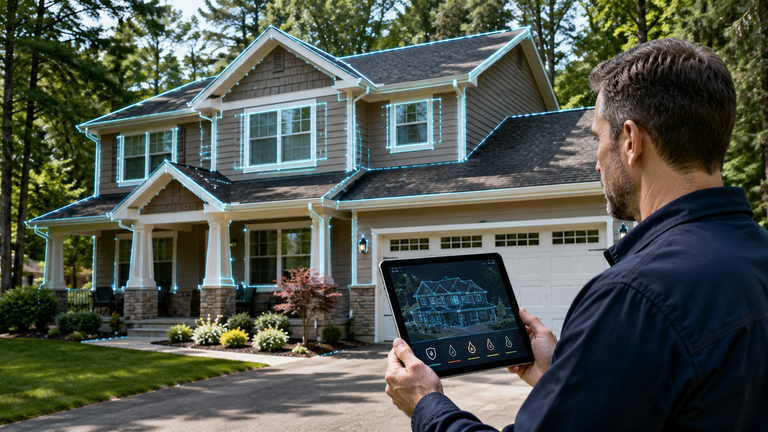
Now imagine applying a similar concept to your house.
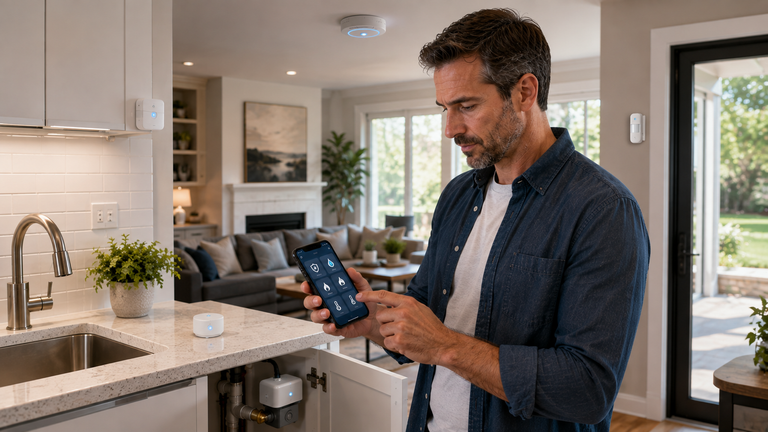
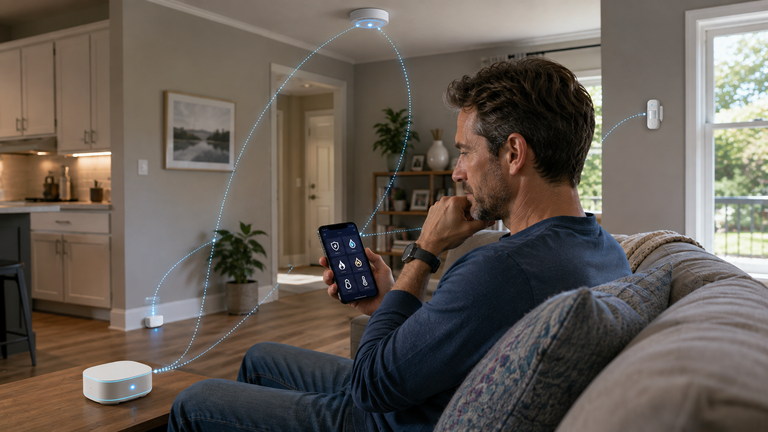
Connected water sensors can detect leaks. Smart valves can automatically stop water flow. Electrical monitors can identify potential hazards. Temperature sensors can warn about frozen pipes. Security systems can monitor doors, windows, smoke, and unusual activity.
Some insurers are increasingly interested in this technology because it can help shift home insurance from simply paying after a disaster toward:
Detecting and preventing damage before it becomes an expensive claim.
The National Association of Insurance Commissioners (NAIC) identifies smart-home sensors that detect leaks, smoke, or unusual activity as one of the connected-device applications emerging within insurance.
The potential benefits are attractive:
- Earlier warnings
- Fewer severe losses
- Automatic intervention
- Potential insurance discounts
- Better property maintenance
- Greater peace of mind
But there’s another side.
For some insurance programs, receiving the benefit requires allowing data from devices inside your home to be shared with the insurer.
That raises an important question for homeowners in 2026:
How much information about your home are you willing to exchange for better protection or a cheaper premium?
The answer depends heavily on exactly what is collected, why it’s collected, and what you receive in return.
What Is Home Insurance Telematics?
Telematics generally refers to technology that collects and communicates data remotely.
Most consumers associate it with auto insurance.
A telematics program might use a smartphone app or connected device to measure driving behavior and potentially adjust insurance pricing.
Home telematics applies a similar broad concept to residential property.
Instead of measuring:
Speed
Braking
or:
Mileage,
connected-home systems might monitor:
Water
Temperature
Electrical conditions
Smoke/fire signals
Security events
or:
Device status.
Triple-I describes smart-home data as a slower-moving counterpart to auto telematics, with connected water-monitoring systems providing one example of technology capable of anticipating and preventing losses.
Home Telematics Is Different From Auto Telematics
There is an important distinction.
Auto telematics frequently evaluates:
human behavior.
How quickly did you accelerate?
When did you drive?
How far did you travel?
How hard did you brake?
Home telematics can be more focused on:
physical property conditions.
For example:
Is water leaking?
Is an electrical condition abnormal?
Did the temperature suddenly fall?
Did a smoke detector activate?
Is a connected sensor still online?
That can make some home programs feel less intrusive.
But privacy concerns don’t disappear.
A detailed stream of household data could potentially reveal information about how a home is used.
How Real-Time Monitoring Can Prevent Claims
The strongest argument for home telematics is straightforward:
Earlier detection can reduce damage.
Imagine a pipe starts leaking at:
2:00 a.m.
Without monitoring, you might not discover the problem until:
7:00 a.m.
Five hours of continuous water could damage:
- Flooring
- Drywall
- Cabinets
- Furniture
- Electrical components
- Rooms below the leak
Now imagine a sensor detects moisture almost immediately.
Your smartphone receives an alert.
An automatic shutoff valve closes the water supply.
The underlying plumbing problem still exists.
But a potentially major insurance claim may have become a manageable repair.
That’s the basic economics behind connected-home insurance.
Water Monitoring May Be the Clearest Example
Water losses are particularly suitable for smart-home prevention because damage often becomes worse with time.
A sensor can be installed near:
Dishwashers
Water heaters
Washing machines
Toilets
Sinks
Refrigerators
and:
Basement plumbing.
More advanced systems can monitor whole-home water flow.
The ideal outcome isn’t:
filing the claim faster.
It’s:
preventing the large claim from happening at all.
Electrical Monitoring Is Another Emerging Use
Some connected-home systems continuously monitor electrical conditions.
The goal is to identify certain hazards before they develop into fires.
There is evidence that this type of technology can produce measurable loss-prevention benefits.
A 2025 study involving Triple-I, Whisker Labs and independent analytics support examined the Ting electrical fire-prevention system. The study estimated a 63% reduction in a broad category of non-catastrophic fire claims within three years after installation in the study sample, equivalent to an estimated $81 annual fire-claims reduction benefit per customer by the third year.
That doesn’t mean every connected-home device will produce comparable results.
But it demonstrates why insurers are interested in real-time property monitoring.
Why Insurers Like Home Telematics
Traditional insurance operates primarily after something goes wrong.
A pipe bursts.
The homeowner files a claim.
The insurer investigates.
Repairs are completed.
Money is paid.
Telematics introduces another model:
Detect → Warn → Intervene → Prevent or Reduce Loss.
For insurers, fewer severe claims can potentially mean:
Lower claim costs
Better risk selection
Improved property information
and:
Earlier intervention.
For homeowners, the benefits may include:
Reduced damage
Less disruption
and potentially:
Premium discounts.
Can Home Telematics Lower Your Premium?
Potentially.
Some insurers already offer connected-home programs that exchange qualifying device participation for insurance discounts.
A useful current example is USAA’s Connected Home program.
Eligible homeowners can connect at least two qualifying water-leak detectors, share device data with USAA, and receive a discount of up to:
8%
on homeowners insurance.
That doesn’t mean every insurer offers 8%.
Nor does it mean every telematics system qualifies.
Discounts vary considerably by:
Insurer
State
Policy
Device
and:
Program.
What Exactly Are You Giving the Insurer?
This is where homeowners need to pay attention.
“Share device data” is a very broad phrase.
Before enrolling, ask:
What data?
Consider the difference between these scenarios.
Program A
Shares only:
Device online/offline status
and:
Leak alerts.
Program B
Shares:
Continuous water-flow information
Temperature readings
Occupancy-related sensor information
and:
Detailed historical activity.
Both might be marketed as:
connected-home programs.
But their privacy implications are very different.
A Real-World Data-Sharing Example
USAA’s program provides a useful illustration of why homeowners should read the details.
USAA says qualifying First Alert/Honeywell Home devices share device usage data for devices connected through the relevant app.
USAA also explicitly states that the information shared with it under the program doesn’t include:
Audio
Video
or:
Still images.
It says the information is used internally to improve offerings and serve members, and that it doesn’t share that device data with third-party or marketing companies.
Those details matter.
A homeowner evaluating any similar program should look for equally clear answers.
Privacy Question #1: What Is Being Collected?
Start with the simplest question.
Ask for an exact list.
Depending on the system, potential information could include:
- Leak events
- Water-flow information
- Temperature
- Humidity
- Electrical conditions
- Alarm events
- Device activation
- Device connectivity
- Security events
Don’t assume that because a device can collect something, the insurer necessarily receives it.
Similarly, don’t assume the insurer receives only the information you expect.
Read the agreement.
Privacy Question #2: Is the Data Continuous?
There’s a meaningful difference between:
Event-Based Monitoring
“Sensor detected water at 3:14 p.m.”
and:
Continuous Monitoring
A device continuously communicates readings or usage information.
Continuous data can potentially provide more effective risk monitoring.
But it can also create a more detailed picture of household activity.
Ask whether data is transmitted:
Continuously
Periodically
or only:
When an event occurs.
Privacy Question #3: Who Actually Gets the Data?
Don’t assume information moves directly from:
Sensor → Insurance Company.
The ecosystem may involve:
Device manufacturer
Mobile application
Cloud provider
Technology vendor
Insurance company
and potentially:
Service providers.
Triple-I noted in August 2026 that increasingly granular insurance data can pass through carriers, brokers, reinsurers, data providers, and other organizations, creating challenges around validation, storage, sharing, and privacy.
So ask:
Who receives my information?
and:
Who can access it?
Privacy Question #4: How Long Is It Stored?
A leak notification may be useful today.
But does the company need to keep the associated information:
30 days?
One year?
Five years?
Indefinitely?
Data retention matters because information that no longer exists can’t later be:
breached
misused
or:
repurposed.
Look for retention policies in the program’s privacy documentation.
Privacy Question #5: Can the Data Affect Your Insurance?
This may be the most important question.
Suppose your insurer gives you a discount for installing connected sensors.
You should ask:
Can the information only be used for loss prevention?
or can it also influence:
Pricing
Underwriting
Renewal
Eligibility
or:
Claims?
Don’t assume the answer.
Insurance rules vary by jurisdiction, and insurers may design connected-device programs differently.
Ask directly:
How can the data collected through this program affect my policy?
Get the answer before enrolling.
Privacy Question #6: What Happens if You Opt Out?
Suppose you participate for two years.
Then you decide:
I don’t want to share this data anymore.
Can you leave?
What happens to:
Previously collected information?
Does your:
Discount disappear?
Does your:
Premium return to the standard amount?
Are there:
Cancellation penalties?
The USAA example shows why this matters: participation and the discount depend on qualifying devices sharing data.
Know the exit rules before entering.
Privacy Question #7: What Happens if the Device Goes Offline?
Technology fails.
Wi-Fi stops working.
A battery dies.
A sensor gets disconnected.
A homeowner replaces the router and forgets to reconnect the device.
If your insurance discount depends on active monitoring, ask:
How long can the device be offline?
Will I receive a warning?
Does the discount disappear immediately?
Will it change at renewal?
Could the insurer interpret inactivity as removal of the device?
These practical details matter as much as the privacy policy.
The Cybersecurity Problem
Every connected device introduces another digital component into your home.
Smart devices can potentially create cybersecurity risks if they are:
Poorly secured
Never updated
Protected by weak passwords
or:
Running outdated firmware.
Triple-I has warned that internet-connected household devices can create cyber exposure, including opportunities for malware and other digital threats.
A device designed to reduce one type of household risk shouldn’t unnecessarily create another.
How to Make Home Telematics More Private
If you’re interested in the technology but concerned about privacy, consider a data-minimization approach.
Look for programs that:
Collect only risk-relevant information
Clearly explain what is shared
Avoid unnecessary audio/video
Provide clear retention rules
Use strong security controls
and:
Allow straightforward withdrawal.
You can also improve your own security by:
Using unique passwords
Enabling multi-factor authentication when available
Updating device firmware
Securing your Wi-Fi
and:
Removing devices you no longer use.
Is Video Monitoring Necessary?
For many loss-prevention purposes:
No.
A water-leak detector doesn’t need to see your kitchen.
A temperature sensor doesn’t need a microphone.
An electrical monitor doesn’t need a camera.
This is an important privacy principle:
The sensor should collect only what it needs to perform its job.
USAA’s current Connected Home disclosure is notable because it explicitly says its shared device data doesn’t include audio, video or still images.
When comparing programs, look for similar specificity.
Insurance Regulators Are Paying Attention to Privacy
Connected insurance isn’t developing in a regulatory vacuum.
The NAIC’s Privacy Protections Working Group is actively working in 2026 on updated insurance privacy protections addressing issues including:
Data collection
Data ownership and use rights
and:
Disclosure of information gathered through insurance transactions.
The NAIC’s Property and Casualty Insurance Committee also lists telematics among the issues being discussed for potential guidance.
That matters because insurance telematics increasingly sits at the intersection of:
insurance regulation + consumer privacy + technology.
Is Home Telematics the Same as Surveillance?
Not necessarily.
There is an enormous difference between:
a water sensor reporting a leak
and:
a camera continuously transmitting video from inside your house.
Calling both “surveillance” ignores those differences.
Instead, evaluate the actual system.
Ask:
What is collected?
How frequently?
Where?
For what purpose?
Who receives it?
How long is it retained?
The privacy risk depends on the answers.
The Insurance Discount May Not Be the Biggest Benefit
Suppose your connected-home program saves:
$150 annually.
That’s useful.
But imagine an automatic shutoff prevents:
$25,000 in water damage.
The avoided loss could be far more valuable than years of premium savings.
This is why the best case for home telematics may not be:
“Give up data to save money.”
It may instead be:
“Use targeted data to prevent expensive damage—and receive an insurance discount as an additional benefit.”
But Calculate the Full Financial Trade-Off
Suppose your system costs:
Equipment: $500
Installation: $250
Monitoring: $15/month
Annual monitoring cost:
$180.
Your insurance discount:
$200 annually.
Your direct annual net saving:
$20.
If your only objective was reducing your premium, that’s not particularly attractive.
But if the system also provides:
Automatic water shutoff
Fire prevention
Freeze protection
and:
Security monitoring,
the value proposition changes.
Don’t judge telematics solely by the insurance discount.
Example: Privacy-Light Setup
Imagine a homeowner wants loss prevention but minimal data sharing.
The homeowner chooses:
Water-leak sensors
Automatic shutoff
Electrical hazard monitoring
and:
Smoke detection.
The insurance program receives only necessary device status and risk-event information.
No:
Interior cameras
Microphones
or:
Detailed occupancy monitoring.
For a privacy-conscious homeowner, this could provide a reasonable compromise.
Example: Privacy-Heavy Setup
Now imagine another system collects:
Interior video
Audio
Detailed motion activity
Door-opening history
Temperature
Energy consumption
and:
Continuous occupancy patterns.
Even if such a hypothetical system offered a larger discount, many homeowners might reasonably decide that the privacy cost isn’t worth it.
The lesson:
Don’t evaluate the discount before evaluating the data.
Home Telematics for Vacation Homes
Connected monitoring may be especially useful for second homes.
Why?
Because one of the biggest risks is:
delayed discovery.
A leak occurring in your primary residence may be noticed within minutes.
At a vacation property, it might remain unnoticed for:
days.
Remote monitoring can help detect:
Water
Freezing temperatures
Smoke
Electrical problems
and:
Unauthorized entry.
For frequently unoccupied properties, the loss-prevention benefit may therefore be particularly valuable.
Home Telematics for Landlords
Landlords should be more cautious.
Monitoring building systems such as:
Water flow
Smoke alarms
or:
Electrical hazards
may provide legitimate property-protection benefits.
But tenant privacy creates additional considerations.
A landlord shouldn’t assume that because a device is technically possible, it is appropriate or lawful to use.
Avoid intrusive monitoring of tenants and comply with applicable:
Privacy
Surveillance
and:
Landlord-tenant laws.
Seek legal advice where necessary.
Could Real-Time Monitoring Eventually Change Pricing?
Potentially, but homeowners shouldn’t assume that every current program dynamically changes premiums based on live household behavior.
Today, some programs primarily use connected devices to:
Prevent losses
and:
Provide discounts.
However, insurance technology continues to evolve.
Triple-I notes that advances in telematics and IoT are increasing the quantity and range of information potentially available to insurers.
That makes it increasingly important for consumers and regulators to define:
acceptable use.
Could Telematics Make Insurance Fairer?
Potentially.
Imagine two otherwise similar houses.
House A
No leak detection
Old plumbing problem goes unnoticed
No automatic shutoff
House B
Real-time water monitoring
Automatic shutoff
Immediate alerts
If House B genuinely produces fewer or less severe claims, more precise insurance pricing could potentially recognize that reduced risk.
Instead of pricing solely based on broad categories such as:
ZIP code,
insurers may be able to incorporate more property-specific loss-prevention information.
Could Telematics Make Insurance More Intrusive?
Also potentially.
The danger comes when:
risk-relevant data
gradually expands into:
unnecessary household monitoring.
Consumers could reasonably become uncomfortable if discounts increasingly require them to provide detailed information unrelated to the insured risk.
The challenge for insurers and regulators is therefore finding a balance:
Enough data to reduce risk—without collecting more than necessary.
Data Accuracy Matters Too
Privacy isn’t the only issue.
What if the sensor is wrong?
Suppose a device repeatedly disconnects because of poor Wi-Fi.
An automated system could potentially interpret that as:
device inactivity.
Or a sensor may generate false alerts.
As insurance becomes more data-driven, inaccurate information can affect consumers as well as insurers.
Triple-I highlighted in August 2026 that increasingly granular insurance data can also create inconsistencies and data-quality challenges that may affect underwriting accuracy and affordability.
So homeowners should have a practical way to:
See
Correct
or:
Challenge
important inaccurate information where applicable.
Questions to Ask Before Joining a Home Telematics Program
Before agreeing to connected monitoring, ask:
- What devices are required?
- What information does each device collect?
- What information does my insurer receive?
- Is data transmitted continuously?
- Are audio recordings collected?
- Is video collected?
- Are still images collected?
- Is location or occupancy information inferred?
- Which third parties receive the data?
- How long is the information retained?
- Is the information encrypted?
- Can it be used for underwriting?
- Can it affect renewal?
- Can it affect claims?
- Can it affect my premium beyond the stated discount?
- Can the data be sold or used for marketing?
- What happens if the device goes offline?
- Can I opt out?
- What happens to previously collected data if I leave?
- How much will I actually save?
If the provider can’t clearly answer these questions, reconsider whether the discount is worth it.
A Simple Privacy-vs.-Value Test
Before enrolling, evaluate four areas.
1. Financial Value
How much do you actually save?
2. Prevention Value
What losses could the technology prevent?
3. Data Sensitivity
Exactly what information leaves your home?
4. Control
Can you understand, limit and stop the data sharing?
A program offering:
$20 annual savings
in exchange for highly intrusive monitoring may not be compelling.
A program providing:
meaningful water-loss prevention + $250 savings
while sharing only limited sensor information could be much easier to justify.
Green Flags
Positive signs include:
Clear data disclosures
Limited collection
No unnecessary audio/video
Defined purpose
Strong security
Clear opt-out process
Transparent discount
and:
Useful loss-prevention technology.
Red Flags
Be cautious when you encounter:
Vague statements about data use
Broad permission to share information
Unclear third-party access
No obvious retention period
Unnecessary interior monitoring
Difficulty opting out
or:
A tiny discount requiring extensive household data.
Don’t click “Accept” simply because the marketing page promises savings.
2026 Home Telematics Privacy Checklist
Before enrolling:
- Identify the exact insurance saving.
- Calculate equipment costs.
- Calculate subscription costs.
- Identify every required sensor.
- Read the insurer’s privacy terms.
- Read the device manufacturer’s privacy terms.
- Determine exactly what is collected.
- Determine exactly what is shared.
- Check whether audio or video is involved.
- Ask whether continuous monitoring is required.
- Identify third-party service providers.
- Check data-retention rules.
- Ask whether data can affect underwriting.
- Ask whether data can affect claims.
- Ask whether data can affect renewal.
- Check cybersecurity protections.
- Use strong unique passwords.
- Enable multi-factor authentication when available.
- Keep firmware updated.
- Understand what happens when sensors disconnect.
- Understand the opt-out process.
- Determine what happens to historical data.
- Compare the program with non-telematics discounts.
- Decide whether the privacy trade-off is genuinely worthwhile.
Frequently Asked Questions
What is home insurance telematics?
Home insurance telematics generally refers to connected technology that collects and communicates property-related information, such as water leaks, smoke, temperature, electrical conditions, or device activity, to help prevent or reduce losses.
Do insurers currently use smart-home sensors?
Yes. The NAIC identifies smart-home sensors that detect leaks, smoke and unusual activity as examples of connected-device technology used within insurtech.
Can telematics lower homeowners insurance premiums?
Potentially. Some insurers offer connected-home discounts. USAA, for example, currently advertises savings of up to 8% for eligible homeowners who connect qualifying water-leak detectors and share required device data.
Does my insurer see video from inside my home?
Don’t assume either way. Check the specific program. USAA states that device data shared through its current Connected Home program doesn’t include audio, video or still images. Other programs may have different terms.
Can home telematics prevent insurance claims?
It can potentially prevent or reduce certain losses. Research involving an electrical fire-prevention system found a substantial reduction in the category of fire claims studied, although results for one technology shouldn’t be generalized to every smart-home product.
Is connected-home monitoring safe?
It can provide valuable safety benefits, but internet-connected devices also introduce cybersecurity and privacy considerations. Use reputable technology, strong account security and updated firmware.
Can I opt out?
That depends on the program. Ask what happens to your discount and previously collected information if you withdraw.
Is the privacy trade-off worth it?
It depends on the amount and sensitivity of information collected, the loss-prevention benefits, your insurance savings and your personal comfort with data sharing.
Final Thoughts
Home telematics represents a potentially significant evolution in homeowners insurance.
The old insurance model was largely:
Damage → Claim → Repair.
Connected technology introduces another possibility:
Detect → Alert → Prevent.
That’s potentially better for everyone.
Homeowners avoid disruption and damage.
Insurers avoid expensive claims.
And safer properties may potentially qualify for better insurance economics.
Evidence is beginning to show that certain IoT loss-prevention technologies can materially reduce claims, while current connected-home insurance programs demonstrate that insurers are willing to offer discounts in exchange for qualifying device participation.
But homeowners shouldn’t treat their privacy as another automatic insurance deductible.
Before agreeing to monitoring, understand:
What is collected.
Who receives it.
Why they need it.
How long they keep it.
How it can affect your insurance.
How you can leave.
The privacy debate is important enough that state insurance regulators are actively reviewing privacy protections around collection, ownership, use and disclosure of insurance-related information in 2026.
The best connected-home insurance program isn’t necessarily the one offering the biggest discount.
It’s the one that provides:
meaningful loss prevention + meaningful savings + proportionate data collection + clear consumer control.
If a water sensor can prevent a $20,000 loss while sharing only limited technical information, the trade-off may be attractive.
If a tiny premium reduction requires unnecessarily intrusive household monitoring, it may not be.
In 2026, the smartest question isn’t simply:
“How much will my insurer save me?”
It’s:
“Exactly what am I giving them in return?”
Disclaimer
This article is for informational and educational purposes only and isn’t legal, insurance, cybersecurity or privacy advice. Connected-home programs, insurance discounts, data collection practices, privacy protections and underwriting rules vary by insurer, technology provider and state. Review the applicable policy, program agreement and privacy disclosures before enrolling.