
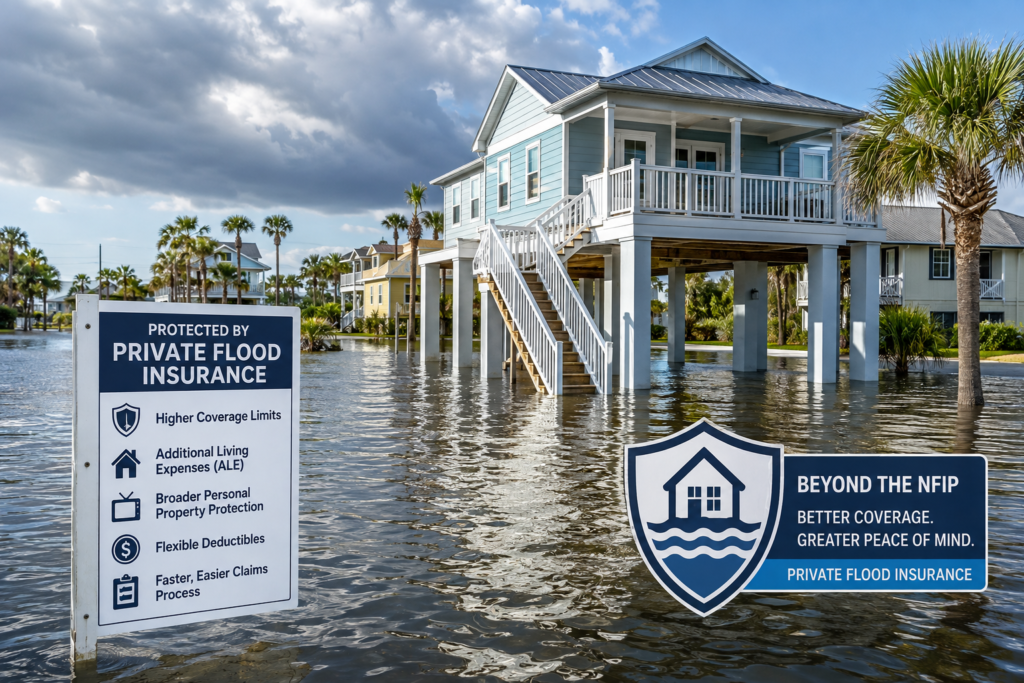
Flooding remains one of the most expensive and common natural disasters in the United States. Coastal storms, hurricanes, heavy rainfall, and inland flooding can cause extensive property damage, often leaving homeowners with repair bills that reach tens or even hundreds of thousands of dollars.
What you’ll understand
- Home Contents Quick Estimator
- Why Flood Insurance Matters
- Understanding the National Flood Insurance Program (NFIP)
Many homeowners assume their standard homeowners insurance policy covers flood damage. In most cases, it does not. Separate flood insurance is generally required to protect against damage caused by rising water.
For decades, the National Flood Insurance Program (NFIP) has been the primary source of residential flood insurance. However, private insurers have expanded their flood insurance offerings in recent years, giving homeowners additional options that may provide broader coverage, higher policy limits, or more flexible pricing depending on the property and insurer.
This guide explains how NFIP and private flood insurance differ and why many homeowners in Florida and the Carolinas are exploring private market alternatives.
Home Contents Quick Estimator
Add your own rough estimates to see how quickly household contents can add up.
This is a rough inventory aid, not a valuation or coverage recommendation. High-value items can have separate limits and documentation requirements.
Why Flood Insurance Matters
Floods can happen almost anywhere—not only in coastal communities.
Flooding may result from:
- Hurricanes
- Tropical storms
- Heavy rainfall
- Storm surge
- Overflowing rivers
- Flash floods
- Drainage system failures
- Urban flooding
- Snowmelt in some regions
Even properties located outside officially designated high-risk flood zones can experience flood damage.
Because homeowners insurance generally excludes flood losses, separate flood insurance can play an important role in protecting both the structure and, depending on the policy, personal belongings.
Understanding the National Flood Insurance Program (NFIP)
The National Flood Insurance Program was established to improve access to flood insurance for property owners and to encourage sound floodplain management.
Participating communities adopt floodplain management standards, allowing eligible property owners to purchase NFIP flood insurance.
NFIP policies generally provide:
Building Coverage
May help cover damage to:
- Foundation
- Electrical systems
- Plumbing
- HVAC equipment
- Water heaters
- Permanently installed flooring
- Built-in appliances
- Structural components
Contents Coverage
Separate contents coverage may help protect:
- Furniture
- Clothing
- Electronics
- Personal belongings
- Certain household items
Building and contents coverage are generally purchased separately under NFIP policies.
Why Flood Risk Is Growing in Florida and the Carolinas
Florida, North Carolina, and South Carolina regularly experience weather events capable of producing significant flooding.
Common causes include:
- Atlantic hurricanes
- Tropical storms
- Coastal storm surge
- Heavy seasonal rainfall
- Inland river flooding
- Urban drainage challenges
- Rising sea levels affecting some coastal communities
As weather patterns evolve and development expands into flood-prone areas, many homeowners are reassessing their flood insurance needs.
Common Misconceptions About Flood Insurance
Many homeowners mistakenly believe:
“I’m not in a flood zone.”
Flooding can occur outside high-risk flood areas. Moderate- and low-risk areas may also experience damaging floods.
“My homeowners insurance covers floods.”
Standard homeowners insurance policies typically exclude flood damage caused by rising water.
“Federal disaster assistance will pay for everything.”
Disaster assistance may not be available after every flood event, and when available, it may not fully cover rebuilding costs or personal property losses.
Limitations of NFIP Coverage
The NFIP has helped millions of homeowners obtain flood insurance, but it may not meet every property’s needs.
Some limitations can include:
- Coverage limits that may not fully protect higher-value homes.
- Separate building and contents coverage selections.
- Certain property types or improvements may have limited coverage.
- Temporary living expenses are generally not included.
- Waiting periods often apply before new coverage becomes effective, subject to certain exceptions.
Coverage details vary by policy and circumstances, so homeowners should review the official policy language carefully.
What Is Private Flood Insurance?
Private flood insurance is offered by insurance companies outside the NFIP.
These policies may provide additional flexibility depending on the insurer, including:
- Higher coverage limits.
- Broader protection.
- Additional optional coverages.
- Flexible deductibles.
- Customized underwriting.
- Digital claims services.
Availability varies by location, property characteristics, and insurer.
Why More Homeowners Are Considering Private Flood Insurance
Competition within the private insurance market has increased significantly over the past several years.
Some homeowners choose private flood insurance because it may offer:
- More coverage choices.
- Higher dwelling limits.
- Coverage for additional living expenses (depending on the policy).
- Broader protection for personal belongings.
- Replacement cost options for eligible homes.
- Streamlined online application processes.
Not every private policy offers all of these features, making policy comparison especially important.
NFIP vs. Private Flood Insurance
| Feature | NFIP | Private Flood Insurance |
|---|---|---|
| Provider | Federal program | Private insurance companies |
| Coverage Limits | Standard program limits | May offer higher limits, depending on insurer |
| Optional Coverage | Limited options | May offer additional endorsements |
| Pricing | Based on program rules and property characteristics | Varies by insurer and underwriting |
| Temporary Living Expenses | Generally not included | May be available with some policies |
| Online Policy Management | Limited | Often more extensive digital tools |
| Customization | Standardized | Greater flexibility may be available |
Advantages of Private Flood Insurance
Higher Coverage Limits
Owners of higher-value homes may find that private insurers offer coverage limits beyond those available through standard NFIP policies.
Broader Personal Property Protection
Some private policies may provide more comprehensive contents coverage or additional options for valuable personal property.
Additional Living Expenses
Certain private flood insurance policies may help cover temporary housing costs if the home becomes uninhabitable following a covered flood loss. This benefit is generally not included in standard NFIP residential policies.
Flexible Deductible Options
Many private insurers offer multiple deductible choices, allowing homeowners to balance premium costs with out-of-pocket expenses.
Modern Digital Experience
Private insurers often provide:
- Mobile claims reporting.
- Online policy management.
- Digital document submission.
- Faster communication.
- Claim tracking through mobile apps.
These features can improve convenience throughout the claims process.
Is Private Flood Insurance Always Better?
Not necessarily.
The best choice depends on several factors, including:
- Property value.
- Flood risk.
- Mortgage lender requirements.
- Desired coverage limits.
- Budget.
- Available insurers in your area.
For some homeowners, the NFIP may remain the most appropriate option. Others may benefit from comparing private market offerings before making a decision.
When Private Flood Insurance May Be a Better Choice
Private flood insurance is not automatically the best option for every homeowner, but it may be worth considering in several situations.
1. Higher-Value Homes
If the cost to rebuild your home exceeds the coverage available through a standard NFIP policy, a private insurer may offer higher dwelling limits that better reflect your property’s replacement cost.
2. Valuable Personal Property
Homeowners with expensive furniture, electronics, artwork, or other high-value belongings may benefit from private policies that provide broader personal property coverage or higher coverage limits.
3. Need for Additional Living Expenses (ALE)
After a major flood, some homeowners may need temporary housing while repairs are completed.
Certain private flood insurance policies may include Additional Living Expenses (ALE) or Loss of Use coverage if the home becomes uninhabitable due to a covered flood event. Standard residential NFIP policies generally do not provide this benefit.
4. Flexible Deductible Options
Private insurers often allow homeowners to choose from several deductible amounts, making it easier to balance premium costs with potential out-of-pocket expenses after a claim.
5. Modern Claims Experience
Many private insurers offer:
- Mobile claim reporting
- Online policy management
- Electronic document uploads
- Digital payment options
- Real-time claim status tracking
These features can improve convenience during the claims process.
Cost Comparison
Flood insurance premiums vary based on many factors, including:
- Property location
- Flood zone designation
- Elevation
- Construction type
- Foundation design
- Replacement cost
- Deductible selected
- Coverage amount
- Claims history
- Underwriting guidelines
Depending on the insurer and the property, a private policy may cost less, about the same, or more than an NFIP policy. Comparing quotes from multiple providers can help homeowners evaluate available options.
What Mortgage Lenders Require
If your property is located in a federally designated Special Flood Hazard Area and your mortgage is backed by a federally regulated or insured lender, flood insurance may be required.
Some lenders accept qualifying private flood insurance policies that meet applicable legal and regulatory requirements. Others may have additional documentation or underwriting requirements.
Before changing coverage, confirm with your mortgage lender that the proposed policy satisfies all applicable requirements.
How to Compare Flood Insurance Policies
When evaluating flood insurance options, consider more than just the premium.
Review:
Coverage Limits
Ensure the policy provides enough protection for both the structure and personal belongings.
Replacement Cost vs. Actual Cash Value
Understand how covered property will be valued after a loss. Some policies may pay replacement cost for eligible property, while others may apply depreciation.
Waiting Periods
Many flood insurance policies include a waiting period before coverage becomes effective, although exceptions may apply in certain situations.
Deductibles
Compare deductible options carefully. A lower premium may come with a higher deductible, increasing your out-of-pocket costs after a covered loss.
Exclusions
Review what is not covered, such as certain outdoor property, landscaping, or specific improvements, depending on the policy.
Claims Process
Ask how claims are reported, documented, and settled. Understanding the insurer’s process before purchasing a policy can help set expectations after a loss.
Tips for Homeowners in Florida and the Carolinas
- Review your flood risk every year.
- Don’t rely solely on FEMA flood maps; local conditions can change over time.
- Keep a current home inventory with photos and receipts.
- Maintain digital copies of insurance documents.
- Consider flood mitigation measures where appropriate.
- Reassess your coverage after major home renovations or additions.
- Compare quotes from multiple insurers before each renewal.
Common Mistakes to Avoid
Assuming Flood Insurance Is Included
Standard homeowners insurance policies generally do not cover flood damage caused by rising water.
Buying Coverage Only After a Storm Is Forecast
Flood insurance usually includes a waiting period before coverage begins, so purchasing a policy after a storm is approaching may not provide immediate protection.
Underestimating Rebuilding Costs
Construction costs can change over time. Review your dwelling coverage periodically to help ensure it reflects current rebuilding estimates.
Forgetting Personal Property Coverage
Some flood insurance policies require separate contents coverage or offer different limits for personal belongings.
Choosing the Cheapest Policy Without Comparing Coverage
A lower premium may come with lower limits, higher deductibles, or fewer covered benefits. Compare the full policy, not just the price.
Frequently Asked Questions
Is private flood insurance accepted by mortgage lenders?
Many lenders accept qualifying private flood insurance policies that meet applicable legal requirements. Check with your lender before changing coverage.
Can I switch from the NFIP to a private flood insurance policy?
In many situations, homeowners can switch if they find a policy that better meets their needs and satisfies any lender requirements. Review the details carefully before making changes.
Does private flood insurance always cost less?
No. Premiums depend on many factors, including the property’s characteristics, flood risk, insurer, and selected coverage. Comparing quotes is the best way to evaluate available options.
Does flood insurance cover hurricane damage?
Flood insurance generally covers flood damage caused by rising water. Wind damage from a hurricane is typically addressed under a homeowners insurance policy, subject to its terms and conditions. Depending on the event, separate claims may be required for wind and flood damage.
Should homeowners outside high-risk flood zones consider flood insurance?
Flooding can occur in moderate- and lower-risk areas. Homeowners should evaluate their property’s location, local flood history, and financial ability to recover from a flood loss when deciding whether coverage is appropriate.
Final Thoughts
Flood insurance remains an important part of financial protection for homeowners in Florida, the Carolinas, and many other parts of the United States. While the National Flood Insurance Program continues to serve millions of property owners, the growth of private flood insurance has expanded the range of available options.
For some homeowners, private policies may offer higher coverage limits, broader benefits, or additional features such as temporary living expense coverage. Others may find that an NFIP policy better suits their needs or satisfies lender requirements.
Before purchasing or changing coverage, compare policy terms, coverage limits, deductibles, exclusions, and claims processes carefully. Taking the time to understand your options can help you choose coverage that aligns with your property’s risks and your financial goals.
Key terms in this guide
Tap a term to review the plain-English meaning while you read.
Premium
The amount charged for insurance coverage, usually paid monthly, quarterly or annually.
Deductible
The amount you may need to pay toward a covered loss before the insurer pays under the policy, subject to the policy terms.
Policy Limit
The maximum amount an insurer may pay for a covered loss or category of loss under the policy.
Exclusion
A policy provision that removes specified situations, causes, property, people or losses from coverage.
Endorsement
A document that changes, adds to or removes terms from the standard insurance policy.
Underwriting
The process an insurer uses to evaluate risk and decide whether and on what terms to offer coverage.
Did the guide make sense?
Answer two quick questions. Your score stays in this browser.
Verify Current Rules
Insurance rules, benefits and product terms can change. These official resources are useful starting points for checking current requirements; they do not replace your policy documents or jurisdiction-specific advice.
Thanks — your response is saved in this browser.
Continue learning, not just scrolling
Follow a practical path from understanding the idea to comparing options and preparing for real-world decisions.
 StartWorkers’ Compensation Insurance Guide: Coverage, Benefits, Costs, and Employer ResponsibilitiesBuild the foundation →
 CompareBehavioral Health Riders in Disability Insurance: Limits, Definitions, and What to CompareCompare your options →
 PlanMedicare Advantage 2026: A Plan-Comparison Checklist for Networks, Drugs, and CostsUnderstand the numbers →
 ActInvisible and Autoimmune Disability Claims: Building Evidence Around FunctionBe ready for a claim →
Leave a Comment
Share a helpful question or experience. Your email address will not be published.