
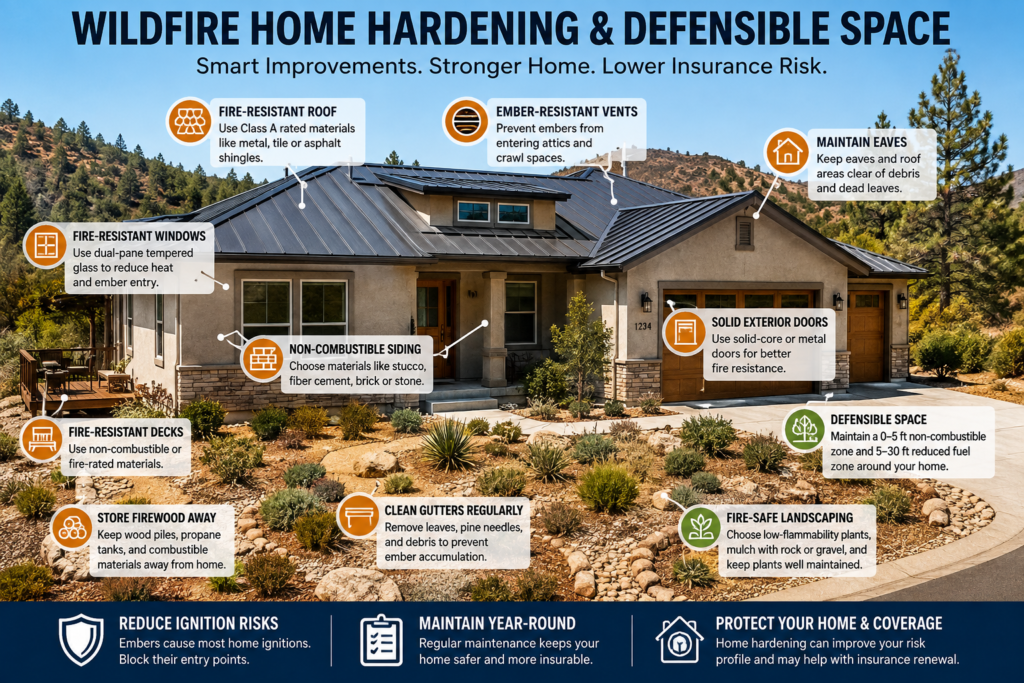
Wildfires have become one of the biggest challenges facing homeowners and insurers in California. Longer fire seasons, higher temperatures, prolonged droughts, and expanding development in wildfire-prone areas have increased both the frequency and severity of wildfire losses. As a result, many homeowners have experienced higher insurance premiums, stricter underwriting, or notices that their policies may not be renewed.
What you’ll understand
- Why Are California Homeowners Facing More Non-Renewals?
- Home Contents Quick Estimator
- What Is Home Hardening?
One strategy receiving growing attention is home hardening—making a home more resistant to wildfire damage through construction upgrades, maintenance, and landscape improvements. While no property can be guaranteed to survive every wildfire, reducing ignition risks may improve a home’s resilience and can be viewed favorably during insurance underwriting.
This guide explains what home hardening involves, why insurers consider wildfire mitigation efforts, and practical steps California homeowners can take to better protect their property.
Why Are California Homeowners Facing More Non-Renewals?
Insurance companies evaluate risk when deciding whether to issue or renew policies. In regions with repeated catastrophic wildfire losses, insurers may reassess their exposure and underwriting guidelines.
Home Contents Quick Estimator
Add your own rough estimates to see how quickly household contents can add up.
This is a rough inventory aid, not a valuation or coverage recommendation. High-value items can have separate limits and documentation requirements.
Factors that can influence underwriting decisions include:
- Location in a high wildfire hazard area.
- History of nearby wildfire losses.
- Distance from fire stations.
- Accessibility for emergency responders.
- Building materials.
- Roof type.
- Vegetation surrounding the home.
- Local weather patterns.
- Availability of reinsurance.
- Overall catastrophe exposure within the insurer’s portfolio.
A non-renewal does not automatically mean a homeowner did anything wrong. It may reflect broader business decisions, changes in underwriting strategy, or increased wildfire risk in a particular region.
What Is Home Hardening?
Home hardening refers to modifications that help reduce the likelihood of a home igniting during a wildfire.
Rather than focusing only on flames reaching the structure, modern wildfire science recognizes that wind-driven embers are responsible for many home ignitions. These burning embers can travel long distances and ignite vulnerable parts of a property.
Home hardening aims to reduce these vulnerabilities through better building materials, improved maintenance, and thoughtful landscaping.
How Wildfires Damage Homes
Homes may be damaged in several ways during a wildfire:
Direct Flame Contact
Flames spread directly from nearby vegetation or structures to the home.
Flying Embers
Burning embers carried by strong winds can land on roofs, decks, gutters, vents, or dry vegetation.
Radiant Heat
Extreme heat from nearby burning structures or vegetation may ignite combustible materials even without direct flame contact.
Because embers often arrive before the main fire front, reducing ember entry points is a major focus of wildfire mitigation.
How Home Hardening May Help with Insurance
Many insurers evaluate wildfire mitigation when assessing properties. While specific underwriting practices vary by company and state regulations, homeowners who reduce wildfire hazards may improve the overall risk profile of their property.
Potential benefits can include:
- Improved insurability.
- Greater likelihood of policy renewal, depending on the insurer’s guidelines.
- Better protection against wildfire damage.
- Reduced repair costs after smaller fire events.
- Increased confidence during home inspections.
- Enhanced overall property resilience.
Home hardening does not guarantee lower premiums or policy renewal, but it may strengthen a property’s risk characteristics.
Top 10 Home Hardening Improvements
1. Install a Fire-Resistant Roof
The roof is one of the most vulnerable parts of a home during a wildfire.
Consider roofing materials with high fire-resistance ratings, such as:
- Metal roofing
- Clay tile
- Concrete tile
- Asphalt shingles with appropriate fire ratings
Regularly remove leaves, pine needles, and debris from the roof.
2. Upgrade Roof Vents
Traditional attic vents can allow embers to enter the home.
Modern ember-resistant vents are designed to reduce this risk while maintaining ventilation.
3. Replace Combustible Siding
Certain siding materials provide better wildfire resistance than untreated wood.
Examples include:
- Fiber cement
- Stucco
- Masonry
- Brick
- Concrete
These materials generally resist ignition better than combustible alternatives.
4. Install Multi-Pane Tempered Glass Windows
Extreme heat can cause ordinary glass to break.
Tempered or multi-pane windows may offer greater resistance to heat exposure and reduce the likelihood of ember entry.
5. Upgrade Exterior Doors
Exterior doors should fit tightly and minimize gaps where embers can enter.
Metal or solid-core doors often provide greater fire resistance than lightweight hollow-core options.
6. Protect Decks and Patios
Wooden decks can become vulnerable if burning debris accumulates underneath.
Consider:
- Fire-resistant decking materials.
- Clearing combustible storage.
- Installing ember-resistant skirting where appropriate.
- Regular inspections and maintenance.
7. Clean Gutters Frequently
Dry leaves and pine needles collected in gutters can ignite from wind-driven embers.
Routine gutter cleaning is one of the simplest and most effective maintenance tasks for wildfire preparedness.
8. Store Firewood Away from the House
Firewood stacks should generally be placed away from the home and other structures to reduce available fuel near the building.
Avoid storing combustible materials directly against exterior walls.
9. Seal Gaps Around the Home
Inspect areas around:
- Utility pipes
- Exterior vents
- Crawl spaces
- Roof edges
- Garage doors
Reducing gaps can help limit ember intrusion.
10. Maintain Regular Property Inspections
Wildfire mitigation is not a one-time project.
Seasonal inspections help identify:
- Damaged vents
- Loose roofing
- Vegetation growth
- Debris accumulation
- Deteriorating building materials
Ongoing maintenance is an important part of reducing wildfire risk.
Understanding Defensible Space
Defensible space is the area surrounding a home where vegetation and other combustible materials are managed to reduce the spread of wildfire.
Creating defensible space can help:
- Slow approaching fires.
- Reduce available fuel.
- Improve firefighter access.
- Lower the chance of flames reaching the structure.
- Limit ember ignition opportunities.
A well-maintained landscape complements home hardening measures and can play an important role in wildfire preparedness.
Practical Landscaping Tips
Homeowners can often reduce wildfire risk through routine landscape maintenance, such as:
- Removing dead plants and branches.
- Trimming tree limbs away from roofs.
- Mowing dry grass regularly.
- Clearing leaves from around structures.
- Keeping vegetation well maintained.
- Spacing shrubs to reduce fire spread.
- Avoiding combustible mulch immediately next to the home where appropriate.
- Maintaining clear access to driveways and emergency routes.
These measures can also improve the property’s overall appearance and reduce maintenance issues beyond wildfire season.
Does Home Hardening Guarantee Insurance Renewal?
No.
Insurance companies consider many factors when making underwriting decisions, including wildfire exposure, company risk appetite, regulatory requirements, claims history, and broader catastrophe trends.
While home hardening may improve a property’s risk profile, it does not guarantee policy renewal, premium reductions, or continued eligibility for coverage. However, reducing wildfire hazards can strengthen your property’s resilience and may support conversations with your insurer during the underwriting process.
Can Home Hardening Lower Insurance Costs?
Some insurers may consider wildfire mitigation measures during underwriting or renewal evaluations. However, premium discounts and eligibility vary by insurer, state regulations, and individual property characteristics.
Homeowners who invest in wildfire mitigation may experience benefits such as:
- Improved property risk profile.
- Better inspection results.
- Increased eligibility for certain insurance programs.
- Greater resilience against wildfire damage.
- Potentially more favorable underwriting decisions, depending on the insurer.
It’s important to ask your insurance company which mitigation improvements they recognize and whether documentation is required.
California FAIR Plan: A Coverage Option for Some Homeowners
For homeowners who are unable to obtain coverage in the standard insurance market, the California FAIR Plan may provide basic property insurance.
Key points include:
- Designed as a last-resort insurance option.
- Covers certain property damage risks but may not include all protections found in a standard homeowners policy.
- Homeowners often purchase a separate “Difference in Conditions (DIC)” policy to obtain additional coverages such as liability or water damage, depending on their needs.
- Eligibility requirements and available coverages may change over time.
Before selecting any policy, review the coverage details carefully and discuss options with a licensed insurance professional.
Wildfire Home Hardening Checklist
Use this checklist to evaluate your property:
Roof
✔ Remove leaves and pine needles regularly.
✔ Inspect for damaged shingles or tiles.
✔ Repair openings that could allow embers to enter.
Gutters
✔ Clean debris.
✔ Check drainage.
✔ Inspect after storms.
Windows
✔ Inspect seals.
✔ Consider tempered or multi-pane glass when replacing windows.
Vents
✔ Install ember-resistant vent products where appropriate.
✔ Inspect for damage.
✔ Keep vents free from debris.
Siding
✔ Repair damaged areas.
✔ Replace deteriorated combustible materials when feasible.
Landscaping
✔ Remove dead vegetation.
✔ Trim tree branches.
✔ Space shrubs appropriately.
✔ Maintain healthy plants.
Deck
✔ Remove combustible storage underneath.
✔ Sweep away leaves and needles.
✔ Inspect supports and connections.
Driveway
✔ Maintain clear access for emergency responders.
✔ Trim vegetation along access routes.
Utilities
✔ Keep electrical equipment clear of combustible materials.
✔ Inspect propane tanks and utility areas according to applicable safety guidance.
Working with Your Insurance Company
If you complete wildfire mitigation improvements, consider:
- Taking dated photographs before and after the work.
- Keeping receipts for materials and contractors.
- Maintaining inspection reports.
- Creating a record of completed improvements.
- Asking your insurer if they accept mitigation documentation during underwriting or renewal.
Well-organized records can help demonstrate the steps you’ve taken to reduce wildfire risk.
Common Mistakes Homeowners Make
Avoid these common errors:
Waiting Until Renewal Time
Wildfire mitigation projects often take time to complete. Planning improvements well before your renewal date provides more flexibility.
Ignoring Roof Maintenance
Even fire-resistant roofing materials require regular cleaning and inspection.
Storing Combustible Materials Against the House
Items such as firewood, lumber, propane cylinders (where permitted), and other combustible materials should be stored according to applicable safety recommendations and away from structures whenever practical.
Allowing Vegetation to Become Overgrown
Routine landscaping maintenance throughout the year helps reduce available fuel near the home.
Assuming One Improvement Is Enough
Wildfire resilience is strongest when multiple mitigation strategies work together. Roofing, vents, windows, landscaping, and ongoing maintenance each contribute to reducing overall risk.
Additional Steps to Improve Wildfire Preparedness
Beyond structural improvements, homeowners may also consider:
- Preparing an emergency evacuation plan.
- Creating a home inventory with photos and receipts.
- Backing up important documents digitally.
- Reviewing insurance coverage annually.
- Confirming replacement cost limits remain adequate.
- Understanding policy deductibles and exclusions.
- Signing up for local emergency alert systems.
These actions can help reduce stress and improve recovery after a wildfire event.
Frequently Asked Questions
Does home hardening guarantee my insurance policy will be renewed?
No. Insurers consider many factors, including wildfire exposure, company underwriting guidelines, claims history, and regulatory requirements. Home hardening may improve your property’s risk profile but does not guarantee renewal.
What is the most important wildfire improvement?
There is no single improvement that eliminates wildfire risk. A combination of fire-resistant construction, ember-resistant features, regular maintenance, and defensible space generally provides the greatest benefit.
Is defensible space required?
Requirements vary depending on local and state regulations. Homeowners should review applicable laws, local ordinances, and guidance from fire authorities for their area.
Should I notify my insurance company after completing improvements?
Yes. It’s generally a good idea to inform your insurer about significant mitigation work and ask whether documentation may be helpful during underwriting or future renewals.
Can older homes be hardened?
In many cases, yes. While some improvements may require significant investment, many effective mitigation measures—such as cleaning gutters, maintaining defensible space, sealing gaps, and replacing vulnerable vents—can often be added to existing homes.
Final Thoughts
Wildfires continue to shape California’s homeowners insurance market, making proactive risk reduction more important than ever. Home hardening focuses on reducing the ways a home can ignite by combining fire-resistant construction, regular maintenance, and thoughtful landscaping.
Although no improvement can eliminate wildfire risk or guarantee insurance renewal, taking practical mitigation steps may enhance your home’s resilience and demonstrate a commitment to reducing risk. Reviewing your coverage regularly, maintaining detailed records of improvements, and staying informed about local wildfire guidance can help you make more confident insurance decisions.
Key terms in this guide
Tap a term to review the plain-English meaning while you read.
Premium
The amount charged for insurance coverage, usually paid monthly, quarterly or annually.
Deductible
The amount you may need to pay toward a covered loss before the insurer pays under the policy, subject to the policy terms.
Exclusion
A policy provision that removes specified situations, causes, property, people or losses from coverage.
Underwriting
The process an insurer uses to evaluate risk and decide whether and on what terms to offer coverage.
Claim
A request for payment or benefits under an insurance policy after an event that may be covered.
Liability
Legal responsibility for injury, damage or loss suffered by another person or organization.
Did the guide make sense?
Answer two quick questions. Your score stays in this browser.
Verify Current Rules
Insurance rules, benefits and product terms can change. These official resources are useful starting points for checking current requirements; they do not replace your policy documents or jurisdiction-specific advice.
Thanks — your response is saved in this browser.
Continue learning, not just scrolling
Follow a practical path from understanding the idea to comparing options and preparing for real-world decisions.
 StartWorkers’ Compensation Insurance Guide: Coverage, Benefits, Costs, and Employer ResponsibilitiesBuild the foundation →
 CompareBehavioral Health Riders in Disability Insurance: Limits, Definitions, and What to CompareCompare your options →
 PlanMedicare Advantage 2026: A Plan-Comparison Checklist for Networks, Drugs, and CostsUnderstand the numbers →
 ActInvisible and Autoimmune Disability Claims: Building Evidence Around FunctionBe ready for a claim →
Leave a Comment
Share a helpful question or experience. Your email address will not be published.