
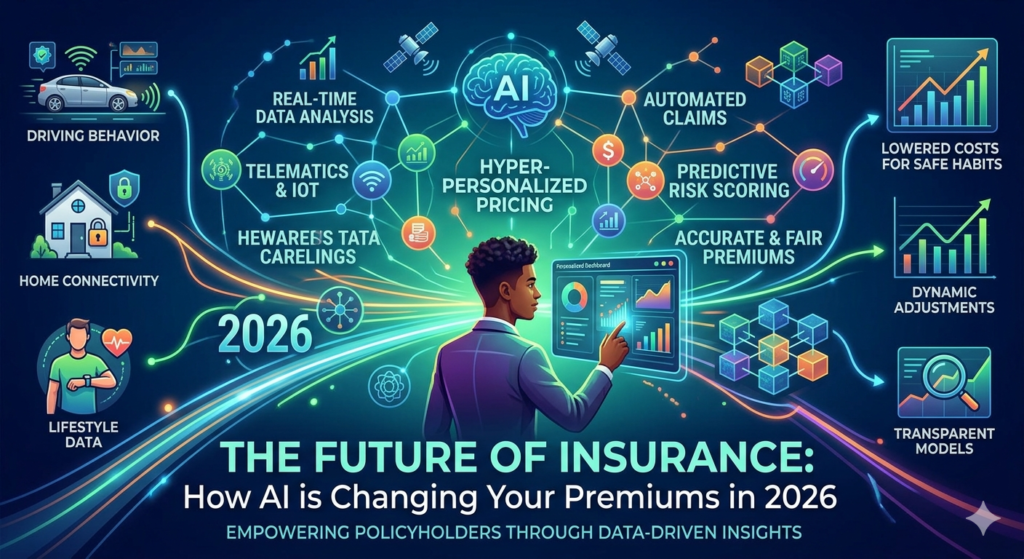
For consumers, the biggest change is not simply that “AI makes insurance cheaper.”
Instead, AI can potentially make pricing more individualized.
Your premium may increasingly reflect a more detailed picture of risk based on the data legally available to an insurer, its approved rating methodology, your jurisdiction and the type of insurance involved.
That creates both an opportunity and a concern:
Business Insurance Risk Explorer
Select the exposures that apply to your business.
This is an educational risk-mapping tool, not a coverage recommendation. Requirements and suitable limits depend on the business, contracts, jurisdiction and policy terms.
Better risk information can improve pricing accuracy—but poorly designed models can also produce unfair or discriminatory outcomes.
Insurance Pricing Is Becoming More Data-Driven
Insurance has always relied on data.
An auto insurer might traditionally consider factors such as:
- Driving history
- Vehicle
- Location
- Annual mileage
- Claims history
- Coverage limits
- Deductibles
A property insurer might consider:
- Location
- Construction type
- Replacement cost
- Claims history
- Fire protection
- Catastrophe exposure
AI doesn’t eliminate these fundamentals.
Instead, it can allow insurers to analyze much larger and more complex datasets and detect relationships that conventional models might not identify as quickly.
The NAIC says AI adoption in insurance has been driven partly by the availability of large datasets, greater computing power and cloud technology.
Think of Traditional Pricing vs. AI-Assisted Pricing
A simplified traditional model might look like:
Age + location + vehicle + driving record → premium
A more data-intensive system might evaluate:
Traditional rating variables
Driving or property information
Behavioral patterns where permitted
Historical claims patterns
Large-scale risk models
↓
More detailed risk assessment
That does not mean every insurer uses every type of data.
Insurance rating variables are regulated, and what can legally be used varies by jurisdiction and insurance line.
But the direction is clear:
insurance underwriting is becoming increasingly computational.
AI Can Find Patterns Humans Might Miss
Imagine an insurer has information from millions of claims.
A human analyst cannot manually compare every relationship among:
location + vehicle + weather + claim severity + repair cost + mileage + driving patterns.
Machine-learning systems can analyze enormous datasets and identify correlations.
That may help insurers estimate:
How likely is a claim?
and:
How expensive might that claim be?
Those two questions sit at the heart of insurance pricing.
AI Doesn’t Set Every Premium by Itself
This distinction is important.
“AI pricing” can sound as though a computer simply decides:
John pays $1,420.
Sarah pays $1,880.
Real insurance pricing is much more constrained.
Insurers operate under state insurance laws, rate-filing requirements and rules prohibiting unfair discrimination.
AI can support:
risk classification + underwriting + modelling + pricing decisions,
but those processes still have to comply with applicable insurance laws.
Texas regulators reinforced that point in June 2026, telling regulated insurance entities that decisions made or supported by AI remain subject to laws addressing unfair practices and unfair discrimination.
Auto Insurance Is a Natural Home for AI
Auto insurance provides enormous amounts of potentially useful data.
Modern vehicles and telematics systems can generate information relating to:
- Mileage
- Braking
- Acceleration
- Driving time
- Routes
- Vehicle use
- Collision events
Usage-based insurance programs can use permitted driving information to differentiate risk.
Consider two drivers.
Driver A
Drives:
4,000 miles per year
mostly during daylight and has relatively cautious driving behavior.
Driver B
Drives:
25,000 miles per year
and exhibits significantly more risky driving patterns.
Historically, insurers might have had less direct visibility into these differences.
Telematics and advanced analytics can provide more information.
That can make insurance increasingly:
behavior-sensitive.
Good Behavior Could Potentially Help
For some consumers, increased personalization can be beneficial.
Suppose you:
- Drive relatively little
- Avoid aggressive braking
- Maintain a strong driving record
- Participate successfully in an insurer’s usage-based program
An insurer may potentially view you as a better risk than another otherwise similar driver.
That can result in more favorable pricing under some programs.
But consumers should check the terms carefully because telematics programs differ.
Poor Behavior Could Work the Other Way
Personalization cuts both ways.
If a program identifies:
high mileage + repeated speeding + aggressive braking + risky driving times,
that information could potentially produce less favorable pricing depending on the insurer and jurisdiction.
This creates a fundamental trade-off:
More individualized pricing can reward lower risk.
But:
It can also expose higher-risk behavior.
AI Is Changing Home Insurance Too
Property insurance is another area where sophisticated modelling is becoming increasingly important.
Consider wildfire.
An older pricing approach might rely heavily on:
ZIP code + historical wildfire experience.
Modern catastrophe modelling can evaluate risk at a much more granular level.
Potential factors can include:
- Vegetation
- Terrain
- Fire history
- Building characteristics
- Nearby structures
- Wind patterns
- Mitigation
- Regional catastrophe exposure
California provides a significant example.
Its insurance reforms now permit approved forward-looking wildfire catastrophe models in the rate-setting process, and the California Department of Insurance says mitigation and home-hardening measures can be reflected in insurance rates.
That isn’t simply “AI determining your premium.”
But it demonstrates the broader movement toward sophisticated forward-looking risk modelling.
Your Property’s Individual Characteristics Matter More
Imagine two houses located relatively close together.
House A
Has:
- Fire-resistant roof
- Cleared vegetation
- Defensible space
- Updated construction
- Lower surrounding fuel exposure
House B
Has:
- Older combustible roof
- Dense vegetation
- Higher wildfire exposure
- Limited mitigation
Historically, geographic pricing might group them relatively broadly.
More granular risk modelling can potentially distinguish them more precisely.
That creates an important opportunity:
Risk mitigation may become increasingly measurable.
AI Could Make Insurance More Preventive
Traditional insurance often works like this:
Something bad happens → claim occurs → insurer pays.
Technology can shift part of the model toward:
Risk detected → warning issued → loss potentially prevented.
For example, insurers and technology providers can potentially use data to identify:
- Water leaks
- Unsafe driving
- Equipment failure
- Fraud patterns
- Property vulnerabilities
Preventing a claim can benefit both sides.
The customer avoids disruption.
The insurer avoids a loss.
AI Is Changing Claims Too
Pricing isn’t the only area being transformed.
The NAIC identifies claims handling and fraud detection among the insurance functions where AI is being used.
Imagine a relatively straightforward vehicle claim.
Instead of:
Claim filed → adjuster scheduled → inspection → estimate → review
technology may help with:
Digital claim submission → image analysis → damage assessment → fraud screening → adjuster review.
For relatively simple claims, that can potentially reduce processing time.
Faster Claims Could Eventually Affect Costs
Claims administration costs money.
Insurers pay for:
- Adjusters
- Inspections
- Fraud investigation
- Administration
- Customer service
- Documentation
If automation makes some processes more efficient, it could reduce certain operating costs.
But consumers should not assume:
AI efficiency = automatic premium reduction.
Premiums are affected by many much larger factors, including:
- Claim frequency
- Claim severity
- Medical inflation
- Repair costs
- Litigation
- Catastrophe losses
- Reinsurance
- Construction costs
AI is only one part of the equation.
AI May Detect Fraud Faster
Insurance fraud ultimately contributes to claim costs.
Machine-learning systems can potentially identify unusual patterns across enormous claim datasets.
For example:
Claim A
looks normal individually.
But the system notices that:
same address + related phone numbers + repeated repair shop + similar loss pattern
appeared across numerous previous claims.
That might trigger additional review.
AI can therefore help investigators prioritize potentially suspicious claims rather than manually reviewing everything.
But AI Can Make Mistakes
Now consider the opposite problem.
Your legitimate claim resembles a statistical pattern associated with fraud.
The system flags it.
You did nothing wrong.
This is why human oversight matters.
A risk score should not automatically become:
proof of wrongdoing.
Texas’s 2026 AI guidance emphasizes human oversight, fairness, accuracy, transparency, privacy, security and accountability in insurance AI governance.
The Biggest Concern: Unfair Discrimination
Insurance necessarily differentiates among levels of risk.
That is fundamental to underwriting.
But there is a critical distinction between:
lawful risk classification
and
unfair discrimination.
AI can potentially create problems when:
- Training data contains historical bias
- A variable acts as a proxy for a protected characteristic
- Data is inaccurate
- Models produce unexplained disparities
- Third-party data isn’t adequately validated
Regulators are paying increasing attention to exactly these issues.
“The Algorithm Did It” Isn’t a Defense
Suppose an insurer purchases a third-party AI underwriting model.
The vendor builds it.
The insurer uses it.
Consumers are affected.
If the model produces decisions that violate applicable insurance law, the insurer generally cannot assume responsibility disappears simply because another company supplied the technology.
The NAIC’s AI Model Bulletin specifically emphasizes insurer responsibility for AI systems, including systems developed by third parties.
Texas similarly states that its expectations extend to third parties working with regulated entities.
That is becoming a major theme in insurance AI regulation:
Outsourcing the model doesn’t automatically outsource accountability.
Regulators Want AI Governance
The NAIC adopted its Model Bulletin on insurers’ use of AI in December 2023.
It establishes expectations around insurers’ governance of AI systems and reminds companies that AI-supported decisions remain subject to existing insurance law.
In 2025 and 2026, the NAIC has also been developing an AI Systems Evaluation Tool to help regulators examine insurer AI use, governance, risk mitigation, high-risk models and underlying data.
As of March 2026, the tool was being piloted by 12 states, with adoption anticipated at the NAIC’s 2026 Fall National Meeting.
That is an important development.
Insurance AI is moving from:
“Interesting new technology”
toward:
“Something regulators expect to examine.”
Regulators Can Ask How the Model Works
Texas’s June 2026 guidance is particularly instructive.
The Texas Department of Insurance says its monitoring may include questions concerning:
- Governance frameworks
- Risk management
- Data protections
- Privacy
- Internal controls
- Specific uses of AI
It also says regulated entities should be able to provide information about their AI procedures and protections when requested.
The message to insurers is increasingly:
Don’t merely use AI.
Be able to explain how you’re controlling it.
Third-Party Data Is Becoming a Major Issue
Insurers don’t necessarily develop every model internally.
They can rely on:
vendors + data providers + external models + analytics platforms.
That creates a difficult regulatory question:
How does an insurer validate a model it didn’t build?
The NAIC created a Third-Party Data and Models Working Group specifically to develop a regulatory framework around third-party AI data and models used by insurers.
For consumers, this matters because the information influencing an insurance decision may originate outside the insurance company itself.
What If the Data Is Wrong?
Imagine an external dataset incorrectly indicates something that makes you appear riskier.
An algorithm uses that information.
Your insurance decision is affected.
Now the issue isn’t necessarily:
bad AI.
It might be:
bad data.
AI can process information extremely quickly.
But:
Fast analysis of inaccurate information is still inaccurate analysis.
Data quality therefore becomes just as important as model sophistication.
AI Could Create Hyper-Personalized Insurance
Traditional insurance groups many people into relatively broad risk categories.
Future insurance could become increasingly individualized.
Instead of:
“Drivers like you generally have this risk.”
the system moves toward:
“Your individual behavior indicates this risk.”
Similarly, property insurance could increasingly move from:
“Homes in this ZIP code”
toward:
“This specific property’s characteristics and surrounding hazards.”
That can improve precision.
But extreme personalization raises policy questions.
Insurance Depends on Risk Pooling
Insurance works because risk is pooled.
Many policyholders pay premiums.
Relatively few experience major losses at the same time.
If technology predicts individual risk with extraordinary precision, a philosophical question emerges:
How individualized should insurance become before risk pooling starts to weaken?
Suppose an algorithm predicts that one household has an exceptionally high probability of loss.
Should its premium become:
2× higher?
5× higher?
Should coverage become unavailable?
These aren’t purely technological questions.
They are:
regulatory + economic + social questions.
Climate Risk Makes This Even More Complicated
AI and catastrophe modelling are developing at the same time climate-related losses are reshaping property insurance.
Insurers increasingly need to understand:
- Wildfire
- Hurricane
- Flood
- Severe convective storms
- Changing construction costs
- Geographic concentration
California is already incorporating forward-looking catastrophe models into its modernized property-insurance framework.
This can improve forward-looking risk assessment.
But it can also make insurance pricing more sensitive to location-specific catastrophe exposure.
Your ZIP Code May Become Less Important—and Your Exact Property More Important
Traditional property rating may heavily reflect:
Where do you live?
Advanced modelling can increasingly ask:
What exactly surrounds your home?
How is your home constructed?
What mitigation have you completed?
What catastrophe exposure does this exact location face?
For some homeowners, greater granularity could help.
For others, it may reveal risk that broad geographic averages previously obscured.
AI May Also Change Life Insurance
Life insurers have traditionally relied on information such as:
- Age
- Medical history
- Lifestyle
- Occupation
- Coverage amount
- Underwriting information
Automation can help insurers process applications and assess qualifying risks faster.
For certain applicants, that can mean:
application → automated underwriting → faster decision
rather than weeks of traditional underwriting.
But the same principles apply:
Data accuracy matters.
Fairness matters.
Privacy matters.
Applicable law still matters.
Health Insurance Has Different Rules
Consumers should be careful not to assume AI affects every insurance line identically.
For example, U.S. Affordable Care Act rules prohibit health insurers in the individual and small-group markets from using health status or gender to set premiums, while permissible premium variation is limited to specified factors such as age, location, tobacco use and family enrollment.
So the statement:
“AI analyzes everything and determines everyone’s health premium”
would be misleading.
Insurance regulation differs significantly by:
product + state + market.
Commercial Insurance Could Become Much More Dynamic
Businesses generate enormous quantities of risk information.
A commercial insurer might potentially analyze:
- Fleet telematics
- Cybersecurity controls
- Building sensors
- Claims history
- Employee safety information
- Supply-chain exposure
- Property characteristics
This can move commercial underwriting away from:
once-a-year questionnaire
toward:
more continuous risk assessment.
That could particularly affect:
- Commercial auto
- Cyber
- Property
- Workers’ compensation
- Business interruption
Cyber Insurance Shows Where Things May Be Heading
Cyber insurance already demonstrates how rapidly changing risk can affect underwriting.
Insurers may ask organizations about:
- Multi-factor authentication
- Backups
- Endpoint protection
- Employee training
- Incident response
- Network controls
AI could help insurers analyze this information more efficiently.
Instead of asking only:
“Do you have MFA?”
a future underwriting system might evaluate:
How consistently is it deployed?
Which accounts lack it?
How quickly are vulnerabilities addressed?
That creates a potentially more dynamic relationship between:
risk controls → underwriting → premium.
The Positive Scenario
AI develops responsibly.
Insurers become better at identifying genuine risk.
Consumers who reduce risk receive more recognition.
Claims become faster.
Fraud declines.
Operational costs fall.
Insurance becomes:
more accurate + faster + more personalized + more preventive.
That is the optimistic future.
The Negative Scenario
Models become too opaque.
Poor-quality data spreads through underwriting.
Consumers cannot understand why decisions were made.
Proxy variables create unfair outcomes.
Automation removes meaningful human review.
Insurance becomes:
more complicated + less transparent + harder to challenge.
That is why regulation matters.
What Consumers Should Do in 2026
You don’t need to understand machine learning to protect yourself.
Focus on what you can control.
Check Your Information
Incorrect information can affect underwriting even without AI.
Review:
- Driving record
- Claims history
- Property details
- Vehicle information
- Credit-related information where legally permitted
- Other information used in your application
Ask About Telematics
Before joining a usage-based auto program, ask:
What information is collected?
Can my premium increase?
How long is the data retained?
Who receives it?
Document Property Improvements
If you’ve improved your home’s resilience, document it.
Examples include:
- Roof replacement
- Fire-resistant materials
- Defensible space
- Alarm systems
- Water-leak detection
Ask whether those improvements affect underwriting or discounts.
Shop Around
Different insurers can evaluate risk differently.
If one insurer’s model produces an unattractive price, another may produce a different result.
Ask Why
If you receive a major premium increase or underwriting decision, ask your insurer or agent:
What factors contributed to this decision?
Don’t assume:
“The computer decided it.”
is a sufficient explanation.
What Businesses Should Do
Businesses should increasingly treat insurance as a data-driven risk-management exercise.
Document improvements such as:
Fleet safety
↓
Telematics evidence
Cybersecurity
↓
Security controls
Property resilience
↓
Mitigation documentation
Workplace safety
↓
Loss-prevention records
Then provide this information to your broker and insurers.
As underwriting becomes more sophisticated, businesses capable of demonstrating risk quality may be better positioned than those that merely claim to be safe.
2026 AI & Insurance Checklist
Before your next insurance renewal:
- Review the information on your policy.
- Correct inaccurate property or vehicle information.
- Review your claims history.
- Ask whether telematics affects your auto pricing.
- Understand what telematics data is collected.
- Document home-safety improvements.
- Document wildfire mitigation where relevant.
- Review cyber controls for business policies.
- Ask which discounts are available.
- Ask what caused significant premium changes.
- Compare several insurers.
- Don’t assume AI automatically means cheaper insurance.
- Keep records supporting your risk improvements.
- Challenge inaccurate information through appropriate processes.
- Review your coverage—not only your premium.
Frequently Asked Questions
Are insurance companies using AI in 2026?
Yes. The NAIC says insurers use AI in underwriting, pricing, customer service, claims, marketing and fraud detection.
Can AI determine my insurance premium?
AI and advanced models may support pricing and underwriting, but insurance rates remain subject to applicable state laws, regulations and regulatory processes. AI isn’t free to ignore insurance law.
Will AI make my insurance cheaper?
Not necessarily. Better risk assessment may benefit some policyholders, but premiums also depend on claims costs, catastrophe exposure, repair costs, inflation, coverage and many other factors.
Can AI increase my premium?
Potentially, if permitted information or modelling indicates higher risk and the insurer’s applicable rating methodology allows it. The precise rules vary by insurance product and jurisdiction.
Can insurers use any data they want?
No. Insurers remain subject to insurance, privacy, consumer-protection and anti-discrimination requirements applicable in their jurisdictions.
Is AI allowed to discriminate?
Insurance AI decisions must comply with applicable laws prohibiting unfair discrimination. Texas’s 2026 AI bulletin explicitly reinforces this requirement.
Who is responsible if an insurer’s AI makes a mistake?
Insurers remain responsible for complying with applicable insurance laws when using AI, including when third-party technologies are involved.
Are regulators monitoring insurance AI?
Yes. The NAIC has developed a Model Bulletin and, as of March 2026, was piloting an AI Systems Evaluation Tool with 12 states to support regulatory review of insurer AI systems.
Is AI used only for pricing?
No. Insurers also use it in underwriting, claims, fraud detection, marketing and customer service.
Will human insurance agents disappear?
AI can automate many administrative and analytical tasks, but insurance still involves complex coverage decisions, regulation, claims disputes and risk advice where human expertise remains valuable.
Final Thoughts
The insurance industry of 2026 is increasingly moving from:
historical averages
toward:
more detailed risk prediction.
AI can analyze enormous amounts of information, identify patterns and help insurers make decisions faster.
That could create real benefits:
Faster underwriting
Faster claims
Better fraud detection
More individualized risk assessment
Greater recognition of risk-reduction efforts
But personalization has another side.
A model can be:
fast
and still be wrong.
It can be:
sophisticated
and still rely on poor data.
It can be:
automated
and still create unfair outcomes.
That’s why the future of insurance isn’t simply:
AI replacing human underwriting.
It is more likely:
AI + data + human oversight + regulation.
The NAIC’s ongoing work and Texas’s 2026 guidance both point in that direction: insurers are expected to manage AI through governance, risk controls and compliance with existing insurance law.
For consumers, the best strategy remains surprisingly traditional:
Understand your coverage → keep your information accurate → reduce your risk → ask questions → compare insurers.
Because even in the age of artificial intelligence, the cheapest premium isn’t necessarily the best insurance policy.
Key terms in this guide
Tap a term to review the plain-English meaning while you read.
Premium
The amount charged for insurance coverage, usually paid monthly, quarterly or annually.
Deductible
The amount you may need to pay toward a covered loss before the insurer pays under the policy, subject to the policy terms.
Underwriting
The process an insurer uses to evaluate risk and decide whether and on what terms to offer coverage.
Claim
A request for payment or benefits under an insurance policy after an event that may be covered.
Network
The group of healthcare providers or facilities that contract with a health plan under specified payment arrangements.
Replacement Cost
The cost to replace damaged property with similar new property, subject to policy terms and limits.
Did the guide make sense?
Answer two quick questions. Your score stays in this browser.
Verify Current Rules
Insurance rules, benefits and product terms can change. These official resources are useful starting points for checking current requirements; they do not replace your policy documents or jurisdiction-specific advice.
Thanks — your response is saved in this browser.
Continue learning, not just scrolling
Follow a practical path from understanding the idea to comparing options and preparing for real-world decisions.
 StartWorkers’ Compensation Insurance Guide: Coverage, Benefits, Costs, and Employer ResponsibilitiesBuild the foundation →
 CompareBehavioral Health Riders in Disability Insurance: Limits, Definitions, and What to CompareCompare your options →
 PlanMedicare Advantage 2026: A Plan-Comparison Checklist for Networks, Drugs, and CostsUnderstand the numbers →
 ActInvisible and Autoimmune Disability Claims: Building Evidence Around FunctionBe ready for a claim →
Leave a Comment
Share a helpful question or experience. Your email address will not be published.