

Imagine you’ve just had a minor parking accident.
What you’ll understand
- Claim Preparation Checklist
- What Is an “AI Adjuster”?
- How a Traditional Car Insurance Claim Works
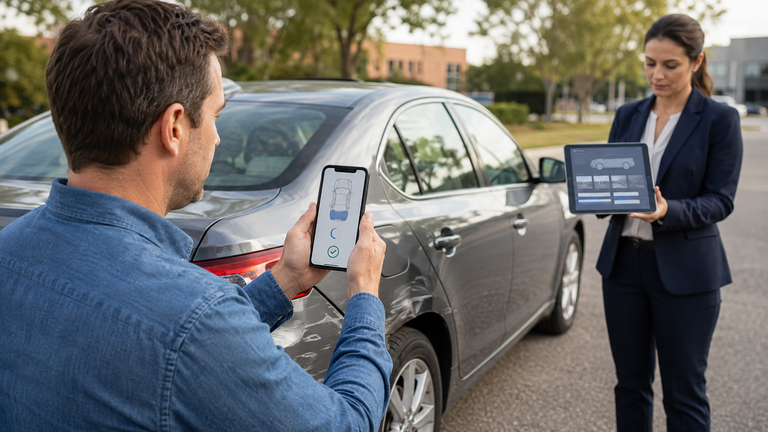
Your rear bumper is cracked, one taillight is damaged, and there is a scrape along the side of your car.
Traditionally, getting an initial damage assessment could involve contacting your insurer, speaking with a claims representative, arranging an inspection, waiting for an estimate and then coordinating repairs.
Increasingly, part of that process can begin with something already in your pocket:
Claim Preparation Checklist
Use this as a general organization aid; policy and jurisdiction-specific requirements can differ.
Your smartphone.
You open your insurer’s app.
The app guides you through taking photographs of the damaged vehicle.
Software analyzes those images, identifies potentially damaged areas, helps determine how the claim should be routed, and in some systems can assist in producing a preliminary repair estimate.
What once required several manual steps can sometimes begin almost immediately.
This isn’t merely a future concept. AI and automated systems are already being incorporated into insurance claims operations. The National Association of Insurance Commissioners (NAIC) says AI is being used across insurance for functions including claims handling and fraud detection.
Technology provider CCC Intelligent Solutions says its computer-vision systems can use vehicle photographs to help determine damage and costs, make repair-versus-replace decisions, convert damage photos into line-by-line estimates, and assist with total-loss predictions.
But does this mean the human insurance adjuster is disappearing?
Not exactly.
The bigger change in 2026 is that AI can increasingly handle or assist with the repetitive parts of a claim, while human professionals remain important when judgment, investigation or negotiation is required.
What Is an “AI Adjuster”?
“AI adjuster” is a convenient description rather than necessarily a formal insurance job title.
It refers to the growing collection of artificial-intelligence and automation technologies insurers and their technology partners can use to help:
- Collect claim information
- Analyze vehicle photographs
- Identify visible damage
- Estimate repair requirements
- Predict claim severity
- Detect potentially suspicious patterns
- Determine whether human review is necessary
- Route claims to appropriate teams
- Identify possible total losses
- Assist with customer communication
- Process claim documents
Instead of one AI robot replacing an adjuster, think of AI as a digital layer operating throughout the claims process.
How a Traditional Car Insurance Claim Works
The exact process varies by insurer and accident, but a traditional claim can involve several stages.
You report the accident.
The insurer collects information.
An adjuster or estimator reviews the claim.
Vehicle damage is inspected.
An estimate is prepared.
Coverage is reviewed.
Liability may be investigated.
Repairs are authorized.
Payment is issued.
Additional damage discovered during repair can produce a supplemental estimate.
Each stage can require communication between:
- Driver
- Insurer
- Repair shop
- Adjuster
- Parts supplier
- Rental company
- Other driver’s insurer
The problem isn’t necessarily that any one stage takes weeks.
The delays can accumulate between stages.
Digital claims technology is increasingly designed to reduce those gaps.
How an AI-Assisted Claim Can Work
Consider a straightforward bumper-damage claim.
Step 1: Report the Accident
You open the insurer’s website or mobile app and enter information such as:
- Date
- Location
- Vehicle involved
- Description of accident
- Type of damage
Step 2: Upload Photographs
The system may guide you through photographing:
- Front
- Rear
- Vehicle identification
- Damaged panels
- Wider vehicle views
Step 3: Images Are Analyzed
Computer-vision technology can analyze visible vehicle damage.
Depending on the system, software may help identify:
- Damaged components
- Repairable parts
- Parts likely requiring replacement
- Potential severity
- Possible total-loss indicators
Step 4: Claim Is Routed
A simple claim may continue through a highly digital workflow.
A complicated claim might immediately be routed to a human adjuster.
Step 5: Estimate Is Generated or Assisted
AI can help prepare estimate information using photographs, vehicle data, repair information and insurer-specific rules.
CCC, for example, says its Intelligent Estimating technology can generate line-level estimates on qualifying repairable vehicles in seconds, either for appraiser review or, depending on insurer configuration, automatic approval.
Step 6: Repair or Settlement Process Begins
The customer can then receive instructions regarding repair shops, payments or additional claim requirements.
The entire claim isn’t necessarily finished in minutes—but several early steps can happen dramatically faster.
Can AI Really Estimate Car Damage From Photos?
Yes, within appropriate use cases.
Computer vision is a branch of AI that enables software to analyze images.
For auto claims, the technology can examine vehicle photographs and identify patterns associated with physical damage.
For example, software might identify:
Rear bumper → damaged
Taillight → damaged
Quarter panel → possible repair
The system can combine that information with vehicle and repair data.
CCC says its AI technology can convert vehicle-damage photographs into line-by-line estimates and assist with repair-versus-replace decisions.
However, photographs have limitations.
AI can’t necessarily see damage hidden:
- Behind a bumper
- Beneath the vehicle
- Inside structural components
- Behind trim
- Within electronic systems
That’s why repair supplements remain important.
Photo Estimating Is Already Here
You don’t need to wait for some distant AI future to see digital estimating in action.
For example, State Farm’s official auto repair and estimating information describes a Photo Estimate tool for eligible external minor damage.
Customers use guided photographs through the mobile app, and State Farm says an initial estimate and payout may be available within 48 hours.
This is an important reality check for the headline of this article:
Digital analysis can happen quickly, but insurers don’t universally promise that the entire claim will be settled within minutes.
State Farm itself notes that no two claims are alike and that it cannot give one universal timeframe for payment without knowing the claim details.
Why AI Can Make Claims Faster
The biggest advantage isn’t simply that computers “think faster.”
Automation can remove waiting periods.
Photos Arrive Immediately
Customers don’t necessarily have to wait for an in-person inspection.
Data Can Be Checked Automatically
Vehicle and policy information can be integrated into the claims workflow.
Damage Can Be Triaged Quickly
AI can help determine which claims are simple and which need specialist attention.
Estimates Can Be Assisted Automatically
Systems can help populate repair operations and parts information.
Claims Can Be Routed Immediately
A complex claim doesn’t have to sit in the wrong queue before someone recognizes it requires additional attention.
These small efficiencies can add up.
AI Triage: One of the Biggest Changes
Not every insurance claim deserves the same process.
Compare:
Claim A
One scratched bumper.
No injuries.
No other vehicle.
Car remains driveable.
Claim B
Three-car intersection collision.
Airbags deployed.
Possible injuries.
Disputed liability.
One vehicle may be a total loss.
Sending both claims through exactly the same workflow would be inefficient.
AI can help insurers identify which claims appear straightforward and which require experienced human handling.
CCC says its technology uses AI to analyze photographs and assist insurers with routing decisions early in the auto physical-damage claims process.
That may ultimately be one of AI’s most valuable roles:
Not replacing every adjuster, but helping adjusters focus their time where human expertise matters most.
AI Can Help Predict Total Losses Earlier
Suppose your car is worth:
$12,000
Visible damage looks severe.
If the likely repair cost approaches the vehicle’s value, the insurer may need to evaluate whether the car should be treated as a total loss under applicable state rules and policy terms.
Traditionally, significant time can be spent inspecting and estimating a vehicle before reaching that conclusion.
AI systems can potentially identify total-loss indicators earlier.
CCC lists automated total-loss prediction among the uses of its AI technology.
Earlier identification can potentially reduce unnecessary steps in claims that are unlikely to proceed through conventional repairs.
AI Can Help Detect Fraud
Insurance fraud increases costs for insurers and ultimately affects consumers.
Suspicious claims can involve:
- Staged accidents
- Previously existing damage
- Altered documentation
- Duplicate claims
- Inflated damage
- Misrepresented accident circumstances
AI and machine-learning systems can analyze patterns across large datasets much faster than a person could manually review every claim.
The NAIC identifies fraud detection as one area in which AI is already being used by insurers.
However, fraud detection also demonstrates why human oversight remains important.
A suspicious pattern is not automatically proof of fraud.
Algorithms can flag claims for further review, but consequential decisions need to comply with applicable insurance laws and regulations.
AI May Help Identify Injury Exposure
Vehicle photographs can potentially provide information beyond bodywork.
The apparent severity of an impact can help insurers triage claims that might involve bodily injury.
CCC says its systems can use AI-derived impact severity from vehicle photographs to help casualty adjusters identify likely bodily-injury exposure and make earlier triage decisions.
That doesn’t mean AI can diagnose an injured person from a photograph of a car.
Instead, vehicle information can help claims professionals decide which cases require more immediate or specialized attention.
What Happens When AI Gets It Wrong?
This is one of the most important questions consumers should ask.
Imagine AI examines photographs and estimates:
Repair cost: $2,800
Your repair shop removes the bumper and discovers:
- Damaged reinforcement
- Broken sensor mount
- Wiring damage
- Additional structural damage
Revised repair cost:
$4,500
The original estimate wasn’t necessarily fraudulent or useless.
It simply couldn’t see hidden damage.
This is where the supplement process becomes important.
State Farm, for example, explains that when a repair shop discovers additional damage related to a claim after a photo estimate, it can work with the shop to review that damage and pay additional eligible amounts.
Consumers shouldn’t assume an AI-assisted initial estimate is necessarily the final word.
Initial Estimate vs. Final Repair Bill
This distinction matters more as photo estimating becomes common.
Initial Estimate
An assessment based on the information currently available.
Supplement
Additional repair costs identified after disassembly or closer inspection.
Final Repair Cost
The ultimate eligible repair amount after approved supplements and adjustments.
Supplements have existed long before modern AI.
Vehicles frequently reveal hidden damage after repair work begins.
AI doesn’t eliminate that reality.
Will AI Replace Human Claims Adjusters?
Probably not across the entire claims process.
Human adjusters remain particularly important for:
- Serious accidents
- Injuries
- Disputed liability
- Complex coverage questions
- Fraud investigations
- Total-loss disputes
- Unusual vehicles
- Complex repair disputes
- Multi-vehicle accidents
- Legal issues
- Customer complaints
Even technology providers frequently design AI to assist human professionals.
CCC states that repairers can set confidence thresholds for AI-assisted estimating while final estimate approvals are made by human estimators in that workflow.
And insurers continue hiring auto estimators to review photographs, inspect vehicles and apply professional judgment.
The likely future is therefore:
AI + human adjuster
rather than simply:
AI instead of human adjuster.
Which Claims Are Best Suited to Automation?
AI-assisted processing is particularly attractive for relatively straightforward claims.
Examples may include:
- Minor bumper damage
- Small dents
- Exterior scratches
- Certain glass claims
- Simple single-vehicle damage
- Clearly documented cosmetic damage
These claims tend to have:
- Good photographs
- Limited damage
- No injuries
- No major coverage disputes
- Relatively predictable repairs
Which Claims Still Need Human Attention?
Now consider:
Driver A says Driver B ran a red light.
Driver B says Driver A ran the red light.
Both vehicles are severely damaged.
Two passengers report injuries.
There are witnesses.
Police attended.
Medical bills are accumulating.
AI can help organize information and analyze data.
But determining liability, reviewing coverage, assessing injuries and negotiating a complex settlement can require significant human judgment.
Technology doesn’t make complexity disappear.
Why “Minutes, Not Weeks” Needs Context
Some AI systems can analyze photographs or generate estimate information in seconds.
CCC says its Intelligent Estimating system can generate line-level estimates for qualifying vehicles in seconds.
But that’s not the same as settling the entire insurance claim in seconds.
A claim can still require:
- Coverage verification
- Deductible calculation
- Liability investigation
- Repair-shop inspection
- Parts availability
- Supplements
- Medical documentation
- Police reports
- Third-party communication
Therefore:
AI may turn certain claim tasks from days into minutes or seconds.
It does not mean every complete claim will move from accident to final payment within minutes.
That distinction makes the article more accurate and trustworthy.
How AI Could Change the Customer Experience
For drivers, perhaps the most visible improvement is convenience.
Instead of:
Call → wait → schedule inspection → wait → estimate
the process can increasingly resemble:
Report → photograph → upload → analyze → route
Customers can also use digital claim systems to:
- Track progress
- Upload documents
- Receive notifications
- Choose repair options
- Communicate with claim teams
- Arrange direct deposit
For example, State Farm currently allows customers using its digital claims tools to upload photographs and documents, track claim status, communicate with claims teams and manage payment information.
Could AI Reduce Insurance Costs?
Potentially—but consumers shouldn’t assume automation automatically means lower premiums.
AI may help insurers reduce:
- Manual processing
- Administrative delays
- Repetitive tasks
- Certain fraud losses
- Claims-handling time
However, premiums also reflect:
- Vehicle repair costs
- Medical costs
- Theft
- Catastrophe losses
- Litigation
- Parts prices
- Labour
- Reinsurance
- Individual driver risk
Faster claims processing doesn’t eliminate these underlying costs.
Could AI Make Claims More Consistent?
Potentially.
Human estimators can interpret damage differently.
AI systems can apply the same underlying model and insurer rules repeatedly.
That can potentially improve consistency for similar claims.
But algorithms themselves depend on:
- Training data
- Model design
- Input quality
- Insurer rules
- System testing
Consistency isn’t automatically the same as fairness or accuracy.
That’s one reason insurance regulators are increasingly focused on AI governance.
Regulators Are Watching Insurance AI
The expansion of AI into insurance has attracted significant regulatory attention.
The NAIC’s Model Bulletin on the Use of Artificial Intelligence Systems by Insurers establishes expectations for responsible AI governance and emphasizes that decisions supported by AI still need to comply with applicable insurance laws and regulations.
Regulatory work has continued into 2026.
The NAIC says its AI Systems Evaluation Tool was being piloted by 12 participating states as of March 2026, with the tool intended to help regulators evaluate insurers’ AI use, governance, risk controls and data inputs.
A May 2026 paper in the NAIC’s Journal of Insurance Regulation also examined expanding AI/ML use by insurers and the state regulatory response.
This matters because automation doesn’t remove insurers’ legal responsibilities.
What About Algorithmic Bias?
An AI system is influenced by the data and design used to build it.
Potential concerns can arise if models produce systematically unfair outcomes.
Insurance regulators are therefore interested in issues including:
- Data quality
- Model governance
- Testing
- Documentation
- Consumer impact
- Compliance
- Third-party AI vendors
Consumers should retain meaningful ways to question decisions and provide additional evidence when automated processing doesn’t accurately reflect their claim.
Can You Challenge an AI Estimate?
If you believe an estimate misses legitimate accident-related damage, don’t assume you must simply accept it because software generated or assisted with it.
Depending on the insurer and claim, you may be able to:
- Submit additional photographs
- Ask questions about the estimate
- Have the repair facility identify hidden damage
- Request a supplement
- Provide supporting documentation
- Communicate with a human claims representative
Your rights and the insurer’s obligations depend on state law and policy terms.
What Should You Photograph After an Accident?
Good input can improve a digital claim.
Where safe, capture:
- Entire vehicle
- Front
- Rear
- Both sides
- Close-up damage
- Wider view of damaged panels
- Other vehicle
- Number plates
- Accident scene
- Road markings
- Traffic signs
- Relevant debris
Take photographs from several angles.
Don’t digitally manipulate the images.
AI may be sophisticated, but poor-quality photographs still provide poor information.
AI Claim Example: Minor Parking Damage
Imagine you reverse into a concrete post.
Damage:
- Cracked rear bumper
- Broken reflector
- Paint damage
No other vehicle is involved.
Nobody is injured.
The vehicle remains driveable.
You submit guided photographs.
An AI-assisted system identifies the damaged area, helps prepare an estimate and routes the claim through a digital process.
This is the kind of straightforward physical-damage claim where automation can potentially provide substantial efficiency.
AI Claim Example: Hidden Sensor Damage
Now imagine the same bumper contains parking sensors.
The initial photographs show:
Cosmetic bumper damage
After removing the bumper, the repair shop finds:
Damaged sensor bracket + wiring
The shop submits a supplement.
A human or automated review process evaluates the additional damage.
This demonstrates why even advanced image analysis doesn’t eliminate the repair shop’s role.
AI Claim Example: Serious Intersection Accident
Now consider a much more complicated accident.
Two vehicles collide at an intersection.
Airbags deploy.
Both drivers dispute liability.
A passenger reports neck pain.
One vehicle may be totaled.
AI can potentially help:
- Analyze damage
- Organize documents
- Triage injury exposure
- Predict total-loss likelihood
- Route the claim
But it doesn’t magically resolve:
Who was legally responsible?
What injuries are compensable?
What does the policy cover?
Those issues can require investigation and human judgment.
Advantages of AI-Assisted Claims
For consumers, potential benefits include:
Faster initial assessment
Photographs can be analyzed without waiting for a traditional inspection.
24/7 digital reporting
A claim can often be started outside normal office hours.
Faster routing
Simple and complex claims can potentially be separated earlier.
Convenience
Customers can upload information from home.
Better status visibility
Digital systems can provide updates.
Less repetitive paperwork
Information can move between connected systems.
Potential Disadvantages
AI claims processing isn’t perfect.
Potential concerns include:
Hidden damage
Photographs can’t reveal everything.
Incorrect identification
AI may misunderstand unusual damage.
Poor photographs
Bad input can produce weak results.
Complex claims
Some situations simply require human judgment.
Consumer understanding
Customers may not realize an estimate is preliminary.
Algorithmic fairness
Models need appropriate governance and oversight.
Cybersecurity and privacy
Claims systems can process photographs, vehicle data and personal information.
Speed shouldn’t come at the expense of accuracy or consumer protection.
What Drivers Should Do in an AI-Powered Claim
1. Document Everything
Take your own photographs even if the insurer’s app also asks for them.
2. Provide Accurate Information
Don’t exaggerate or minimize damage.
3. Keep Original Files
Preserve photographs, receipts and accident documentation.
4. Read the Estimate
Don’t simply look at the final dollar amount.
Check what repairs and parts are included.
5. Ask About Missing Damage
If something appears absent, raise it.
6. Understand Supplements
Your repair shop may identify legitimate additional damage.
7. Ask for Human Review When Necessary
Complex or disputed situations may require a claims professional.
8. Track Communication
Keep records of important conversations and documents.
Frequently Asked Questions
What is an AI insurance adjuster?
It’s a general term for AI and automation used to assist claims tasks such as image analysis, estimating, triage, fraud detection and routing. It doesn’t necessarily mean one AI system replaces a licensed human adjuster.
Can AI estimate car damage from photographs?
Yes. Computer-vision systems can analyze vehicle images and assist with repair estimates. CCC says its technology can convert damage photographs into line-by-line estimate information.
Can AI settle a car insurance claim in minutes?
Certain tasks can happen in seconds or minutes, but entire claims aren’t universally settled that quickly. Complex claims can still require significant investigation.
Are insurers already using photo estimates?
Yes. State Farm, for example, offers a Photo Estimate option for certain eligible minor external vehicle damage and says an initial estimate and payout may be available within 48 hours.
What if AI misses hidden damage?
A repair facility may discover additional accident-related damage and submit a supplemental estimate for review.
Will AI replace insurance adjusters?
AI is more likely to automate or assist specific tasks while humans continue handling complex claims, disputes, injuries and cases requiring judgment.
Can AI detect insurance fraud?
AI can help identify unusual patterns and potentially suspicious claims for further investigation. The NAIC identifies fraud detection as an existing insurance use case for AI.
Can I dispute an AI-generated estimate?
Claims procedures vary, but consumers can generally raise concerns, provide additional documentation and communicate with the insurer about missing or disputed damage.
Does AI decide whether my claim is covered?
AI may support insurer workflows, but insurers remain responsible for complying with applicable policy terms and insurance laws regardless of whether automated systems are involved.
Is my claim data safe when using AI?
Insurers and vendors process sensitive information and are subject to applicable privacy, cybersecurity and insurance requirements. Consumers should still use official insurer applications and secure channels when submitting claim information.
AI Claims Checklist
After an accident:
- Make sure everyone is safe.
- Contact emergency services where necessary.
- Photograph the entire vehicle.
- Take close-ups of damage.
- Photograph the accident scene where safe.
- Preserve original images.
- Report the claim accurately.
- Review any AI-assisted estimate carefully.
- Compare the estimate with repair-shop findings.
- Ask about missing damage.
- Understand your deductible.
- Keep copies of documents.
- Ask about supplemental damage.
- Request additional explanation or human assistance if necessary.
Final Thoughts
The insurance adjuster isn’t disappearing.
But the adjuster’s job—and the customer’s claims experience—is changing.
Artificial intelligence can already analyze vehicle photographs, assist with damage estimates, predict potential total losses, support fraud detection and help route claims to the right workflow. The NAIC confirms that AI is being used in insurance claims handling, while auto-claims technology providers already offer AI-powered image analysis and estimating systems.
For straightforward physical-damage claims, the impact could be significant.
Instead of waiting for every step to be performed manually, drivers can increasingly:
Report → Photograph → Upload → Analyze → Estimate → Repair
But the phrase “minutes, not weeks” should be understood carefully.
AI can reduce some tasks from hours or days to seconds or minutes. That doesn’t mean every accident will receive a final settlement immediately.
Hidden damage, injuries, disputed liability, coverage questions, repair supplements and complex total losses still require additional work.
The most realistic future isn’t an algorithm replacing every claims professional.
It’s a system where AI handles routine analysis and administrative work while human adjusters concentrate on judgment, exceptions, disputes and customer support.
For drivers, that could mean fewer delays and more convenient claims.
But speed must come with something equally important:
Accuracy, transparency and the ability to get meaningful human review when technology doesn’t get the answer right.
Key terms in this guide
Tap a term to review the plain-English meaning while you read.
Premium
The amount charged for insurance coverage, usually paid monthly, quarterly or annually.
Deductible
The amount you may need to pay toward a covered loss before the insurer pays under the policy, subject to the policy terms.
Claim
A request for payment or benefits under an insurance policy after an event that may be covered.
Liability
Legal responsibility for injury, damage or loss suffered by another person or organization.
Waiting Period
A specified period that must pass before certain coverage or benefits become available.
Did the guide make sense?
Answer two quick questions. Your score stays in this browser.
Verify Current Rules
Insurance rules, benefits and product terms can change. These official resources are useful starting points for checking current requirements; they do not replace your policy documents or jurisdiction-specific advice.
Thanks — your response is saved in this browser.
Continue learning, not just scrolling
Follow a practical path from understanding the idea to comparing options and preparing for real-world decisions.
 StartCollision Coverage Explained: What It Covers, What It Doesn’t, and When You Need ItBuild the foundation →
 CompareCommercial Trucking Insurance: Why “Bobtail” vs. “Physical Damage” coverage is critical for owner-operators.Compare your options →
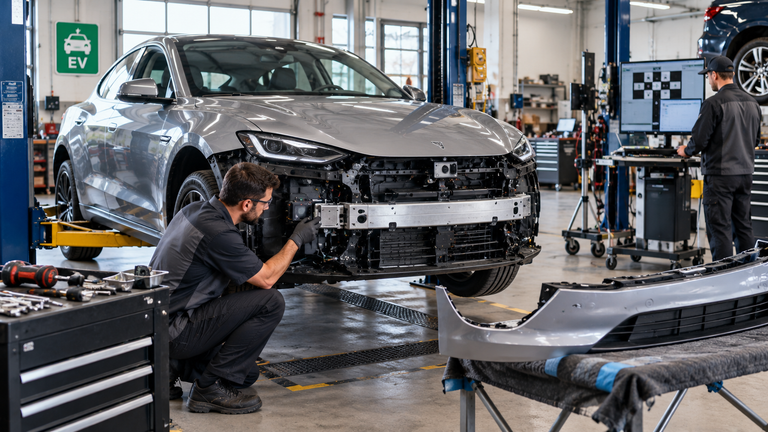 PlanTesla & EV Insurance Hikes: Why Repair Costs Are Driving Premiums UpUnderstand the numbers →
 ActThe Impact of AI on Claims: Will 2026 Algorithms Settle Your Car Accident Claim in Minutes or Hours?Be ready for a claim →
Leave a Comment
Share a helpful question or experience. Your email address will not be published.